
About This Book
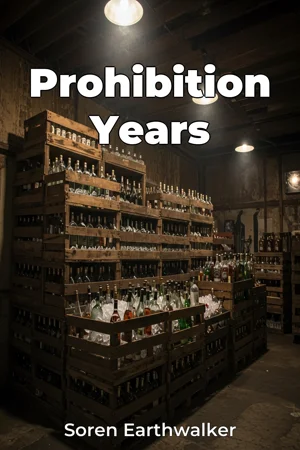
Did the noble experiment of alcohol prohibition in the United States actually curb societal ills, or did it inadvertently catalyze a surge in crime and corruption that forever altered the nation’s landscape? "Prohibition Years" delves into the tumultuous period from 1920 to 1933, dissecting the complex interplay between the Eighteenth Amendment, its enforcement, and the unforeseen consequences that reverberated through American society. This book examines the era's impact on three critical areas: the explosion of organized crime, the profound disruption of the American economy, and the shifting dynamics of law enforcement and public health. These topics are vital for understanding not just the history of the United States but also the enduring challenges of legislating morality and controlling vice. Understanding this period requires a grasp of the social reform movements of the late 19th and early 20th centuries, which sought to address issues such as poverty, corruption, and public health through legislative action. The rise of the temperance movement, fueled by religious and moral convictions, laid the groundwork for national prohibition. The central argument of "Prohibition Years" is that the unintended consequences of Prohibition far outweighed its intended benefits, leading to a dramatic increase in organized crime, a loss of tax revenue that crippled government services, and a general erosion of respect for the law. This argument is crucial because it challenges the simplistic narrative of Prohibition as a well-intentioned failure and instead reveals the complex and often contradictory forces at play. The book begins by exploring the historical context leading up to Prohibition, detailing the rise of the temperance movement and the political maneuvering that resulted in the passage of the Eighteenth Amendment. It then pivots to the core of the subject, with sections dedicated to: (1) The Rise of Organized Crime: Chronicling the emergence of powerful criminal syndicates that profited immensely from the illegal production and distribution of alcohol. (2) Economic Disruptions: Analyzing the impact of Prohibition on various industries, including brewing, distilling, and hospitality, as well as the loss of tax revenue for federal and state governments. (3) Enforcement Challenges and Public Health: Examining the difficulties faced by law enforcement in enforcing Prohibition, the corruption that permeated the system, and the public health consequences of unregulated alcohol production. The book culminates in an analysis of the factors that led to the repeal of Prohibition and its lasting legacy on American society. The book draws upon a wide range of primary and secondary sources, including government documents, court records, newspaper articles, personal memoirs, and scholarly studies. It incorporates statistical data on crime rates, alcohol consumption, and economic indicators to support its arguments. "Prohibition Years" connects to other fields of study such as criminology, economics, and political science. It explores the economic principles that govern black markets, the sociological factors that contribute to criminal behavior, and the political dynamics that shape law enforcement policy. These connections enrich the book's analysis and provide a more comprehensive understanding of the era. This book offers a fresh perspective by examining the long-term consequences of Prohibition, highlighting how it not only failed to achieve its goals but also created new and unforeseen problems that continue to impact American society today. The tone of the book is factual and analytical, presenting the evidence in a clear and objective manner while also engaging the reader through compelling storytelling. The target audience includes students, scholars, history buffs, and anyone interested in the history of crime, law enforcement, and American social policy. The book is valuable to them because it provides a comprehensive and nuanced account of a pivotal moment in American history, offering insights into the complexities of law, morality, and unintended consequences. As a work of true crime and history, "Prohibition Years" adheres to the conventions of factual accuracy, objectivity, and comprehensive research. It avoids sensationalism and instead seeks to provide a balanced and informative account of the era. While the book focuses primarily on the United States, it also acknowledges the international dimensions of Prohibition, including the cross-border smuggling of alcohol and the global impact of American policies. The information presented has real-world applications for policymakers, law enforcement officials, and anyone interested in understanding the challenges of regulating vice and controlling crime. The book addresses ongoing debates about the role of government in regulating personal behavior, the effectiveness of different approaches to crime control, and the balance between individual liberty and public safety.
Did the noble experiment of alcohol prohibition in the United States actually curb societal ills, or did it inadvertently catalyze a surge in crime and corruption that forever altered the nation’s landscape? "Prohibition Years" delves into the tumultuous period from 1920 to 1933, dissecting the complex interplay between the Eighteenth Amendment, its enforcement, and the unforeseen consequences that reverberated through American society. This book examines the era's impact on three critical areas: the explosion of organized crime, the profound disruption of the American economy, and the shifting dynamics of law enforcement and public health. These topics are vital for understanding not just the history of the United States but also the enduring challenges of legislating morality and controlling vice. Understanding this period requires a grasp of the social reform movements of the late 19th and early 20th centuries, which sought to address issues such as poverty, corruption, and public health through legislative action. The rise of the temperance movement, fueled by religious and moral convictions, laid the groundwork for national prohibition. The central argument of "Prohibition Years" is that the unintended consequences of Prohibition far outweighed its intended benefits, leading to a dramatic increase in organized crime, a loss of tax revenue that crippled government services, and a general erosion of respect for the law. This argument is crucial because it challenges the simplistic narrative of Prohibition as a well-intentioned failure and instead reveals the complex and often contradictory forces at play. The book begins by exploring the historical context leading up to Prohibition, detailing the rise of the temperance movement and the political maneuvering that resulted in the passage of the Eighteenth Amendment. It then pivots to the core of the subject, with sections dedicated to: (1) The Rise of Organized Crime: Chronicling the emergence of powerful criminal syndicates that profited immensely from the illegal production and distribution of alcohol. (2) Economic Disruptions: Analyzing the impact of Prohibition on various industries, including brewing, distilling, and hospitality, as well as the loss of tax revenue for federal and state governments. (3) Enforcement Challenges and Public Health: Examining the difficulties faced by law enforcement in enforcing Prohibition, the corruption that permeated the system, and the public health consequences of unregulated alcohol production. The book culminates in an analysis of the factors that led to the repeal of Prohibition and its lasting legacy on American society. The book draws upon a wide range of primary and secondary sources, including government documents, court records, newspaper articles, personal memoirs, and scholarly studies. It incorporates statistical data on crime rates, alcohol consumption, and economic indicators to support its arguments. "Prohibition Years" connects to other fields of study such as criminology, economics, and political science. It explores the economic principles that govern black markets, the sociological factors that contribute to criminal behavior, and the political dynamics that shape law enforcement policy. These connections enrich the book's analysis and provide a more comprehensive understanding of the era. This book offers a fresh perspective by examining the long-term consequences of Prohibition, highlighting how it not only failed to achieve its goals but also created new and unforeseen problems that continue to impact American society today. The tone of the book is factual and analytical, presenting the evidence in a clear and objective manner while also engaging the reader through compelling storytelling. The target audience includes students, scholars, history buffs, and anyone interested in the history of crime, law enforcement, and American social policy. The book is valuable to them because it provides a comprehensive and nuanced account of a pivotal moment in American history, offering insights into the complexities of law, morality, and unintended consequences. As a work of true crime and history, "Prohibition Years" adheres to the conventions of factual accuracy, objectivity, and comprehensive research. It avoids sensationalism and instead seeks to provide a balanced and informative account of the era. While the book focuses primarily on the United States, it also acknowledges the international dimensions of Prohibition, including the cross-border smuggling of alcohol and the global impact of American policies. The information presented has real-world applications for policymakers, law enforcement officials, and anyone interested in understanding the challenges of regulating vice and controlling crime. The book addresses ongoing debates about the role of government in regulating personal behavior, the effectiveness of different approaches to crime control, and the balance between individual liberty and public safety.
"Prohibition Years" examines the period from 1920 to 1933 when the Eighteenth Amendment outlawed alcohol in the United States. This era, intended to curb societal ills through social reform, unexpectedly fueled organized crime and economic disruptions. The book argues that Prohibition's negative consequences, such as the rise of speakeasies and bootlegging, outweighed its benefits. The book dissects how the temperance movement led to the law's passage and then explores its impact on three key areas: the explosion of organized crime, the disruption of the American economy due to lost tax revenue, and the challenges faced by law enforcement. Interestingly, the ban led to a surge in unregulated alcohol production, creating public health issues, and also fostered unprecedented levels of corruption. By exploring these interwoven challenges, the book offers a comprehensive view of a unique period in US history. Beginning with the historical context, "Prohibition Years" progresses through the rise of criminal syndicates and economic impacts, culminating in an analysis of the repeal and its lasting legacy. It uses a range of sources, from government documents to personal memoirs, to support its arguments, offering an insightful look at the complexities of legislating morality.
Book Details
ISBN
9788235294074
Publisher
Publifye AS
Your Licenses
You don't own any licenses for this book
Purchase a license below to unlock this book and download the EPUB.
Purchase License
Select a tier to unlock this book
Need bulk licensing?
Contact us for enterprise agreements.