
About This Book
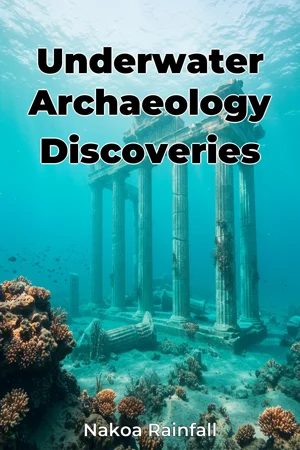
What secrets lie beneath the waves, hidden within the silent ruins of sunken ships and submerged cities? "Underwater Archaeology Discoveries" unveils these submerged historical treasures, offering unprecedented insights into past civilizations and maritime history, bridging the disciplines of Earth Sciences, Geography, and History. This book explores the captivating realm of underwater archaeology, focusing on the meticulous recovery, analysis, and interpretation of artifacts and structures found beneath the ocean's surface. We investigate the submerged remains of ancient port cities, lost trade vessels, and even prehistoric settlements, revealing forgotten aspects of human history. These submerged sites, often remarkably well-preserved, offer unique snapshots of daily life, technological advancements, and cultural exchanges that shaped the world we know today. A central argument presented is that the study of underwater sites provides a more complete and nuanced understanding of terrestrial history. Traditional archaeological methods are often limited by the destructive forces of weather and human activity. The underwater environment, however, can act as a preservative, safeguarding fragile artifacts and architectural remains from the ravages of time, offering an unparalleled window into the past. "Underwater Archaeology Discoveries" begins with an introduction to the field, covering the history of underwater exploration, the development of specialized diving techniques, and the ethical considerations involved in excavating submerged sites. Following this introductory section, the book is divided into three major thematic areas. First, it examines several significant sunken cities around the world, detailing their rediscovery, mapping, and analysis. This section will explore the environmental factors that led to their submersion and the cultural and economic importance of these urban centers in their time. Second, the book delves into the world of shipwrecks, focusing on the stories these vessels tell about trade routes, naval battles, and maritime technology. Detailed case studies will illustrate how the analysis of ship construction, cargo, and personal belongings recovered from these sites can reconstruct complex historical narratives. Third, the book investigates prehistoric submerged landscapes, examining evidence of early human settlements now found underwater due to rising sea levels. This evidence allows us to understand human adaptation to changing environments and early technological innovations. The evidence presented in this book is drawn from a variety of sources, including primary archaeological reports, nautical charts, historical documents, and cutting-edge scientific analysis. We will examine the use of remote sensing technologies, such as sonar and sub-bottom profiling, in the initial discovery and mapping of underwater sites. The book highlights the application of forensic techniques, such as dendrochronology and carbon dating, to accurately date artifacts and reconstruct past environments. This study connects to diverse fields such as oceanography, climate science, and anthropology. Oceanographic studies help us to understand the processes that led to the preservation or destruction of underwater sites. Climate science provides insights into sea-level changes and coastal erosion, enabling us to reconstruct the environments in which these submerged settlements and shipwrecks existed. Anthropological perspectives help us interpret the cultural significance of the artifacts and remains recovered from these sites. The book adopts a fact-based, analytical approach, drawing directly on scientific findings and historical evidence to support its conclusions. "Underwater Archaeology Discoveries" is targeted toward students of archaeology, history, geography, and oceanography, as well as enthusiasts interested in maritime history and underwater exploration. It would be valuable to those seeking a comprehensive overview of the field, or for anyone who wants a deeper understanding of history as told by submerged remnants of civilizations. The scope of the book is global, examining underwater sites from various regions and historical periods. However, it acknowledges the inherent limitations of underwater archaeology, including the challenges of accessing and excavating deep-sea sites, the ethical considerations of disturbing submerged cultural heritage, and the ongoing debate over the ownership and preservation of underwater artifacts. The information presented here has practical applications in environmental management, cultural heritage preservation, and tourism. The study of submerged landscapes can inform coastal management strategies and help us to mitigate the impact of climate change on coastal communities. The preservation of underwater cultural heritage can promote sustainable tourism and provide educational opportunities for future generations. "Underwater Archaeology Discoveries" aims to provide a thorough and insightful exploration of the world beneath the waves, illuminating the rich history that lies hidden beneath the sea.
What secrets lie beneath the waves, hidden within the silent ruins of sunken ships and submerged cities? "Underwater Archaeology Discoveries" unveils these submerged historical treasures, offering unprecedented insights into past civilizations and maritime history, bridging the disciplines of Earth Sciences, Geography, and History. This book explores the captivating realm of underwater archaeology, focusing on the meticulous recovery, analysis, and interpretation of artifacts and structures found beneath the ocean's surface. We investigate the submerged remains of ancient port cities, lost trade vessels, and even prehistoric settlements, revealing forgotten aspects of human history. These submerged sites, often remarkably well-preserved, offer unique snapshots of daily life, technological advancements, and cultural exchanges that shaped the world we know today. A central argument presented is that the study of underwater sites provides a more complete and nuanced understanding of terrestrial history. Traditional archaeological methods are often limited by the destructive forces of weather and human activity. The underwater environment, however, can act as a preservative, safeguarding fragile artifacts and architectural remains from the ravages of time, offering an unparalleled window into the past. "Underwater Archaeology Discoveries" begins with an introduction to the field, covering the history of underwater exploration, the development of specialized diving techniques, and the ethical considerations involved in excavating submerged sites. Following this introductory section, the book is divided into three major thematic areas. First, it examines several significant sunken cities around the world, detailing their rediscovery, mapping, and analysis. This section will explore the environmental factors that led to their submersion and the cultural and economic importance of these urban centers in their time. Second, the book delves into the world of shipwrecks, focusing on the stories these vessels tell about trade routes, naval battles, and maritime technology. Detailed case studies will illustrate how the analysis of ship construction, cargo, and personal belongings recovered from these sites can reconstruct complex historical narratives. Third, the book investigates prehistoric submerged landscapes, examining evidence of early human settlements now found underwater due to rising sea levels. This evidence allows us to understand human adaptation to changing environments and early technological innovations. The evidence presented in this book is drawn from a variety of sources, including primary archaeological reports, nautical charts, historical documents, and cutting-edge scientific analysis. We will examine the use of remote sensing technologies, such as sonar and sub-bottom profiling, in the initial discovery and mapping of underwater sites. The book highlights the application of forensic techniques, such as dendrochronology and carbon dating, to accurately date artifacts and reconstruct past environments. This study connects to diverse fields such as oceanography, climate science, and anthropology. Oceanographic studies help us to understand the processes that led to the preservation or destruction of underwater sites. Climate science provides insights into sea-level changes and coastal erosion, enabling us to reconstruct the environments in which these submerged settlements and shipwrecks existed. Anthropological perspectives help us interpret the cultural significance of the artifacts and remains recovered from these sites. The book adopts a fact-based, analytical approach, drawing directly on scientific findings and historical evidence to support its conclusions. "Underwater Archaeology Discoveries" is targeted toward students of archaeology, history, geography, and oceanography, as well as enthusiasts interested in maritime history and underwater exploration. It would be valuable to those seeking a comprehensive overview of the field, or for anyone who wants a deeper understanding of history as told by submerged remnants of civilizations. The scope of the book is global, examining underwater sites from various regions and historical periods. However, it acknowledges the inherent limitations of underwater archaeology, including the challenges of accessing and excavating deep-sea sites, the ethical considerations of disturbing submerged cultural heritage, and the ongoing debate over the ownership and preservation of underwater artifacts. The information presented here has practical applications in environmental management, cultural heritage preservation, and tourism. The study of submerged landscapes can inform coastal management strategies and help us to mitigate the impact of climate change on coastal communities. The preservation of underwater cultural heritage can promote sustainable tourism and provide educational opportunities for future generations. "Underwater Archaeology Discoveries" aims to provide a thorough and insightful exploration of the world beneath the waves, illuminating the rich history that lies hidden beneath the sea.
"Underwater Archaeology Discoveries" delves into the captivating world beneath the waves, revealing submerged clues about past civilizations. It highlights how underwater sites, including sunken cities and shipwrecks, offer unique insights into maritime history, trade routes, and even prehistoric settlements. The book emphasizes that these underwater environments often preserve artifacts better than terrestrial sites, providing a clearer picture of daily life, technological advancements, and cultural exchanges. The book explores significant sunken cities, detailing their rediscovery and the environmental factors leading to their submersion. It also investigates shipwrecks, using recovered cargo and ship construction to reconstruct historical narratives about naval battles and maritime technology. Furthermore, it examines prehistoric submerged landscapes, shedding light on early human adaptation to changing environments and technological innovations. Adopting a fact-based approach, the book uses scientific findings and historical evidence to support its conclusions, connecting to fields like oceanography and climate science. By examining underwater sites globally, this study offers a comprehensive look at Earth Sciences, Geography, and History as told by the ocean's hidden treasures.
Book Details
ISBN
9788235294012
Publisher
Publifye AS
Your Licenses
You don't own any licenses for this book
Purchase a license below to unlock this book and download the EPUB.
Purchase License
Select a tier to unlock this book
Need bulk licensing?
Contact us for enterprise agreements.