
About This Book
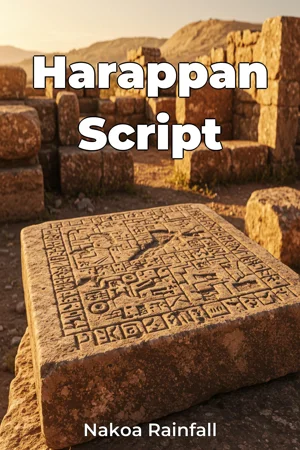
What secrets lie hidden within the symbols of a lost civilization? This book, "Harappan Script," delves into the intriguing enigma of the Harappan writing system, an undeciphered script from the Bronze Age Indus Valley Civilization (c. 3300-1300 BCE), and explores its potential links to later writing systems in South Asia. This investigation is critical because unlocking the Harappan script could revolutionize our understanding of the social, economic, and political structures of one of the world's earliest urban societies. Furthermore, decipherment might illuminate linguistic connections between the Harappan people and subsequent populations in the region. This book provides a comprehensive exploration of this undeciphered script, focusing on three key areas. First, it offers an in-depth analysis of the known characteristics of the Harappan script, including its visual appearance, frequency of signs, directionality, and the materials on which it is found. Second, it critically examines various decipherment attempts proposed over the past century, evaluating their methodologies, strengths, and weaknesses. Finally, it explores the possible relationships between the Harappan script and later Brahmi and other South Asian scripts, investigating potential lines of influence and adaptation. Understanding Proto-Indo-European languages and the archaeological context of the Indus Valley Civilization is helpful for grasping the challenges of decipherment. The book begins by introducing the archaeological discoveries related to the Harappan Civilization and the initial recognition of a unique writing system. Then, it navigates the landscape of scholarly research and contrasting approaches to decipherment. The central argument of this book is that while a definitive decipherment of the Harappan script remains elusive, a rigorous, evidence-based analysis of the script's internal structure and its archaeological context, combined with careful comparative linguistics, offers the most promising path toward understanding its function and meaning. This argument is crucial because it moves beyond speculative interpretations and grounds the investigation in verifiable data, encouraging more disciplined and productive research. The book is structured into three parts. Part 1 introduces the script itself, detailing its physical characteristics and providing a catalog of known signs. Part 2 critically assesses past decipherment attempts, categorizing them by methodology and analyzing their limitations. Part 3 examines potential connections between the Harappan script and later South Asian scripts, weighing the linguistic and archaeological evidence for continuity or influence. The book culminates with a discussion of the implications of a successful decipherment and suggests future research directions. The evidence presented in this book draws upon a wide range of sources, including the corpus of known Harappan inscriptions, archaeological reports from Indus Valley sites, statistical analyses of sign frequencies, and comparative linguistic studies. It also incorporates insights from the fields of epigraphy, archaeology, and linguistics. The decipherment of the Harappan script has implications for several interconnected fields. Archaeology is central, as the script is a primary means of accessing the civilization which created it. Linguistics forms a critical element to decipherment, examining the potential relationship to other languages. History will necessarily be rewritten based on insights the decipherment provides. This book offers a unique perspective by integrating archaeological, linguistic, and computational approaches to the study of the Harappan script. It moves beyond speculative interpretations and emphasizes the importance of rigorous data analysis and comparative linguistics. Written in a clear and accessible style, this book is aimed at historians, archaeologists, linguists, and anyone interested in ancient civilizations and the mysteries of undeciphered scripts. It offers a valuable resource for students and researchers alike, providing a comprehensive overview of the current state of knowledge and outlining promising avenues for future investigation. It aligns with the conventions of academic non-fiction, presenting well-researched information, supported by evidence and analysis, and adhering to scholarly standards of citation and argumentation. The scope of this book is limited to the analysis of the Harappan script and its potential connections to later South Asian scripts. It does not attempt to reconstruct the Harappan language or provide a comprehensive history of the Indus Valley Civilization, although relevant historical and archaeological context is provided. Understanding the Harappan script can enhance our understanding of the origins of writing and the development of early civilizations. It also offers insights into the processes of cultural transmission and linguistic change, which have relevance for understanding the diverse human societies of today. The field of Harappan script decipherment is rife with controversies and competing interpretations. This book addresses these debates directly, presenting different perspectives and evaluating their strengths and weaknesses. It encourages readers to think critically about the challenges of decipherment and to consider the limitations of our current knowledge.
What secrets lie hidden within the symbols of a lost civilization? This book, "Harappan Script," delves into the intriguing enigma of the Harappan writing system, an undeciphered script from the Bronze Age Indus Valley Civilization (c. 3300-1300 BCE), and explores its potential links to later writing systems in South Asia. This investigation is critical because unlocking the Harappan script could revolutionize our understanding of the social, economic, and political structures of one of the world's earliest urban societies. Furthermore, decipherment might illuminate linguistic connections between the Harappan people and subsequent populations in the region. This book provides a comprehensive exploration of this undeciphered script, focusing on three key areas. First, it offers an in-depth analysis of the known characteristics of the Harappan script, including its visual appearance, frequency of signs, directionality, and the materials on which it is found. Second, it critically examines various decipherment attempts proposed over the past century, evaluating their methodologies, strengths, and weaknesses. Finally, it explores the possible relationships between the Harappan script and later Brahmi and other South Asian scripts, investigating potential lines of influence and adaptation. Understanding Proto-Indo-European languages and the archaeological context of the Indus Valley Civilization is helpful for grasping the challenges of decipherment. The book begins by introducing the archaeological discoveries related to the Harappan Civilization and the initial recognition of a unique writing system. Then, it navigates the landscape of scholarly research and contrasting approaches to decipherment. The central argument of this book is that while a definitive decipherment of the Harappan script remains elusive, a rigorous, evidence-based analysis of the script's internal structure and its archaeological context, combined with careful comparative linguistics, offers the most promising path toward understanding its function and meaning. This argument is crucial because it moves beyond speculative interpretations and grounds the investigation in verifiable data, encouraging more disciplined and productive research. The book is structured into three parts. Part 1 introduces the script itself, detailing its physical characteristics and providing a catalog of known signs. Part 2 critically assesses past decipherment attempts, categorizing them by methodology and analyzing their limitations. Part 3 examines potential connections between the Harappan script and later South Asian scripts, weighing the linguistic and archaeological evidence for continuity or influence. The book culminates with a discussion of the implications of a successful decipherment and suggests future research directions. The evidence presented in this book draws upon a wide range of sources, including the corpus of known Harappan inscriptions, archaeological reports from Indus Valley sites, statistical analyses of sign frequencies, and comparative linguistic studies. It also incorporates insights from the fields of epigraphy, archaeology, and linguistics. The decipherment of the Harappan script has implications for several interconnected fields. Archaeology is central, as the script is a primary means of accessing the civilization which created it. Linguistics forms a critical element to decipherment, examining the potential relationship to other languages. History will necessarily be rewritten based on insights the decipherment provides. This book offers a unique perspective by integrating archaeological, linguistic, and computational approaches to the study of the Harappan script. It moves beyond speculative interpretations and emphasizes the importance of rigorous data analysis and comparative linguistics. Written in a clear and accessible style, this book is aimed at historians, archaeologists, linguists, and anyone interested in ancient civilizations and the mysteries of undeciphered scripts. It offers a valuable resource for students and researchers alike, providing a comprehensive overview of the current state of knowledge and outlining promising avenues for future investigation. It aligns with the conventions of academic non-fiction, presenting well-researched information, supported by evidence and analysis, and adhering to scholarly standards of citation and argumentation. The scope of this book is limited to the analysis of the Harappan script and its potential connections to later South Asian scripts. It does not attempt to reconstruct the Harappan language or provide a comprehensive history of the Indus Valley Civilization, although relevant historical and archaeological context is provided. Understanding the Harappan script can enhance our understanding of the origins of writing and the development of early civilizations. It also offers insights into the processes of cultural transmission and linguistic change, which have relevance for understanding the diverse human societies of today. The field of Harappan script decipherment is rife with controversies and competing interpretations. This book addresses these debates directly, presenting different perspectives and evaluating their strengths and weaknesses. It encourages readers to think critically about the challenges of decipherment and to consider the limitations of our current knowledge.
"Harappan Script" explores the enduring mystery of the Harappan writing system, a still-undeciphered script from the Indus Valley Civilization. Understanding this Bronze Age script is crucial, as its decipherment could unlock insights into the civilization's social structure and potential linguistic connections to later South Asian populations. The book delves into the script's characteristics, considering its visual aspects and frequency of certain symbols, while also evaluating past attempts to break the code. Intriguingly, the directionality of the script has been determined, and inscriptions have been found on various materials, offering clues to its purpose. The book presents a comprehensive overview in three parts, beginning with an introduction to the script and its physical attributes. It then moves into a critical assessment of past decipherment attempts, categorizing them to highlight their limitations. Finally, the book explores whether there are links between the Harappan script and later South Asian scripts, such as Brahmi, analyzing linguistic and archaeological evidence. Ultimately, "Harappan Script" emphasizes a rigorous, evidence-based approach to decipherment, encouraging disciplined research grounded in verifiable data, moving beyond speculative interpretations.
Book Details
ISBN
9788235293695
Publisher
Publifye AS
Your Licenses
You don't own any licenses for this book
Purchase a license below to unlock this book and download the EPUB.
Purchase License
Select a tier to unlock this book
Need bulk licensing?
Contact us for enterprise agreements.