
About This Book
What happens after an aircraft falls from the sky? "Aircraft Crash Sites" delves into the intricate and often perilous world of aircraft accident investigation and recovery, revealing the meticulous processes and challenges faced by those who venture into these devastated landscapes. This book explores the critical intersection of safety, risk management, and environmental considerations inherent in gaining access to and operating within the confines of a crash site. This book addresses two essential topics: understanding the methodical procedures used to secure and investigate crash sites and the complicated logistics of safely recovering aircraft wreckage. It examines the critical nature of these operations, not only for determining the causes of accidents and preventing future occurrences but also for honoring the memory of those lost and providing closure to their families. The content is grounded in the history of aviation accident investigation and the evolution of safety protocols. Readers will gain an understanding of the foundational regulatory frameworks, such as those established by the National Transportation Safety Board (NTSB) and other international bodies, that dictate how crash sites are managed. This historical context is essential for appreciating the current methodologies and the ongoing efforts to refine them. The central argument is that effective crash site management requires a holistic approach that balances the needs of investigation, recovery, and environmental protection. This involves implementing stringent safety measures, mitigating fire hazards, and adapting to diverse and challenging terrain conditions. The book supports this argument by providing an in-depth exploration of the protocols and technologies used in accident investigation. The book is structured into distinct sections. Initially, it introduces the fundamental concepts of aircraft accident investigation, including crime scene preservation, evidence collection, and preliminary hazard assessment. Subsequent sections focus on specific aspects, such as fire suppression techniques, wreckage recovery strategies in varied terrains (mountainous regions, underwater environments, and densely populated areas), and post-recovery environmental remediation. The book culminates by examining the practical implications of these processes, highlighting the importance of collaboration among investigators, recovery teams, and local authorities. The content relies on real-world case studies, accident reports, and interviews with experienced investigators and recovery specialists. Readers will have access to detailed photographs, diagrams, and schematics that illustrate the complexities of crash site operations. This research-driven approach ensures the material is accurate, informative, and grounded in practical experience. Connecting with military history, the book explores the unique challenges posed by military aircraft accidents, including those involving classified technologies or combat-related incidents. Its links to true crime stem from the forensic aspects of accident investigation, where investigators must meticulously analyze evidence to determine the cause of the crash, exploring potential equipment malfunctions, pilot errors, or even malicious acts. The intersection with the broader field of history demonstrates how aviation accidents have shaped safety regulations and technological advancements over time. What sets this book apart is its comprehensive coverage of both the investigative and recovery phases of aircraft accidents. It offers insights into the human element of crash site operations, detailing the emotional and psychological challenges faced by those involved. It delves into the development of specialized equipment and techniques necessary for the safe and efficient retrieval of wreckage from extremely difficult locations. The book is written in a clear and accessible style, avoiding technical jargon where possible and providing explanations for specialized terms. It is intended for aviation enthusiasts, accident investigators, first responders, military personnel, and anyone interested in understanding the complexities of aircraft crash site operations. The book's scope encompasses both civilian and military aircraft accidents, but it primarily focuses on fixed-wing aircraft. While it acknowledges the importance of helicopter accidents, these are only discussed in a limited capacity. The information presented could be applied by aviation safety professionals, emergency responders, and military personnel to enhance their understanding of best practices in crash site management. It also provides valuable insights for policymakers and regulators involved in developing aviation safety standards. The book acknowledges ongoing debates surrounding the roles and responsibilities of different agencies involved in accident investigation. It delves into the controversies associated with balancing the need for timely investigation with the need to protect sensitive information or ongoing military operations.
What happens after an aircraft falls from the sky? "Aircraft Crash Sites" delves into the intricate and often perilous world of aircraft accident investigation and recovery, revealing the meticulous processes and challenges faced by those who venture into these devastated landscapes. This book explores the critical intersection of safety, risk management, and environmental considerations inherent in gaining access to and operating within the confines of a crash site. This book addresses two essential topics: understanding the methodical procedures used to secure and investigate crash sites and the complicated logistics of safely recovering aircraft wreckage. It examines the critical nature of these operations, not only for determining the causes of accidents and preventing future occurrences but also for honoring the memory of those lost and providing closure to their families. The content is grounded in the history of aviation accident investigation and the evolution of safety protocols. Readers will gain an understanding of the foundational regulatory frameworks, such as those established by the National Transportation Safety Board (NTSB) and other international bodies, that dictate how crash sites are managed. This historical context is essential for appreciating the current methodologies and the ongoing efforts to refine them. The central argument is that effective crash site management requires a holistic approach that balances the needs of investigation, recovery, and environmental protection. This involves implementing stringent safety measures, mitigating fire hazards, and adapting to diverse and challenging terrain conditions. The book supports this argument by providing an in-depth exploration of the protocols and technologies used in accident investigation. The book is structured into distinct sections. Initially, it introduces the fundamental concepts of aircraft accident investigation, including crime scene preservation, evidence collection, and preliminary hazard assessment. Subsequent sections focus on specific aspects, such as fire suppression techniques, wreckage recovery strategies in varied terrains (mountainous regions, underwater environments, and densely populated areas), and post-recovery environmental remediation. The book culminates by examining the practical implications of these processes, highlighting the importance of collaboration among investigators, recovery teams, and local authorities. The content relies on real-world case studies, accident reports, and interviews with experienced investigators and recovery specialists. Readers will have access to detailed photographs, diagrams, and schematics that illustrate the complexities of crash site operations. This research-driven approach ensures the material is accurate, informative, and grounded in practical experience. Connecting with military history, the book explores the unique challenges posed by military aircraft accidents, including those involving classified technologies or combat-related incidents. Its links to true crime stem from the forensic aspects of accident investigation, where investigators must meticulously analyze evidence to determine the cause of the crash, exploring potential equipment malfunctions, pilot errors, or even malicious acts. The intersection with the broader field of history demonstrates how aviation accidents have shaped safety regulations and technological advancements over time. What sets this book apart is its comprehensive coverage of both the investigative and recovery phases of aircraft accidents. It offers insights into the human element of crash site operations, detailing the emotional and psychological challenges faced by those involved. It delves into the development of specialized equipment and techniques necessary for the safe and efficient retrieval of wreckage from extremely difficult locations. The book is written in a clear and accessible style, avoiding technical jargon where possible and providing explanations for specialized terms. It is intended for aviation enthusiasts, accident investigators, first responders, military personnel, and anyone interested in understanding the complexities of aircraft crash site operations. The book's scope encompasses both civilian and military aircraft accidents, but it primarily focuses on fixed-wing aircraft. While it acknowledges the importance of helicopter accidents, these are only discussed in a limited capacity. The information presented could be applied by aviation safety professionals, emergency responders, and military personnel to enhance their understanding of best practices in crash site management. It also provides valuable insights for policymakers and regulators involved in developing aviation safety standards. The book acknowledges ongoing debates surrounding the roles and responsibilities of different agencies involved in accident investigation. It delves into the controversies associated with balancing the need for timely investigation with the need to protect sensitive information or ongoing military operations.
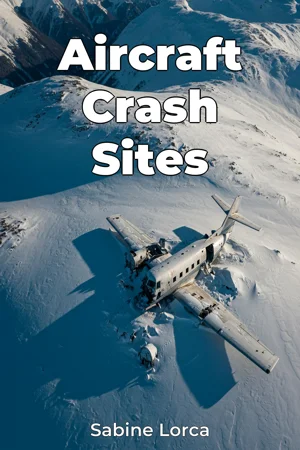
"Aircraft Crash Sites" explores the complex world of aviation accidents, delving into accident investigation and wreckage recovery. It examines how investigators meticulously secure crash sites, collect evidence, and determine causes, often balancing the need for thoroughness with environmental concerns and safety protocols. Readers gain insights into the National Transportation Safety Board (NTSB) procedures and the evolution of aviation safety standards. The book highlights the critical nature of these operations, not only for preventing future occurrences but also for honoring the memory of those lost. The book uniquely emphasizes the holistic approach required for effective crash site management, balancing investigation, recovery, and environmental protection. It integrates military history by addressing military aircraft accidents and true crime aspects through forensic analysis. Through real-world case studies, accident reports, and detailed visuals, the book progresses from preliminary hazard assessment and fire suppression techniques to wreckage recovery in varied terrains and post-recovery environmental remediation. It also explores the emotional challenges faced by investigators and recovery teams. This comprehensive coverage makes it valuable to aviation enthusiasts, accident investigators, first responders, and military personnel.
Book Details
ISBN
9788235293619
Publisher
Publifye AS
Your Licenses
You don't own any licenses for this book
Purchase a license below to unlock this book and download the EPUB.
Purchase License
Select a tier to unlock this book
Need bulk licensing?
Contact us for enterprise agreements.