
About This Book
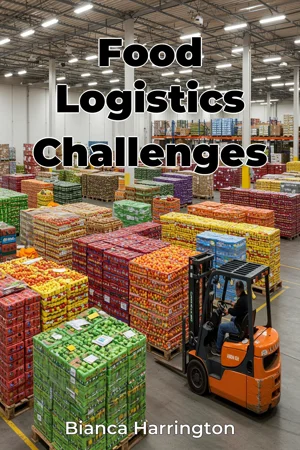
How prepared are we to feed the world tomorrow? "Food Logistics Challenges" delves into the intricate web of activities that bring food from farm to table, exposing vulnerabilities within transportation, storage, and demand forecasting that impact food supply chains globally. This book explores these critical areas, essential for anyone involved in or affected by our food systems. This book aims to provide a comprehensive understanding of the complexities inherent in modern food logistics. We examine how inefficiencies in food transportation contribute to waste and increased costs, analyze the impact of inadequate storage infrastructure on food safety and availability, and investigate the challenges of predicting and responding to demand fluctuations in diverse markets. These topics are critical because the rising global population, coupled with climate change and geopolitical instability, places unprecedented strain on food supply chains. Understanding these challenges is the first step toward building more resilient and sustainable systems. We present a structured analysis, beginning with an introduction to the fundamental concepts of food logistics and supply chain management. The book then delves into three main areas: transportation, storage, and demand management. The section on transportation explores various modes of transport, from road and rail to air and sea, evaluating their efficiency, cost-effectiveness, and environmental impact. We analyze the impact of transportation infrastructure, regulations, and technological advancements on food distribution, with case studies illustrating successful and unsuccessful strategies. The storage section examines different storage technologies, focusing on preservation techniques, temperature control, and inventory management, and assess the role of warehousing and distribution centers in maintaining food quality and reducing spoilage. Lastly, the demand management section explores the impact of consumer behavior, market trends, and external factors such as weather patterns and economic conditions on food demand. We examine forecasting techniques and strategies for managing inventory levels to minimize waste and ensure product availability. The culmination of these sections provides a holistic perspective on the interconnectedness of these elements and their impact on food security. The book relies on a combination of quantitative data analysis, case studies, and industry insights to support its arguments. We draw upon data from government agencies, industry reports, academic research, and real-world examples from various regions and food sectors. Our unique approach blends theoretical frameworks with practical applications, providing readers with actionable insights. This book intersects with other fields like environmental science, public policy, and technology. The environmental impact of transportation and storage, policies regulating food safety and distribution, and technological innovations in areas like cold chain logistics and data analytics all influence the food supply chain. This book takes a comprehensive, data-driven approach, integrating academic rigor with practical insights. We present information in a clear, accessible style, avoiding jargon while maintaining accuracy. Designed for professionals in the food industry, policymakers, academics, and anyone interested in sustainable food systems, this book provides an essential resource for understanding and addressing the challenges of modern food logistics. The scope of this book focuses primarily on the operational and logistical aspects of food supply chains, with a particular emphasis on post-harvest activities. While we acknowledge the importance of agricultural production, our primary focus is on the movement, storage, and distribution of food products. The insights within can be directly applied to improve operational efficiency, reduce waste, optimize resource utilization, and enhance food security. Supply chain managers can use the information to make informed decisions about transportation modes, storage technologies, and inventory management strategies. Policymakers can use our analysis to develop effective regulations and incentive programs that promote sustainable food logistics. This book addresses ongoing debates about the optimal balance between cost efficiency and sustainability in food supply chains. Should companies prioritize minimizing costs, even if it means compromising environmental standards? Or should they invest in more sustainable practices, even if it means incurring higher costs? We explore these questions, presenting evidence-based arguments and case studies to inform the debate.
How prepared are we to feed the world tomorrow? "Food Logistics Challenges" delves into the intricate web of activities that bring food from farm to table, exposing vulnerabilities within transportation, storage, and demand forecasting that impact food supply chains globally. This book explores these critical areas, essential for anyone involved in or affected by our food systems. This book aims to provide a comprehensive understanding of the complexities inherent in modern food logistics. We examine how inefficiencies in food transportation contribute to waste and increased costs, analyze the impact of inadequate storage infrastructure on food safety and availability, and investigate the challenges of predicting and responding to demand fluctuations in diverse markets. These topics are critical because the rising global population, coupled with climate change and geopolitical instability, places unprecedented strain on food supply chains. Understanding these challenges is the first step toward building more resilient and sustainable systems. We present a structured analysis, beginning with an introduction to the fundamental concepts of food logistics and supply chain management. The book then delves into three main areas: transportation, storage, and demand management. The section on transportation explores various modes of transport, from road and rail to air and sea, evaluating their efficiency, cost-effectiveness, and environmental impact. We analyze the impact of transportation infrastructure, regulations, and technological advancements on food distribution, with case studies illustrating successful and unsuccessful strategies. The storage section examines different storage technologies, focusing on preservation techniques, temperature control, and inventory management, and assess the role of warehousing and distribution centers in maintaining food quality and reducing spoilage. Lastly, the demand management section explores the impact of consumer behavior, market trends, and external factors such as weather patterns and economic conditions on food demand. We examine forecasting techniques and strategies for managing inventory levels to minimize waste and ensure product availability. The culmination of these sections provides a holistic perspective on the interconnectedness of these elements and their impact on food security. The book relies on a combination of quantitative data analysis, case studies, and industry insights to support its arguments. We draw upon data from government agencies, industry reports, academic research, and real-world examples from various regions and food sectors. Our unique approach blends theoretical frameworks with practical applications, providing readers with actionable insights. This book intersects with other fields like environmental science, public policy, and technology. The environmental impact of transportation and storage, policies regulating food safety and distribution, and technological innovations in areas like cold chain logistics and data analytics all influence the food supply chain. This book takes a comprehensive, data-driven approach, integrating academic rigor with practical insights. We present information in a clear, accessible style, avoiding jargon while maintaining accuracy. Designed for professionals in the food industry, policymakers, academics, and anyone interested in sustainable food systems, this book provides an essential resource for understanding and addressing the challenges of modern food logistics. The scope of this book focuses primarily on the operational and logistical aspects of food supply chains, with a particular emphasis on post-harvest activities. While we acknowledge the importance of agricultural production, our primary focus is on the movement, storage, and distribution of food products. The insights within can be directly applied to improve operational efficiency, reduce waste, optimize resource utilization, and enhance food security. Supply chain managers can use the information to make informed decisions about transportation modes, storage technologies, and inventory management strategies. Policymakers can use our analysis to develop effective regulations and incentive programs that promote sustainable food logistics. This book addresses ongoing debates about the optimal balance between cost efficiency and sustainability in food supply chains. Should companies prioritize minimizing costs, even if it means compromising environmental standards? Or should they invest in more sustainable practices, even if it means incurring higher costs? We explore these questions, presenting evidence-based arguments and case studies to inform the debate.
"Food Logistics Challenges" explores the complex world of food supply chains, examining how food gets from farms to consumers. It highlights the vulnerabilities in food transportation, storage, and demand forecasting that impact global food security. Did you know that inefficiencies in food transportation contribute significantly to waste and increased costs? The book dives into these critical areas, offering insights for professionals, policymakers, and anyone concerned about sustainable food systems. The book analyzes various transportation modes, storage technologies, and demand management strategies. It uses quantitative data, case studies, and industry insights to provide a comprehensive understanding. For example, temperature control in storage is crucial for preserving food quality and reducing spoilage. This data-driven approach blends practical applications with theoretical frameworks, providing actionable insights for improving operational efficiency and reducing waste. The book progresses systematically, starting with core concepts and then delving into transportation, storage, and demand management. It addresses the balance between cost efficiency and sustainability, making it a valuable resource for understanding and addressing the challenges in modern food logistics and supply chain management.
Book Details
ISBN
9788235293527
Publisher
Publifye AS
Your Licenses
You don't own any licenses for this book
Purchase a license below to unlock this book and download the EPUB.
Purchase License
Select a tier to unlock this book
Need bulk licensing?
Contact us for enterprise agreements.