
About This Book
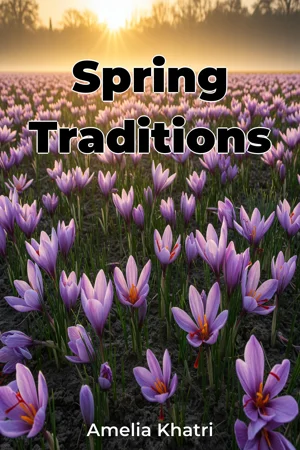
Across the globe, as winter's grip loosens, humanity awakens to the vibrant promise of spring. But what threads connect the diverse celebrations that mark this season of renewal? "Spring Traditions" delves into the heart of these worldwide festivities to reveal shared human experiences of hope, rebirth, and community. This book uncovers the rich tapestry of spring festivals, focusing on three key celebrations: Holi, Nowruz, and Easter. Understanding these festivals provides insight into the cultural, religious, and historical forces that shape human expression. Ignoring these traditions limits our understanding of global interconnectedness and human resilience. "Spring Traditions" explores the historical context of each celebration, tracing their origins and evolution over centuries. It examines the social structures and cultural practices that have shaped these events, enriching our understanding of how communities preserve and adapt their traditions. The central argument of this book is that spring festivals, despite their diverse forms, represent universal human aspirations for renewal and connection. By examining the common themes and variations within these celebrations, we gain a deeper appreciation of human ingenuity and the enduring power of hope. The book begins by introducing the concept of spring as a symbol of rebirth and renewal across various cultures and religions. It then devotes individual sections to Holi, Nowruz, and Easter, exploring their unique rituals, symbols, and historical development. Each section examines the festival’s origin, its transformation over time, and its significance for contemporary practitioners. The book culminates by drawing parallels between these festivals and highlighting the shared human desires for hope, community, and a fresh start, offering practical reflections on how these traditions continue to shape modern life. The analysis presented in "Spring Traditions" is grounded in historical records, anthropological studies, religious texts, and firsthand accounts. The book draws upon a wide range of primary and secondary sources to provide a comprehensive and nuanced understanding of each festival. It uses comparative analysis to highlight both the unique characteristics of each celebration and the common threads that bind them together. "Spring Traditions" connects the study of world history to the fields of religious studies, cultural anthropology, and sociology. By exploring the intersection of these disciplines, the book provides a holistic understanding of spring festivals as expressions of both individual faith and collective identity. This book offers a unique perspective by comparing and contrasting seemingly disparate spring celebrations, revealing common themes and shared human experiences. This comparative approach allows readers to appreciate the diversity of human culture while also recognizing the underlying unity of human aspirations. "Spring Traditions" employs an accessible and engaging writing style, making complex historical and cultural information understandable for a broad audience. The book balances scholarly rigor with narrative storytelling to bring these festivals to life and connect readers to the human experiences they represent. The book is intended for general readers interested in world history, religious studies, and cultural traditions. It will also appeal to students and educators seeking a comprehensive and engaging overview of spring festivals. "Spring Traditions" provides valuable insights into the diverse ways that cultures around the world celebrate renewal, hope, and community. As a work of non-fiction in the genres of World History, Religion, and History World, "Spring Traditions" adheres to the conventions of accuracy, objectivity, and thorough research. While the book aims to provide a broad overview of spring festivals, it acknowledges the limitations of its scope and encourages readers to explore further the rich diversity of human traditions. The book focuses on Holi, Nowruz, and Easter as case studies, recognizing that many other spring festivals exist worldwide. The information presented in "Spring Traditions" can be applied to foster cross-cultural understanding and promote appreciation for diversity. By learning about different traditions, readers can develop empathy for others and work towards building a more inclusive and interconnected world. While spring festivals are generally associated with positive themes of renewal and hope, the book acknowledges that these celebrations can also be sites of conflict and contestation. For example, debates may arise regarding the interpretation of religious rituals or the appropriation of cultural symbols. "Spring Traditions" addresses these controversies in a balanced and nuanced manner, promoting critical thinking and informed dialogue.
Across the globe, as winter's grip loosens, humanity awakens to the vibrant promise of spring. But what threads connect the diverse celebrations that mark this season of renewal? "Spring Traditions" delves into the heart of these worldwide festivities to reveal shared human experiences of hope, rebirth, and community. This book uncovers the rich tapestry of spring festivals, focusing on three key celebrations: Holi, Nowruz, and Easter. Understanding these festivals provides insight into the cultural, religious, and historical forces that shape human expression. Ignoring these traditions limits our understanding of global interconnectedness and human resilience. "Spring Traditions" explores the historical context of each celebration, tracing their origins and evolution over centuries. It examines the social structures and cultural practices that have shaped these events, enriching our understanding of how communities preserve and adapt their traditions. The central argument of this book is that spring festivals, despite their diverse forms, represent universal human aspirations for renewal and connection. By examining the common themes and variations within these celebrations, we gain a deeper appreciation of human ingenuity and the enduring power of hope. The book begins by introducing the concept of spring as a symbol of rebirth and renewal across various cultures and religions. It then devotes individual sections to Holi, Nowruz, and Easter, exploring their unique rituals, symbols, and historical development. Each section examines the festival’s origin, its transformation over time, and its significance for contemporary practitioners. The book culminates by drawing parallels between these festivals and highlighting the shared human desires for hope, community, and a fresh start, offering practical reflections on how these traditions continue to shape modern life. The analysis presented in "Spring Traditions" is grounded in historical records, anthropological studies, religious texts, and firsthand accounts. The book draws upon a wide range of primary and secondary sources to provide a comprehensive and nuanced understanding of each festival. It uses comparative analysis to highlight both the unique characteristics of each celebration and the common threads that bind them together. "Spring Traditions" connects the study of world history to the fields of religious studies, cultural anthropology, and sociology. By exploring the intersection of these disciplines, the book provides a holistic understanding of spring festivals as expressions of both individual faith and collective identity. This book offers a unique perspective by comparing and contrasting seemingly disparate spring celebrations, revealing common themes and shared human experiences. This comparative approach allows readers to appreciate the diversity of human culture while also recognizing the underlying unity of human aspirations. "Spring Traditions" employs an accessible and engaging writing style, making complex historical and cultural information understandable for a broad audience. The book balances scholarly rigor with narrative storytelling to bring these festivals to life and connect readers to the human experiences they represent. The book is intended for general readers interested in world history, religious studies, and cultural traditions. It will also appeal to students and educators seeking a comprehensive and engaging overview of spring festivals. "Spring Traditions" provides valuable insights into the diverse ways that cultures around the world celebrate renewal, hope, and community. As a work of non-fiction in the genres of World History, Religion, and History World, "Spring Traditions" adheres to the conventions of accuracy, objectivity, and thorough research. While the book aims to provide a broad overview of spring festivals, it acknowledges the limitations of its scope and encourages readers to explore further the rich diversity of human traditions. The book focuses on Holi, Nowruz, and Easter as case studies, recognizing that many other spring festivals exist worldwide. The information presented in "Spring Traditions" can be applied to foster cross-cultural understanding and promote appreciation for diversity. By learning about different traditions, readers can develop empathy for others and work towards building a more inclusive and interconnected world. While spring festivals are generally associated with positive themes of renewal and hope, the book acknowledges that these celebrations can also be sites of conflict and contestation. For example, debates may arise regarding the interpretation of religious rituals or the appropriation of cultural symbols. "Spring Traditions" addresses these controversies in a balanced and nuanced manner, promoting critical thinking and informed dialogue.
"Spring Traditions" explores the universal human experience of renewal and hope through the lens of spring festivals around the world. Focusing on Holi, Nowruz, and Easter, the book reveals how diverse cultures celebrate the season of rebirth. These celebrations, despite their unique expressions, share common themes, reflecting humanity's enduring desire for community and a fresh start. Did you know that Nowruz, the Persian New Year, predates Islam by centuries? Or that the vibrant colors of Holi symbolize the triumph of good over evil and the arrival of spring? The book examines the historical context, social structures, and cultural practices that have shaped these celebrations. By tracing the origins and evolution of each festival, "Spring Traditions" provides insights into the cultural, religious, and historical forces that influence human expression. The book progresses by introducing the concept of spring as a symbol of rebirth, then delving into the unique rituals and symbols of Holi, Nowruz, and Easter, culminating in a comparison of these festivals to highlight shared human aspirations. Its comparative approach offers a unique perspective on the diversity of human culture and the underlying unity of human desires.
Book Details
ISBN
9788235293404
Publisher
Publifye AS
Your Licenses
You don't own any licenses for this book
Purchase a license below to unlock this book and download the EPUB.
Purchase License
Select a tier to unlock this book
Need bulk licensing?
Contact us for enterprise agreements.