
About This Book
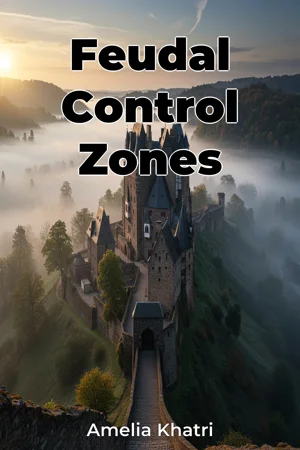
How did a patchwork of loyalties and localized power structures shape the medieval world? "Feudal Control Zones" delves into the intricate web of land ownership, allegiance, and authority that defined medieval governance, offering a comprehensive analysis of how these elements coalesced to form a unique system of control. Understanding feudalism is critical, not just for historians, but for anyone seeking to grasp the roots of modern political and social frameworks. We explore two fundamental concepts: the nature of land as the primary source of wealth and power, and the multifaceted bonds of allegiance that held society together. This book examines the period from roughly the 9th to the 15th centuries, a time when centralized authority weakened and local lords rose to prominence. The analysis begins with the fragmentation of the Carolingian Empire and extends to the consolidation of national monarchies, tracing the evolution of feudal relationships and their impact on political landscapes. The central argument posits that feudalism was not simply a static system of land tenure and service, but a dynamic and constantly evolving framework shaped by local circumstances and power struggles. It provided both a means of defense and a source of stability. The book is structured to provide a clear and coherent understanding of these dynamics. Part one introduces the core concepts of feudalism, examining its origins, key institutions, and the roles of various social classes, from kings and nobles to knights and peasants. Part two focuses on specific case studies across different regions of Europe, illustrating how feudalism manifested in diverse ways and adapted to varying political and economic conditions. We will explore the interplay of local customs, legal traditions, and economic factors that shaped feudal practices in areas such as France, England, and the Holy Roman Empire. Part three analyzes the decline of feudalism, examining the factors that contributed to its erosion, including the rise of centralized states, the growth of a money economy, and the impact of social and technological changes. The book relies on a wide range of primary and secondary sources, including medieval chronicles, legal codes, manorial records, and archaeological evidence. It incorporates recent scholarship on feudalism and utilizes quantitative data to analyze economic trends and demographic shifts. Interdisciplinary connections are drawn with law, economics, and sociology to provide a more nuanced understanding of the social, political, and economic dimensions of feudalism. The book also connects to the broader field of comparative governance. "Feudal Control Zones" offers a fresh perspective by focusing on the dynamic interplay between central and local power, emphasizing the agency of individuals within the feudal system. This stands in contrast to traditional interpretations that often portray feudalism as a rigid and hierarchical structure. Written in a clear and accessible style, this book is intended for students, scholars, and general readers with an interest in medieval history, political science, and European studies. It is particularly valuable for those seeking a comprehensive overview of feudalism and its lasting impact on Western civilization. This work avoids a Eurocentric perspective by including comparative references to feudal-like systems in other parts of the world. While encompassing a broad geographical area and a significant time span, the book primarily concentrates on Western Europe, acknowledging that the complexities of feudalism require a focused approach. Future studies could expand this to Eastern Europe and Asia. The insights provided can be applied to understanding contemporary issues of governance, regionalism, and the distribution of power. The book addresses ongoing scholarly debates about the nature of feudalism, providing a balanced and nuanced assessment of different perspectives. By exploring the complexities of "Feudal Control Zones," we gain a deeper understanding of a pivotal period in history and its enduring legacy.
How did a patchwork of loyalties and localized power structures shape the medieval world? "Feudal Control Zones" delves into the intricate web of land ownership, allegiance, and authority that defined medieval governance, offering a comprehensive analysis of how these elements coalesced to form a unique system of control. Understanding feudalism is critical, not just for historians, but for anyone seeking to grasp the roots of modern political and social frameworks. We explore two fundamental concepts: the nature of land as the primary source of wealth and power, and the multifaceted bonds of allegiance that held society together. This book examines the period from roughly the 9th to the 15th centuries, a time when centralized authority weakened and local lords rose to prominence. The analysis begins with the fragmentation of the Carolingian Empire and extends to the consolidation of national monarchies, tracing the evolution of feudal relationships and their impact on political landscapes. The central argument posits that feudalism was not simply a static system of land tenure and service, but a dynamic and constantly evolving framework shaped by local circumstances and power struggles. It provided both a means of defense and a source of stability. The book is structured to provide a clear and coherent understanding of these dynamics. Part one introduces the core concepts of feudalism, examining its origins, key institutions, and the roles of various social classes, from kings and nobles to knights and peasants. Part two focuses on specific case studies across different regions of Europe, illustrating how feudalism manifested in diverse ways and adapted to varying political and economic conditions. We will explore the interplay of local customs, legal traditions, and economic factors that shaped feudal practices in areas such as France, England, and the Holy Roman Empire. Part three analyzes the decline of feudalism, examining the factors that contributed to its erosion, including the rise of centralized states, the growth of a money economy, and the impact of social and technological changes. The book relies on a wide range of primary and secondary sources, including medieval chronicles, legal codes, manorial records, and archaeological evidence. It incorporates recent scholarship on feudalism and utilizes quantitative data to analyze economic trends and demographic shifts. Interdisciplinary connections are drawn with law, economics, and sociology to provide a more nuanced understanding of the social, political, and economic dimensions of feudalism. The book also connects to the broader field of comparative governance. "Feudal Control Zones" offers a fresh perspective by focusing on the dynamic interplay between central and local power, emphasizing the agency of individuals within the feudal system. This stands in contrast to traditional interpretations that often portray feudalism as a rigid and hierarchical structure. Written in a clear and accessible style, this book is intended for students, scholars, and general readers with an interest in medieval history, political science, and European studies. It is particularly valuable for those seeking a comprehensive overview of feudalism and its lasting impact on Western civilization. This work avoids a Eurocentric perspective by including comparative references to feudal-like systems in other parts of the world. While encompassing a broad geographical area and a significant time span, the book primarily concentrates on Western Europe, acknowledging that the complexities of feudalism require a focused approach. Future studies could expand this to Eastern Europe and Asia. The insights provided can be applied to understanding contemporary issues of governance, regionalism, and the distribution of power. The book addresses ongoing scholarly debates about the nature of feudalism, providing a balanced and nuanced assessment of different perspectives. By exploring the complexities of "Feudal Control Zones," we gain a deeper understanding of a pivotal period in history and its enduring legacy.
"Feudal Control Zones" explores the intricate system of feudalism that shaped medieval governance through land ownership and allegiance. This system wasn't static; it dynamically evolved due to local power struggles, serving as both defense and a source of stability. Intriguingly, the fragmentation of the Carolingian Empire significantly contributed to the rise of local lords, who became central figures in this decentralized power structure. Understanding this medieval history provides insights into the roots of modern political and social frameworks. The book begins by introducing the core concepts of feudalism, such as manorialism and the roles of various social classes. It then progresses to specific regional case studies in Europe, illustrating the diverse manifestations of feudalism under varying political and economic conditions. Finally, it analyzes the decline of feudalism due to factors like centralized states and the growth of a money economy. This study relies on primary and secondary sources, offering a fresh perspective on the interplay between central and local power.
Book Details
ISBN
9788235293350
Publisher
Publifye AS
Your Licenses
You don't own any licenses for this book
Purchase a license below to unlock this book and download the EPUB.
Purchase License
Select a tier to unlock this book
Need bulk licensing?
Contact us for enterprise agreements.