
About This Book
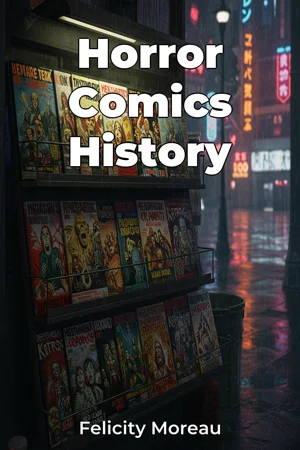
What lurked in the shadows of newsstands, captivating and horrifying a generation? "Horror Comics History" delves into the graphic and often disturbing world of post-war horror comics, exploring not only their immense popularity but also the social anxieties they reflected and the subsequent censorship that nearly extinguished the genre. This book argues that the rise and fall of horror comics provide a crucial lens through which to understand mid-20th century American culture, fears, and the ever-present tension between artistic expression and societal control. The book tackles three principal topics. First, it meticulously charts the ascent of horror comics, examining how artists and writers, freed from wartime restrictions, pushed the boundaries of graphic storytelling. Second, it investigates the moral panic that gripped the nation, fueled by concerns about juvenile delinquency and the alleged corrupting influence of these comics. Third, it dissects the impact of the Comics Code Authority (CCA), a self-regulatory body that effectively sanitized the genre, leading to its decline. These topics are vital because they illuminate a pivotal moment in the history of American media, censorship, and the evolution of popular culture, and underscore the debates that continue to resonate today regarding media influence and artistic freedom. To understand the phenomenon of horror comics, one must consider the historical context of post-World War II America. The nation was grappling with anxieties related to the Cold War, nuclear threat, and rapidly changing social norms. This fear found an outlet in the pages of horror comics, which often served as allegories for these broader societal concerns. Readers do not need prior knowledge of comics, but a basic understanding of mid-20th century American history will enrich their comprehension. The central argument of "Horror Comics History" is that the censorship of horror comics, while ostensibly intended to protect children, ultimately stifled artistic creativity and reflected a deeper cultural discomfort with confronting darker aspects of the human condition. This argument is significant for understanding the long-term effects of censorship on artistic expression and the challenges faced by creators in navigating societal pressures. The book unfolds in a structured manner. It begins with an introduction to the key figures and publishers who pioneered the genre, followed by a detailed analysis of the thematic elements that defined horror comics, such as gore, the supernatural, and psychological terror. The narrative then shifts to the growing public outcry against these comics, exploring the role of concerned parents, educators, and politicians. The establishment of the Comics Code Authority and its profound impact on the industry forms the book's central turning point. Finally, the book examines the legacy of horror comics, exploring their influence on subsequent generations of artists and storytellers, and offering a reflection on the broader implications of censorship for artistic expression. The book draws upon a wide range of primary and secondary sources, including scans of original comics, interviews with surviving artists and writers, archival documents from the CCA, and contemporary articles and editorials. This multi-faceted approach provides a comprehensive and nuanced account of the subject. "Horror Comics History" connects to several other fields of study, including media studies, cultural history, art history, and sociology. By exploring the intersection of these disciplines, the book offers a richer understanding of the cultural forces that shaped the horror comics phenomenon. The book's perspective is unique in its balanced assessment of the arguments for and against censorship, avoiding simplistic narratives and instead exploring the complex interplay of social, economic, and artistic factors. The tone is academic yet accessible, aiming to engage both scholars and general readers with an interest in comics history and American popular culture. The writing style is clear and concise, providing rigorous analysis without sacrificing readability. The target audience includes students and scholars of comics studies, media history, and American culture, as well as comic book enthusiasts and anyone interested in the history of censorship and its impact on artistic expression. The book's value lies in its comprehensive and insightful exploration of a neglected but significant chapter in American cultural history. As a work of history and art, the book relies on archival research, factual accuracy, and a clear presentation of evidence to support its claims. It adheres to the conventions of academic writing while also incorporating visual elements to showcase the artwork of the comics themselves. The book focuses on the period from the late 1940s to the mid-1950s, the peak of horror comics' popularity. While it acknowledges the broader history of horror in literature and art, its primary focus is on the specific phenomenon of horror comics in post-war America. The lessons learned from the rise and fall of horror comics, regarding media regulation, artistic freedom, and the reflection of societal anxieties in popular culture, have real-world applications for understanding contemporary debates about media violence, censorship, and the role of art in society. The book examines the debates surrounding the publication of horror comics and Dr. Fredric Wertham's "Seduction of the Innocent".
What lurked in the shadows of newsstands, captivating and horrifying a generation? "Horror Comics History" delves into the graphic and often disturbing world of post-war horror comics, exploring not only their immense popularity but also the social anxieties they reflected and the subsequent censorship that nearly extinguished the genre. This book argues that the rise and fall of horror comics provide a crucial lens through which to understand mid-20th century American culture, fears, and the ever-present tension between artistic expression and societal control. The book tackles three principal topics. First, it meticulously charts the ascent of horror comics, examining how artists and writers, freed from wartime restrictions, pushed the boundaries of graphic storytelling. Second, it investigates the moral panic that gripped the nation, fueled by concerns about juvenile delinquency and the alleged corrupting influence of these comics. Third, it dissects the impact of the Comics Code Authority (CCA), a self-regulatory body that effectively sanitized the genre, leading to its decline. These topics are vital because they illuminate a pivotal moment in the history of American media, censorship, and the evolution of popular culture, and underscore the debates that continue to resonate today regarding media influence and artistic freedom. To understand the phenomenon of horror comics, one must consider the historical context of post-World War II America. The nation was grappling with anxieties related to the Cold War, nuclear threat, and rapidly changing social norms. This fear found an outlet in the pages of horror comics, which often served as allegories for these broader societal concerns. Readers do not need prior knowledge of comics, but a basic understanding of mid-20th century American history will enrich their comprehension. The central argument of "Horror Comics History" is that the censorship of horror comics, while ostensibly intended to protect children, ultimately stifled artistic creativity and reflected a deeper cultural discomfort with confronting darker aspects of the human condition. This argument is significant for understanding the long-term effects of censorship on artistic expression and the challenges faced by creators in navigating societal pressures. The book unfolds in a structured manner. It begins with an introduction to the key figures and publishers who pioneered the genre, followed by a detailed analysis of the thematic elements that defined horror comics, such as gore, the supernatural, and psychological terror. The narrative then shifts to the growing public outcry against these comics, exploring the role of concerned parents, educators, and politicians. The establishment of the Comics Code Authority and its profound impact on the industry forms the book's central turning point. Finally, the book examines the legacy of horror comics, exploring their influence on subsequent generations of artists and storytellers, and offering a reflection on the broader implications of censorship for artistic expression. The book draws upon a wide range of primary and secondary sources, including scans of original comics, interviews with surviving artists and writers, archival documents from the CCA, and contemporary articles and editorials. This multi-faceted approach provides a comprehensive and nuanced account of the subject. "Horror Comics History" connects to several other fields of study, including media studies, cultural history, art history, and sociology. By exploring the intersection of these disciplines, the book offers a richer understanding of the cultural forces that shaped the horror comics phenomenon. The book's perspective is unique in its balanced assessment of the arguments for and against censorship, avoiding simplistic narratives and instead exploring the complex interplay of social, economic, and artistic factors. The tone is academic yet accessible, aiming to engage both scholars and general readers with an interest in comics history and American popular culture. The writing style is clear and concise, providing rigorous analysis without sacrificing readability. The target audience includes students and scholars of comics studies, media history, and American culture, as well as comic book enthusiasts and anyone interested in the history of censorship and its impact on artistic expression. The book's value lies in its comprehensive and insightful exploration of a neglected but significant chapter in American cultural history. As a work of history and art, the book relies on archival research, factual accuracy, and a clear presentation of evidence to support its claims. It adheres to the conventions of academic writing while also incorporating visual elements to showcase the artwork of the comics themselves. The book focuses on the period from the late 1940s to the mid-1950s, the peak of horror comics' popularity. While it acknowledges the broader history of horror in literature and art, its primary focus is on the specific phenomenon of horror comics in post-war America. The lessons learned from the rise and fall of horror comics, regarding media regulation, artistic freedom, and the reflection of societal anxieties in popular culture, have real-world applications for understanding contemporary debates about media violence, censorship, and the role of art in society. The book examines the debates surrounding the publication of horror comics and Dr. Fredric Wertham's "Seduction of the Innocent".
"Horror Comics History" explores the rise and fall of a controversial art form in post-war America. Delving into the graphic world of horror comics, the book examines their popularity, the social anxieties they mirrored, and the censorship that ultimately curtailed their artistic freedom. The book highlights how these comics, filled with gore and the supernatural, became a focal point in a moral panic fueled by concerns about juvenile delinquency, even leading to the establishment of the Comics Code Authority, which significantly sanitized the industry. The book charts the ascent of horror comics, dissects the moral panic they ignited, and analyzes the lasting impact of censorship. It begins with the pioneers of the genre, moves through the thematic elements that defined these comics, and culminates in the establishment of the Comics Code Authority. This exploration reveals how anxieties about the Cold War and changing social norms found expression in these often disturbing narratives, offering a unique lens through which to view mid-20th century American culture and the ongoing tension between artistic expression and societal control.
Book Details
ISBN
9788235293305
Publisher
Publifye AS
Your Licenses
You don't own any licenses for this book
Purchase a license below to unlock this book and download the EPUB.
Purchase License
Select a tier to unlock this book
Need bulk licensing?
Contact us for enterprise agreements.