
About This Book
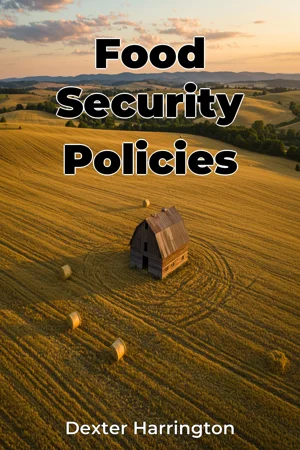
How can governments ensure access to sufficient, safe, and nutritious food for all citizens in an era of increasing climate volatility and global instability? "Food Security Policies" delves into the multifaceted challenges and strategies that governments employ to regulate food supplies, prevent shortages, and guarantee public access to adequate nutrition. This book examines the critical intersection of economics and politics in shaping food systems worldwide. The key topics explored within these pages include governmental approaches to agricultural subsidies and trade regulations, the role of strategic food reserves in mitigating crises, and the development of social safety nets aimed at vulnerable populations. These topics are of paramount importance because food security is not merely a matter of agricultural output; it’s a cornerstone of social stability, public health, and economic prosperity. Insufficient or inconsistent access to food can trigger civil unrest, hinder economic development, and exacerbate existing inequalities. Understanding present-day food security policies necessitates a grasp of historical context. The book examines historical case studies of famine and food crises, tracing the evolution of governmental interventions from rudimentary price controls to sophisticated, data-driven policy frameworks. It also takes into account the scientific advancements in agricultural technology and their influence on policy decisions, acknowledging the interplay between technological innovation and regulatory oversight. The central argument of "Food Security Policies" is that effective food security requires a holistic, adaptive policy framework that balances market efficiency with social equity, and proactively addresses emerging threats. The book posits that governments must move beyond reactive crisis management and instead foster resilient food systems capable of withstanding a range of potential shocks. The book's structure follows a logical progression: First, foundational concepts such as food availability, food access, food utilization, and food system stability are defined. Then, the book examines the policy tools available to governments, including agricultural subsidies, international trade agreements, food safety regulations, and social welfare programs. Subsequent chapters analyze case studies from different countries, highlighting both successful and unsuccessful interventions. The book culminates in a discussion of emerging challenges, such as climate change, resource scarcity, and geopolitical instability, and offers policy recommendations for building more resilient and equitable food systems. The arguments presented are supported by empirical evidence drawn from a variety of sources, including government reports, academic studies, and data from international organizations like the Food and Agriculture Organization (FAO) and the World Bank. The book also incorporates econometric analysis to evaluate the effectiveness of different policy interventions and identify best practices. "Food Security Policies" connects to several other fields of study, including environmental science, public health, and international development. The environmental connections are evident in the discussion of sustainable agriculture and the impact of climate change on food production. Public health considerations are woven throughout the book, particularly in the analysis of nutritional interventions and food safety regulations. The book’s focus on international trade and development links it directly to discussions of global poverty and inequality. A distinctive approach lies in its emphasis on policy integration, advocating for a coordinated approach that aligns agricultural, trade, environmental, and social policies to achieve food security goals. This differs from more siloed analyses that treat food security as solely an agricultural issue. The writing style is academic but accessible, aiming to present complex economic and political concepts in a clear and concise manner. The book is intended for policymakers, students, researchers, and anyone interested in understanding how governments shape our food systems. It provides valuable insights for those working in agriculture, public health, international development, and related fields. The scope of the book is global, examining food security policies in both developed and developing countries. However, it is not intended to be an exhaustive catalog of every food policy in every country. Instead, it focuses on identifying common challenges and exploring a range of policy approaches. The information presented in "Food Security Policies" can be applied in practical ways by policymakers seeking to design more effective food security strategies, by researchers studying the impact of government interventions on food systems, and by citizens seeking to understand the forces that shape their access to food. The book tackles some of the ongoing debates regarding the optimal level of government intervention in food markets. It explores the tension between free market principles and the need to protect vulnerable populations, and it examines the arguments for and against different types of agricultural subsidies.
How can governments ensure access to sufficient, safe, and nutritious food for all citizens in an era of increasing climate volatility and global instability? "Food Security Policies" delves into the multifaceted challenges and strategies that governments employ to regulate food supplies, prevent shortages, and guarantee public access to adequate nutrition. This book examines the critical intersection of economics and politics in shaping food systems worldwide. The key topics explored within these pages include governmental approaches to agricultural subsidies and trade regulations, the role of strategic food reserves in mitigating crises, and the development of social safety nets aimed at vulnerable populations. These topics are of paramount importance because food security is not merely a matter of agricultural output; it’s a cornerstone of social stability, public health, and economic prosperity. Insufficient or inconsistent access to food can trigger civil unrest, hinder economic development, and exacerbate existing inequalities. Understanding present-day food security policies necessitates a grasp of historical context. The book examines historical case studies of famine and food crises, tracing the evolution of governmental interventions from rudimentary price controls to sophisticated, data-driven policy frameworks. It also takes into account the scientific advancements in agricultural technology and their influence on policy decisions, acknowledging the interplay between technological innovation and regulatory oversight. The central argument of "Food Security Policies" is that effective food security requires a holistic, adaptive policy framework that balances market efficiency with social equity, and proactively addresses emerging threats. The book posits that governments must move beyond reactive crisis management and instead foster resilient food systems capable of withstanding a range of potential shocks. The book's structure follows a logical progression: First, foundational concepts such as food availability, food access, food utilization, and food system stability are defined. Then, the book examines the policy tools available to governments, including agricultural subsidies, international trade agreements, food safety regulations, and social welfare programs. Subsequent chapters analyze case studies from different countries, highlighting both successful and unsuccessful interventions. The book culminates in a discussion of emerging challenges, such as climate change, resource scarcity, and geopolitical instability, and offers policy recommendations for building more resilient and equitable food systems. The arguments presented are supported by empirical evidence drawn from a variety of sources, including government reports, academic studies, and data from international organizations like the Food and Agriculture Organization (FAO) and the World Bank. The book also incorporates econometric analysis to evaluate the effectiveness of different policy interventions and identify best practices. "Food Security Policies" connects to several other fields of study, including environmental science, public health, and international development. The environmental connections are evident in the discussion of sustainable agriculture and the impact of climate change on food production. Public health considerations are woven throughout the book, particularly in the analysis of nutritional interventions and food safety regulations. The book’s focus on international trade and development links it directly to discussions of global poverty and inequality. A distinctive approach lies in its emphasis on policy integration, advocating for a coordinated approach that aligns agricultural, trade, environmental, and social policies to achieve food security goals. This differs from more siloed analyses that treat food security as solely an agricultural issue. The writing style is academic but accessible, aiming to present complex economic and political concepts in a clear and concise manner. The book is intended for policymakers, students, researchers, and anyone interested in understanding how governments shape our food systems. It provides valuable insights for those working in agriculture, public health, international development, and related fields. The scope of the book is global, examining food security policies in both developed and developing countries. However, it is not intended to be an exhaustive catalog of every food policy in every country. Instead, it focuses on identifying common challenges and exploring a range of policy approaches. The information presented in "Food Security Policies" can be applied in practical ways by policymakers seeking to design more effective food security strategies, by researchers studying the impact of government interventions on food systems, and by citizens seeking to understand the forces that shape their access to food. The book tackles some of the ongoing debates regarding the optimal level of government intervention in food markets. It explores the tension between free market principles and the need to protect vulnerable populations, and it examines the arguments for and against different types of agricultural subsidies.
"Food Security Policies" examines how governments worldwide navigate the complex challenge of ensuring stable access to safe and nutritious food for all citizens. It delves into the intersection of economics and politics, exploring governmental regulations, agricultural subsidies, and the creation of social safety nets to protect vulnerable populations from food shortages and crises. The book uniquely emphasizes the need for integrated policies, combining agricultural, trade, and environmental strategies, highlighting that effective food security extends beyond mere agricultural output, impacting social stability, public health, and economic prosperity. The book progresses logically, first defining foundational concepts like food access and utilization. It then analyzes policy tools available to governments, such as international trade agreements and food safety regulations. Case studies from various countries illustrate successful and unsuccessful interventions. The book culminates by addressing emerging challenges like climate volatility and resource scarcity and offers policy recommendations for building more resilient food systems. The analysis includes empirical evidence and econometric analysis, making it valuable for policymakers, researchers, and anyone interested in understanding the forces shaping our food systems.
Book Details
ISBN
9788235293220
Publisher
Publifye AS
Your Licenses
You don't own any licenses for this book
Purchase a license below to unlock this book and download the EPUB.
Purchase License
Select a tier to unlock this book
Need bulk licensing?
Contact us for enterprise agreements.