
About This Book
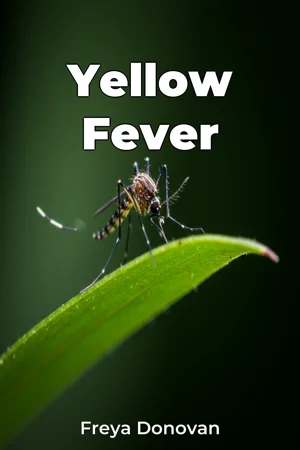
Could a single mosquito bite lead to organ failure and death? The answer is a resounding yes, if that mosquito carries the yellow fever virus. This book, "Yellow Fever," delves into the multifaceted aspects of this dangerous infectious disease, focusing on its transmission, pathogenesis, prevention, and global impact. Understanding yellow fever is crucial not only for travelers venturing into endemic regions but also for public health officials striving to eradicate the disease and protect vulnerable populations. This book aims to provide a comprehensive understanding of yellow fever by exploring its historical context, biological mechanisms, and current strategies for prevention and control. The central argument is that while yellow fever remains a significant threat, particularly in tropical regions of Africa and South America, targeted vaccination programs and mosquito control measures can effectively mitigate its spread and impact. This argument is vital because many perceive yellow fever as a disease of the past, leading to complacency in vaccination efforts and inadequate resource allocation for mosquito control. To support this argument, the book will be structured in three major parts. First, it will introduce the history of yellow fever, tracing its origins, its devastating impact on past populations (particularly during the construction of the Panama Canal), and the scientific breakthroughs that led to the identification of the virus and its vector. This section will provide crucial context for understanding the disease's current challenges. Second, the book will delve into the biological aspects of yellow fever, including the virus's structure and replication cycle, its transmission dynamics via the Aedes mosquito, and the disease's pathogenesis in humans. This section will examine the various stages of infection, from initial flu-like symptoms to the development of jaundice, hemorrhage, and organ failure. It will also explore the immunological responses to the virus and the factors that contribute to severe disease outcomes. Third, the book will focus on strategies for preventing and controlling yellow fever. This section will thoroughly examine the yellow fever vaccine, detailing its efficacy, safety profile, and global distribution. It will also address the challenges of vaccine production and delivery, particularly in resource-limited settings. In addition, the book will explore various mosquito control measures, including insecticide spraying, larval control, and environmental management. Finally, the book will touch upon the importance of surveillance and early detection in preventing outbreaks and minimizing their impact, including the challenges presented by urban transmission cycles. The evidence presented in the book will draw from a wide range of sources, including peer-reviewed scientific studies, reports from international health organizations such as the World Health Organization (WHO) and the Centers for Disease Control and Prevention (CDC), and historical accounts of yellow fever outbreaks. The book will also incorporate data from epidemiological studies, clinical trials, and laboratory research to provide a comprehensive and up-to-date account of the disease. "Yellow Fever" connects to other fields such as epidemiology, virology, and entomology. Understanding the epidemiological patterns of the disease is essential for targeting interventions effectively. Virological research provides insights into the virus's evolution and mechanisms of pathogenesis. Entomological studies are crucial for understanding mosquito behavior and developing effective control strategies. This book takes a practical approach, emphasizing the importance of translating scientific knowledge into effective public health interventions. The tone will be informative and accessible, making the complex scientific information understandable to a broad audience. The target audience includes healthcare professionals, public health students, medical researchers, travelers to endemic regions, and anyone interested in learning more about infectious diseases. This book will be valuable to them because it provides a comprehensive and up-to-date account of yellow fever, equipping them with the knowledge and tools to protect themselves and others from this deadly disease. As a work of public health and infectious diseases non-fiction, this book adheres to strict standards of accuracy and objectivity. It avoids sensationalism and presents information in a clear and unbiased manner. The scope of the book is limited to yellow fever, and will not extensively cover other flavivirus infections. The book will address ongoing debates about vaccine strategies and the use of insecticides in mosquito control, acknowledging the complexities and uncertainties involved. The information in this book can be applied practically by readers in several ways. Travelers can use the book to inform their decisions about vaccination and mosquito avoidance. Healthcare professionals can use the book to improve their diagnosis and management of yellow fever cases. Public health officials can use the book to develop and implement effective control programs.
Could a single mosquito bite lead to organ failure and death? The answer is a resounding yes, if that mosquito carries the yellow fever virus. This book, "Yellow Fever," delves into the multifaceted aspects of this dangerous infectious disease, focusing on its transmission, pathogenesis, prevention, and global impact. Understanding yellow fever is crucial not only for travelers venturing into endemic regions but also for public health officials striving to eradicate the disease and protect vulnerable populations. This book aims to provide a comprehensive understanding of yellow fever by exploring its historical context, biological mechanisms, and current strategies for prevention and control. The central argument is that while yellow fever remains a significant threat, particularly in tropical regions of Africa and South America, targeted vaccination programs and mosquito control measures can effectively mitigate its spread and impact. This argument is vital because many perceive yellow fever as a disease of the past, leading to complacency in vaccination efforts and inadequate resource allocation for mosquito control. To support this argument, the book will be structured in three major parts. First, it will introduce the history of yellow fever, tracing its origins, its devastating impact on past populations (particularly during the construction of the Panama Canal), and the scientific breakthroughs that led to the identification of the virus and its vector. This section will provide crucial context for understanding the disease's current challenges. Second, the book will delve into the biological aspects of yellow fever, including the virus's structure and replication cycle, its transmission dynamics via the Aedes mosquito, and the disease's pathogenesis in humans. This section will examine the various stages of infection, from initial flu-like symptoms to the development of jaundice, hemorrhage, and organ failure. It will also explore the immunological responses to the virus and the factors that contribute to severe disease outcomes. Third, the book will focus on strategies for preventing and controlling yellow fever. This section will thoroughly examine the yellow fever vaccine, detailing its efficacy, safety profile, and global distribution. It will also address the challenges of vaccine production and delivery, particularly in resource-limited settings. In addition, the book will explore various mosquito control measures, including insecticide spraying, larval control, and environmental management. Finally, the book will touch upon the importance of surveillance and early detection in preventing outbreaks and minimizing their impact, including the challenges presented by urban transmission cycles. The evidence presented in the book will draw from a wide range of sources, including peer-reviewed scientific studies, reports from international health organizations such as the World Health Organization (WHO) and the Centers for Disease Control and Prevention (CDC), and historical accounts of yellow fever outbreaks. The book will also incorporate data from epidemiological studies, clinical trials, and laboratory research to provide a comprehensive and up-to-date account of the disease. "Yellow Fever" connects to other fields such as epidemiology, virology, and entomology. Understanding the epidemiological patterns of the disease is essential for targeting interventions effectively. Virological research provides insights into the virus's evolution and mechanisms of pathogenesis. Entomological studies are crucial for understanding mosquito behavior and developing effective control strategies. This book takes a practical approach, emphasizing the importance of translating scientific knowledge into effective public health interventions. The tone will be informative and accessible, making the complex scientific information understandable to a broad audience. The target audience includes healthcare professionals, public health students, medical researchers, travelers to endemic regions, and anyone interested in learning more about infectious diseases. This book will be valuable to them because it provides a comprehensive and up-to-date account of yellow fever, equipping them with the knowledge and tools to protect themselves and others from this deadly disease. As a work of public health and infectious diseases non-fiction, this book adheres to strict standards of accuracy and objectivity. It avoids sensationalism and presents information in a clear and unbiased manner. The scope of the book is limited to yellow fever, and will not extensively cover other flavivirus infections. The book will address ongoing debates about vaccine strategies and the use of insecticides in mosquito control, acknowledging the complexities and uncertainties involved. The information in this book can be applied practically by readers in several ways. Travelers can use the book to inform their decisions about vaccination and mosquito avoidance. Healthcare professionals can use the book to improve their diagnosis and management of yellow fever cases. Public health officials can use the book to develop and implement effective control programs.
"Yellow Fever" offers a comprehensive exploration of this dangerous infectious disease, relevant for public health professionals, travelers, and anyone interested in viral diseases. The book examines the disease's transmission via the Aedes mosquito, its pathogenesis leading to organ failure, and crucial strategies for disease prevention through vaccination and mosquito control. Readers will gain insight into the historical impact of yellow fever, including its devastating effects during the Panama Canal construction, and understand why, despite advancements, it remains a significant public health challenge, especially in Africa and South America. The book progresses systematically, starting with the history of yellow fever and the breakthroughs in identifying the virus. It then delves into the virology, exploring the virus's structure, replication, and the pathogenesis of the disease, including the progression from flu-like symptoms to jaundice and hemorrhage. Finally, it addresses strategies for prevention, thoroughly examining the yellow fever vaccine and mosquito control measures, emphasizing the importance of surveillance and early detection. Drawing on scientific studies, WHO and CDC reports, the book adopts a practical approach, translating complex scientific knowledge into actionable public health interventions.
Book Details
ISBN
9788235293060
Publisher
Publifye AS
Your Licenses
You don't own any licenses for this book
Purchase a license below to unlock this book and download the EPUB.
Purchase License
Select a tier to unlock this book
Need bulk licensing?
Contact us for enterprise agreements.