
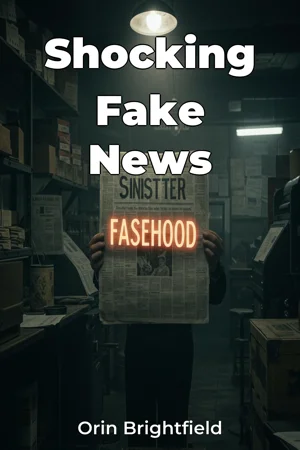
About This Book
Have you ever wondered how a lie, meticulously crafted and widely disseminated, could alter the course of history? "Shocking Fake News" delves into the unsettling reality of how fabricated information has manipulated public opinion, incited mass hysteria, and convinced millions to embrace utterly false beliefs. This book is not just a catalog of falsehoods; it's an examination of the profound impact these deceptions have had on our world. We will explore three key areas: the anatomy of fake news, its historical consequences, and the psychological vulnerabilities that make us susceptible to its influence. Understanding these aspects is crucial in an era where misinformation spreads rapidly through digital channels, threatening the foundations of informed decision-making and democratic processes. To fully appreciate the significance of fake news, we must consider the historical and social context in which it operates. From ancient rumors that sparked wars to modern-day social media campaigns that sway elections, the spread of misinformation has always been a powerful force. The book provides the essential background necessary to understand how this phenomenon has evolved. "Shocking Fake News" argues that fake news, while not a new phenomenon, poses an unprecedented threat in the digital age due to its scale, speed, and accessibility. Combating this threat requires understanding its origins, mechanisms, and impacts, as well as developing critical thinking skills to discern fact from fiction. This information is vital for anyone seeking to navigate the complex information landscape of the 21st century. The book begins by defining and categorizing different types of fake news, ranging from simple errors and satire to deliberate disinformation campaigns. It then presents detailed case studies of historical events shaped by fabricated information, such as the Reichstag fire and its use by the Nazi party to consolidate power, sensationalized accounts of the Spanish-American War driven by yellow journalism, and the more recent Pizzagate conspiracy theory and its real-world consequences. Each case study analyzes the origin of the fake news, its spread through various media, the motivations of those who created and disseminated it, and its ultimate impact on society. The book culminates by exploring strategies for identifying and combating fake news, including media literacy education, fact-checking initiatives, and technological solutions. The evidence presented is drawn from a variety of sources, including historical documents, academic research, media reports, and interviews with experts in journalism, psychology, and political science. The book also analyzes data from social media platforms to illustrate how fake news spreads online. This book connects to several other fields, including political science (examining the role of fake news in elections and political polarization), psychology (exploring the cognitive biases that make individuals susceptible to misinformation), and communications (analyzing the strategies used to create and disseminate fake news). By integrating these perspectives, the book offers a comprehensive understanding of the phenomenon. "Shocking Fake News" adopts a fact-based, narrative non-fiction approach, presenting complex information in a clear and engaging style. The book avoids jargon and technical language, making it accessible to a broad audience while maintaining scholarly rigor. It is relevant for students, educators, journalists, policymakers, and anyone concerned about the impact of misinformation on society. The scope of the book is limited to analyzing specific cases of fake news and their consequences, rather than providing a comprehensive history of propaganda or a theoretical framework for understanding all forms of deception. It focuses primarily on examples from the 20th and 21st centuries, with some relevant historical antecedents for context. The information presented in "Shocking Fake News" has practical applications for readers seeking to improve their media literacy skills, protect themselves from misinformation, and become more informed and engaged citizens. By understanding the tactics used to create and spread fake news, readers can develop critical thinking skills to discern fact from fiction and actively combat the spread of misinformation in their own communities. The book also engages with ongoing debates about the role of social media platforms in regulating fake news and the balance between freedom of speech and the need to protect society from harmful misinformation. "Shocking Fake News" provides a balanced and nuanced perspective on these complex issues, offering practical recommendations for addressing the challenge of fake news in the digital age.
Have you ever wondered how a lie, meticulously crafted and widely disseminated, could alter the course of history? "Shocking Fake News" delves into the unsettling reality of how fabricated information has manipulated public opinion, incited mass hysteria, and convinced millions to embrace utterly false beliefs. This book is not just a catalog of falsehoods; it's an examination of the profound impact these deceptions have had on our world. We will explore three key areas: the anatomy of fake news, its historical consequences, and the psychological vulnerabilities that make us susceptible to its influence. Understanding these aspects is crucial in an era where misinformation spreads rapidly through digital channels, threatening the foundations of informed decision-making and democratic processes. To fully appreciate the significance of fake news, we must consider the historical and social context in which it operates. From ancient rumors that sparked wars to modern-day social media campaigns that sway elections, the spread of misinformation has always been a powerful force. The book provides the essential background necessary to understand how this phenomenon has evolved. "Shocking Fake News" argues that fake news, while not a new phenomenon, poses an unprecedented threat in the digital age due to its scale, speed, and accessibility. Combating this threat requires understanding its origins, mechanisms, and impacts, as well as developing critical thinking skills to discern fact from fiction. This information is vital for anyone seeking to navigate the complex information landscape of the 21st century. The book begins by defining and categorizing different types of fake news, ranging from simple errors and satire to deliberate disinformation campaigns. It then presents detailed case studies of historical events shaped by fabricated information, such as the Reichstag fire and its use by the Nazi party to consolidate power, sensationalized accounts of the Spanish-American War driven by yellow journalism, and the more recent Pizzagate conspiracy theory and its real-world consequences. Each case study analyzes the origin of the fake news, its spread through various media, the motivations of those who created and disseminated it, and its ultimate impact on society. The book culminates by exploring strategies for identifying and combating fake news, including media literacy education, fact-checking initiatives, and technological solutions. The evidence presented is drawn from a variety of sources, including historical documents, academic research, media reports, and interviews with experts in journalism, psychology, and political science. The book also analyzes data from social media platforms to illustrate how fake news spreads online. This book connects to several other fields, including political science (examining the role of fake news in elections and political polarization), psychology (exploring the cognitive biases that make individuals susceptible to misinformation), and communications (analyzing the strategies used to create and disseminate fake news). By integrating these perspectives, the book offers a comprehensive understanding of the phenomenon. "Shocking Fake News" adopts a fact-based, narrative non-fiction approach, presenting complex information in a clear and engaging style. The book avoids jargon and technical language, making it accessible to a broad audience while maintaining scholarly rigor. It is relevant for students, educators, journalists, policymakers, and anyone concerned about the impact of misinformation on society. The scope of the book is limited to analyzing specific cases of fake news and their consequences, rather than providing a comprehensive history of propaganda or a theoretical framework for understanding all forms of deception. It focuses primarily on examples from the 20th and 21st centuries, with some relevant historical antecedents for context. The information presented in "Shocking Fake News" has practical applications for readers seeking to improve their media literacy skills, protect themselves from misinformation, and become more informed and engaged citizens. By understanding the tactics used to create and spread fake news, readers can develop critical thinking skills to discern fact from fiction and actively combat the spread of misinformation in their own communities. The book also engages with ongoing debates about the role of social media platforms in regulating fake news and the balance between freedom of speech and the need to protect society from harmful misinformation. "Shocking Fake News" provides a balanced and nuanced perspective on these complex issues, offering practical recommendations for addressing the challenge of fake news in the digital age.
"Shocking Fake News" explores the pervasive issue of fake news, or misinformation, and its profound effects on society and history. This book examines how deliberately fabricated information warps public opinion, incites mass hysteria, and fosters false beliefs. It aims to equip readers with the knowledge to navigate the modern information landscape. The book uniquely blends historical analysis with current events, showcasing both the roots and evolution of this phenomenon across the digital age. One astonishing fact revealed is how easily fabricated rumors have ignited conflicts. Another is the way social media accelerates the spread of disinformation, threatening democracy. The book progresses by first defining fake news and categorizing its various forms. It then delves into historical case studies, such as the Reichstag fire and the Pizzagate conspiracy, to illustrate the real-world consequences of manipulated information and mass hysteria. By investigating the origins and spread of false narratives, "Shocking Fake News" highlights the psychological vulnerabilities that make individuals susceptible to manipulation. Ultimately, the book provides strategies for combating fake news through media literacy and critical thinking, empowering readers to discern fact from fiction.
Book Details
ISBN
9788235292957
Publisher
Publifye AS
Your Licenses
You don't own any licenses for this book
Purchase a license below to unlock this book and download the EPUB.
Purchase License
Select a tier to unlock this book
Need bulk licensing?
Contact us for enterprise agreements.