
About This Book
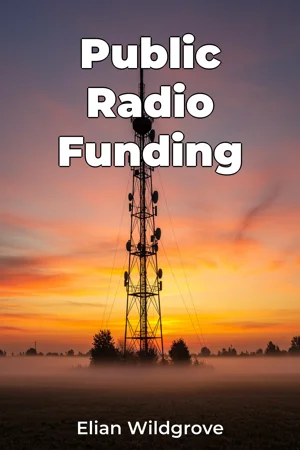
Have you ever wondered how your favorite public radio station manages to stay on the air, providing news, music, and cultural programming without commercial interruptions? This book, "Public Radio Funding," delves into the intricate financial ecosystem that sustains public radio, exploring the critical role of listener donations, the complexities of balancing educational content with engaging entertainment, and the political forces that shape its funding landscape. Understanding these dynamics is crucial not only for loyal listeners but also for policymakers, media professionals, and anyone interested in the future of independent journalism and cultural expression. This book centers on three core themes. First, it examines the diverse revenue streams that support public radio, ranging from government grants and corporate sponsorships to individual contributions. Second, it investigates the motivations behind listener giving and the strategies stations employ to cultivate and maintain their donor base. Third, it explores the ongoing tension between providing enriching, often educational programming and attracting a broad audience through more accessible, entertainment-oriented content. These factors are essential for public radio's survival and its ability to serve the public interest. The book provides historical context by tracing the evolution of public radio funding from its origins in the mid-20th century to the present day, highlighting key policy changes and economic shifts that have shaped its current structure. We also examine the social context, looking at how public radio stations function as community hubs and sources of trusted information in an increasingly fragmented media environment. The central argument of "Public Radio Funding" is that the long-term sustainability of public radio depends on diversifying its revenue streams, strengthening its connection with local communities, and continually adapting its programming to meet the evolving needs and interests of its audience. Public radio’s ability to navigate these challenges will determine its future relevance and its capacity to continue providing essential public services. The book is structured around a clear and logical framework. We begin by introducing the fundamental principles of public radio funding and the various stakeholders involved. We then examine the role of listener donations, providing an in-depth analysis of donor behavior and fundraising strategies. Next, we explore the challenges and opportunities associated with government funding and corporate sponsorships. Subsequently, the book looks at programming strategies, analyzing the balance between educational content, news, and entertainment. Finally, we conclude with a discussion of the future of public radio funding and its implications for the broader media landscape. This book draws on a range of evidence, including financial data from public radio stations, audience research surveys, interviews with station managers and donors, and policy documents from government agencies. It also incorporates case studies of successful and struggling public radio stations to illustrate the diverse challenges and innovative solutions found across the country. "Public Radio Funding" connects to several other fields, including economics (analyzing the market for public goods), political science (examining the role of government in funding media), and sociology (studying the relationship between media and community). These interdisciplinary connections enhance the book's argument by providing a more comprehensive understanding of the complex forces shaping public radio funding. This book offers a unique perspective by combining a rigorous data-driven approach with insightful qualitative analysis. It goes beyond simply describing the current state of public radio funding to offer practical recommendations for stations and policymakers seeking to ensure its long-term viability. The tone is informative and accessible, avoiding jargon and technical terms whenever possible. The writing style is clear and concise, designed to engage a broad audience without sacrificing intellectual rigor. The target audience for this book includes public radio listeners, station staff, policymakers, media scholars, and anyone interested in the future of independent journalism and cultural programming. It will be valuable to anyone seeking a deeper understanding of the financial and political forces shaping this important institution. As a work of business and political analysis, this book adheres to the conventions of these genres by presenting factual information, analyzing data, and offering evidence-based arguments. The scope of the book is limited to public radio stations in the United States, although the principles and strategies discussed may be relevant to public broadcasting systems in other countries. The book also focuses primarily on financial issues, although it acknowledges the importance of other factors, such as programming quality and community engagement. The information in this book can be applied practically by public radio stations seeking to improve their fundraising strategies, by policymakers seeking to develop more effective funding models, and by listeners seeking to become more informed and engaged supporters of their local stations. The book also addresses ongoing debates about the role of government funding in public radio, the ethics of corporate sponsorships, and the balance between serving niche audiences and attracting a broader listenership. By providing a balanced and well-informed perspective on these issues, this book aims to contribute to a more productive dialogue about the future of public radio.
Have you ever wondered how your favorite public radio station manages to stay on the air, providing news, music, and cultural programming without commercial interruptions? This book, "Public Radio Funding," delves into the intricate financial ecosystem that sustains public radio, exploring the critical role of listener donations, the complexities of balancing educational content with engaging entertainment, and the political forces that shape its funding landscape. Understanding these dynamics is crucial not only for loyal listeners but also for policymakers, media professionals, and anyone interested in the future of independent journalism and cultural expression. This book centers on three core themes. First, it examines the diverse revenue streams that support public radio, ranging from government grants and corporate sponsorships to individual contributions. Second, it investigates the motivations behind listener giving and the strategies stations employ to cultivate and maintain their donor base. Third, it explores the ongoing tension between providing enriching, often educational programming and attracting a broad audience through more accessible, entertainment-oriented content. These factors are essential for public radio's survival and its ability to serve the public interest. The book provides historical context by tracing the evolution of public radio funding from its origins in the mid-20th century to the present day, highlighting key policy changes and economic shifts that have shaped its current structure. We also examine the social context, looking at how public radio stations function as community hubs and sources of trusted information in an increasingly fragmented media environment. The central argument of "Public Radio Funding" is that the long-term sustainability of public radio depends on diversifying its revenue streams, strengthening its connection with local communities, and continually adapting its programming to meet the evolving needs and interests of its audience. Public radio’s ability to navigate these challenges will determine its future relevance and its capacity to continue providing essential public services. The book is structured around a clear and logical framework. We begin by introducing the fundamental principles of public radio funding and the various stakeholders involved. We then examine the role of listener donations, providing an in-depth analysis of donor behavior and fundraising strategies. Next, we explore the challenges and opportunities associated with government funding and corporate sponsorships. Subsequently, the book looks at programming strategies, analyzing the balance between educational content, news, and entertainment. Finally, we conclude with a discussion of the future of public radio funding and its implications for the broader media landscape. This book draws on a range of evidence, including financial data from public radio stations, audience research surveys, interviews with station managers and donors, and policy documents from government agencies. It also incorporates case studies of successful and struggling public radio stations to illustrate the diverse challenges and innovative solutions found across the country. "Public Radio Funding" connects to several other fields, including economics (analyzing the market for public goods), political science (examining the role of government in funding media), and sociology (studying the relationship between media and community). These interdisciplinary connections enhance the book's argument by providing a more comprehensive understanding of the complex forces shaping public radio funding. This book offers a unique perspective by combining a rigorous data-driven approach with insightful qualitative analysis. It goes beyond simply describing the current state of public radio funding to offer practical recommendations for stations and policymakers seeking to ensure its long-term viability. The tone is informative and accessible, avoiding jargon and technical terms whenever possible. The writing style is clear and concise, designed to engage a broad audience without sacrificing intellectual rigor. The target audience for this book includes public radio listeners, station staff, policymakers, media scholars, and anyone interested in the future of independent journalism and cultural programming. It will be valuable to anyone seeking a deeper understanding of the financial and political forces shaping this important institution. As a work of business and political analysis, this book adheres to the conventions of these genres by presenting factual information, analyzing data, and offering evidence-based arguments. The scope of the book is limited to public radio stations in the United States, although the principles and strategies discussed may be relevant to public broadcasting systems in other countries. The book also focuses primarily on financial issues, although it acknowledges the importance of other factors, such as programming quality and community engagement. The information in this book can be applied practically by public radio stations seeking to improve their fundraising strategies, by policymakers seeking to develop more effective funding models, and by listeners seeking to become more informed and engaged supporters of their local stations. The book also addresses ongoing debates about the role of government funding in public radio, the ethics of corporate sponsorships, and the balance between serving niche audiences and attracting a broader listenership. By providing a balanced and well-informed perspective on these issues, this book aims to contribute to a more productive dialogue about the future of public radio.
"Public Radio Funding" explores the complex financial structure that supports public radio, an essential source of independent journalism and cultural programming. It examines the diverse revenue streams, including listener donations, government grants, and corporate sponsorships, highlighting the political forces influencing this media landscape. One intriguing fact is that listener donations often form a significant portion of a station's budget, reflecting the strong community support. The book delves into the motivations behind listener giving and the fundraising strategies employed by stations. It also addresses the delicate balance between providing enriching, often educational programming and attracting a broader audience with more accessible content. The book explores the evolution of public radio funding, from its mid-20th century origins to the present day, placing everything into the context of key policy and economic changes. The book progresses logically, starting with the principles of public radio funding, then examining listener donations, government funding, and corporate sponsorships. It concludes with a discussion of the future. Using financial data, audience research, and interviews, the book provides practical recommendations for stations and policymakers, making it valuable for anyone interested in the sustainability of independent media.
Book Details
ISBN
9788235292933
Publisher
Publifye AS
Your Licenses
You don't own any licenses for this book
Purchase a license below to unlock this book and download the EPUB.
Purchase License
Select a tier to unlock this book
Need bulk licensing?
Contact us for enterprise agreements.