
About This Book
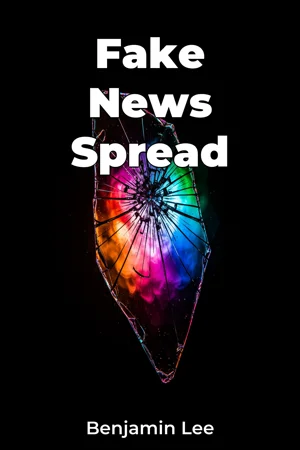
Are we living in an era defined by truth or by the calculated dissemination of falsehoods? "Fake News Spread" delves into the core mechanisms that allow misinformation to thrive online, examining its psychological underpinnings and its significant impact on public opinion and the very foundations of democratic institutions. This book is a critical examination of how engineered falsehoods have become a pervasive force shaping contemporary society. This book addresses three crucial topics: the psychological vulnerabilities that make individuals susceptible to believing and sharing fake news, the technological infrastructure that facilitates its rapid spread, and the consequential effects on political discourse and societal trust. These topics are important because the proliferation of misinformation erodes the public's ability to make informed decisions, exacerbates social divisions, and threatens the stability of democratic processes. "Fake News Spread" provides a necessary context by tracing the evolution of media consumption from traditional sources to the current fragmented online environment. Readers will gain an understanding of how algorithms, social media platforms, and the 24-hour news cycle contribute to the spread of misinformation. The book assumes a basic understanding of social media and internet culture, but clarifies key concepts related to algorithms, bot networks, and data analytics. The central argument of this book is that the widespread dissemination and acceptance of fake news are not accidental occurrences but rather are the result of a complex interplay between human psychology, technological affordances, and strategic manipulation. Understanding this interplay is crucial to developing effective strategies for mitigating the harmful effects of misinformation. The book begins by introducing the core concepts of misinformation, disinformation, and malinformation, differentiating them and providing real-world examples. It then delves into the psychological factors that make individuals more likely to believe and share fake news, such as confirmation bias, emotional reasoning, and the Dunning-Kruger effect. A key section analyzes the role of social media algorithms in creating filter bubbles and echo chambers, which reinforce existing beliefs and limit exposure to diverse perspectives. Finally, the book examines the real-world consequences of fake news, including its impact on elections, public health, and social cohesion, including analysis of specific case studies. The arguments presented are supported by a wide range of evidence, including empirical studies from psychology and communication research, data analytics from social media platforms, and case studies of specific fake news campaigns. The book draws upon original research, including sentiment analysis of social media data and network analysis of information diffusion patterns. This book bridges several fields, connecting psychological insights about human cognition with communication studies on media effects and political science perspectives on democratic governance. It also incorporates elements of computer science in describing and dissecting the technological aspects of online information spread. These connections enhance the argument by providing a holistic view of the fake news phenomenon. "Fake News Spread" stands out by offering a multidisciplinary approach, integrating psychological, technological, and political perspectives to provide a comprehensive understanding of the fake news ecosystem. It doesn't just identify the problem but also explores the deeper underlying causes and potential solutions. The book adopts a fact-based, analytical tone, presenting information in a clear and accessible manner. While grounded in academic research, the writing style avoids jargon and is tailored for an intelligent and informed general audience. The target audience includes students, researchers, policymakers, journalists, and concerned citizens who seek a deeper understanding of the challenges posed by misinformation. This book offers valuable insights for anyone interested in media literacy, digital citizenship, and the future of democracy. As a work of non-fiction, "Fake News Spread" prioritizes accuracy, objectivity, and rigorous sourcing. It adheres to the genre's conventions by presenting well-researched information in a structured and logical manner. The scope of the book focuses primarily on online misinformation and its impact on democratic societies, covering a wide range of examples across different countries and contexts. It does not delve into the specifics of individual social media platforms' content moderation policies, focusing instead on the broader systemic issues. The book concludes by offering practical strategies for combating fake news, including media literacy education, critical thinking skills development, and algorithmic transparency. It emphasizes the need for a multi-pronged approach involving individuals, institutions, and technology companies. The topic of fake news is inherently controversial, with ongoing debates about the role of free speech, censorship, and platform responsibility. "Fake News Spread" acknowledges these debates, presenting different perspectives and encouraging readers to critically evaluate the issues involved.
Are we living in an era defined by truth or by the calculated dissemination of falsehoods? "Fake News Spread" delves into the core mechanisms that allow misinformation to thrive online, examining its psychological underpinnings and its significant impact on public opinion and the very foundations of democratic institutions. This book is a critical examination of how engineered falsehoods have become a pervasive force shaping contemporary society. This book addresses three crucial topics: the psychological vulnerabilities that make individuals susceptible to believing and sharing fake news, the technological infrastructure that facilitates its rapid spread, and the consequential effects on political discourse and societal trust. These topics are important because the proliferation of misinformation erodes the public's ability to make informed decisions, exacerbates social divisions, and threatens the stability of democratic processes. "Fake News Spread" provides a necessary context by tracing the evolution of media consumption from traditional sources to the current fragmented online environment. Readers will gain an understanding of how algorithms, social media platforms, and the 24-hour news cycle contribute to the spread of misinformation. The book assumes a basic understanding of social media and internet culture, but clarifies key concepts related to algorithms, bot networks, and data analytics. The central argument of this book is that the widespread dissemination and acceptance of fake news are not accidental occurrences but rather are the result of a complex interplay between human psychology, technological affordances, and strategic manipulation. Understanding this interplay is crucial to developing effective strategies for mitigating the harmful effects of misinformation. The book begins by introducing the core concepts of misinformation, disinformation, and malinformation, differentiating them and providing real-world examples. It then delves into the psychological factors that make individuals more likely to believe and share fake news, such as confirmation bias, emotional reasoning, and the Dunning-Kruger effect. A key section analyzes the role of social media algorithms in creating filter bubbles and echo chambers, which reinforce existing beliefs and limit exposure to diverse perspectives. Finally, the book examines the real-world consequences of fake news, including its impact on elections, public health, and social cohesion, including analysis of specific case studies. The arguments presented are supported by a wide range of evidence, including empirical studies from psychology and communication research, data analytics from social media platforms, and case studies of specific fake news campaigns. The book draws upon original research, including sentiment analysis of social media data and network analysis of information diffusion patterns. This book bridges several fields, connecting psychological insights about human cognition with communication studies on media effects and political science perspectives on democratic governance. It also incorporates elements of computer science in describing and dissecting the technological aspects of online information spread. These connections enhance the argument by providing a holistic view of the fake news phenomenon. "Fake News Spread" stands out by offering a multidisciplinary approach, integrating psychological, technological, and political perspectives to provide a comprehensive understanding of the fake news ecosystem. It doesn't just identify the problem but also explores the deeper underlying causes and potential solutions. The book adopts a fact-based, analytical tone, presenting information in a clear and accessible manner. While grounded in academic research, the writing style avoids jargon and is tailored for an intelligent and informed general audience. The target audience includes students, researchers, policymakers, journalists, and concerned citizens who seek a deeper understanding of the challenges posed by misinformation. This book offers valuable insights for anyone interested in media literacy, digital citizenship, and the future of democracy. As a work of non-fiction, "Fake News Spread" prioritizes accuracy, objectivity, and rigorous sourcing. It adheres to the genre's conventions by presenting well-researched information in a structured and logical manner. The scope of the book focuses primarily on online misinformation and its impact on democratic societies, covering a wide range of examples across different countries and contexts. It does not delve into the specifics of individual social media platforms' content moderation policies, focusing instead on the broader systemic issues. The book concludes by offering practical strategies for combating fake news, including media literacy education, critical thinking skills development, and algorithmic transparency. It emphasizes the need for a multi-pronged approach involving individuals, institutions, and technology companies. The topic of fake news is inherently controversial, with ongoing debates about the role of free speech, censorship, and platform responsibility. "Fake News Spread" acknowledges these debates, presenting different perspectives and encouraging readers to critically evaluate the issues involved.
"Fake News Spread" explores the complex world of misinformation and its profound effects on society. It examines how engineered falsehoods spread through social media and impact public opinion, ultimately threatening democratic institutions. The book delves into the psychological vulnerabilities that make individuals susceptible to believing fake news, such as confirmation bias, which leads people to favor information confirming existing beliefs. It also highlights the role of algorithms in creating filter bubbles and echo chambers, reinforcing pre-existing views and limiting exposure to diverse perspectives. The book adopts a multidisciplinary approach, integrating psychological, technological, and political insights. It traces the evolution of media consumption to the current fragmented online environment, explaining how the 24-hour news cycle contributes to the problem. Beginning with definitions of misinformation, disinformation, and malinformation, the book progresses to analyze psychological factors, the impact of social media algorithms, and the real-world consequences of fake news on elections, public health, and social cohesion.
Book Details
ISBN
9788235292902
Publisher
Publifye AS
Your Licenses
You don't own any licenses for this book
Purchase a license below to unlock this book and download the EPUB.
Purchase License
Select a tier to unlock this book
Need bulk licensing?
Contact us for enterprise agreements.