
About This Book
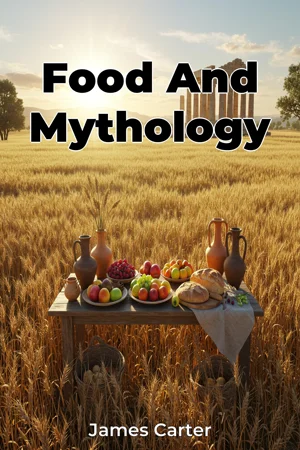
How did the gods dictate dinner? "Food and Mythology" explores the profound and often surprising influence of ancient deities, rituals, and beliefs on the culinary traditions that have shaped cultures across the globe. This book delves into the intertwined worlds of gastronomy and mythology, revealing how food transcends mere sustenance, becoming a powerful symbol of identity, spirituality, and social order. We will examine two key themes. First, the role of specific deities associated with agriculture, harvest, and food preparation, illustrating how these figures were integral to ensuring abundance and prosperity within their respective societies. Second, we will explore the ritualistic use of food in religious ceremonies, festivals, and everyday practices, demonstrating how these customs reinforced social bonds and conveyed deeper spiritual meanings. Understanding these themes is vital because they provide insights into the cultural values, historical events, and belief systems that have shaped our relationship with food. This book offers historical, anthropological, and culinary context. We will explore ancient civilizations, their agricultural practices, and the pantheons of gods they worshipped, providing a comprehensive foundation for understanding the connections between food and mythology. We'll need some familiarity with prominent mythologies (Greek, Roman, Norse, Egyptian, etc.) to appreciate the nuances discussed. The central argument of "Food and Mythology" is that food traditions are not accidental or arbitrary; they are deeply rooted in ancient mythological narratives that reflect each culture's unique worldview. This argument is crucial because it challenges the common perception of food as simply a biological necessity, revealing its profound cultural and spiritual significance. The book will unfold as follows: a) First, we introduce the fundamental concepts of food mythology, exploring the role of deities, rituals, and symbolic meanings associated with food in ancient cultures. b) The book then develops these ideas through case studies, examining prominent examples from various regions and historical periods. One chapter will focus on the role of Demeter and Ceres in shaping agricultural practices in the Mediterranean world. Another explores the significance of ritual feasting in Norse mythology, particularly its connection to concepts of honor, kinship, and the afterlife. A third will delve into the symbolic meaning of specific foods, such as bread, wine, and meat, across cultures, examining how these items were used in religious ceremonies and social gatherings. c) The culmination of the argument will demonstrate how these ancient food mythologies continue to resonate in modern culinary traditions, influencing our eating habits, food choices, and cultural identities. d) In the conclusion, we will explore the practical implications of understanding food mythology. This includes promoting cultural awareness, appreciating the diversity of culinary traditions, and fostering a deeper connection with the history and heritage of the food we eat. The book will present evidence from a variety of sources, including archaeological records, ancient texts, ethnographic studies, and culinary analyses. We will draw upon unique data sources, such as ancient recipes, religious inscriptions, and artisticdepictions of food rituals, to support our arguments. "Food and Mythology" connects to other fields of study through anthropology, religious studies and history. These connections enhance the book's argument by providing a holistic perspective on the interplay between food, culture, and belief. The unique approach lies in its comparative analysis of food mythologies across diverse cultures, revealing universal themes and local variations. The writing style is accessible and engaging, presenting scholarly research in a clear and compelling manner, suitable for a broad audience. The intended readership includes food enthusiasts, history buffs, mythology lovers, students of cultural studies, and anyone interested in exploring the rich connections between food and culture. This book would be valuable to them because it offers new insights into the history and significance of food, fostering a deeper appreciation for the culinary traditions of the world. As a work of non-fiction, "Food and Mythology" will adhere to the genre's commitment to accuracy, objectivity, and evidence-based analysis. The scope of the book encompasses a wide range of ancient cultures, but it is not exhaustive. Readers can apply the information in this book to enhance their appreciation of culinary diversity, promote cultural understanding, and make more informed food choices. While the interpretation of ancient myths and rituals can be subjective, this book will strive to present balanced and well-supported arguments, while acknowledging alternative perspectives.
How did the gods dictate dinner? "Food and Mythology" explores the profound and often surprising influence of ancient deities, rituals, and beliefs on the culinary traditions that have shaped cultures across the globe. This book delves into the intertwined worlds of gastronomy and mythology, revealing how food transcends mere sustenance, becoming a powerful symbol of identity, spirituality, and social order. We will examine two key themes. First, the role of specific deities associated with agriculture, harvest, and food preparation, illustrating how these figures were integral to ensuring abundance and prosperity within their respective societies. Second, we will explore the ritualistic use of food in religious ceremonies, festivals, and everyday practices, demonstrating how these customs reinforced social bonds and conveyed deeper spiritual meanings. Understanding these themes is vital because they provide insights into the cultural values, historical events, and belief systems that have shaped our relationship with food. This book offers historical, anthropological, and culinary context. We will explore ancient civilizations, their agricultural practices, and the pantheons of gods they worshipped, providing a comprehensive foundation for understanding the connections between food and mythology. We'll need some familiarity with prominent mythologies (Greek, Roman, Norse, Egyptian, etc.) to appreciate the nuances discussed. The central argument of "Food and Mythology" is that food traditions are not accidental or arbitrary; they are deeply rooted in ancient mythological narratives that reflect each culture's unique worldview. This argument is crucial because it challenges the common perception of food as simply a biological necessity, revealing its profound cultural and spiritual significance. The book will unfold as follows: a) First, we introduce the fundamental concepts of food mythology, exploring the role of deities, rituals, and symbolic meanings associated with food in ancient cultures. b) The book then develops these ideas through case studies, examining prominent examples from various regions and historical periods. One chapter will focus on the role of Demeter and Ceres in shaping agricultural practices in the Mediterranean world. Another explores the significance of ritual feasting in Norse mythology, particularly its connection to concepts of honor, kinship, and the afterlife. A third will delve into the symbolic meaning of specific foods, such as bread, wine, and meat, across cultures, examining how these items were used in religious ceremonies and social gatherings. c) The culmination of the argument will demonstrate how these ancient food mythologies continue to resonate in modern culinary traditions, influencing our eating habits, food choices, and cultural identities. d) In the conclusion, we will explore the practical implications of understanding food mythology. This includes promoting cultural awareness, appreciating the diversity of culinary traditions, and fostering a deeper connection with the history and heritage of the food we eat. The book will present evidence from a variety of sources, including archaeological records, ancient texts, ethnographic studies, and culinary analyses. We will draw upon unique data sources, such as ancient recipes, religious inscriptions, and artisticdepictions of food rituals, to support our arguments. "Food and Mythology" connects to other fields of study through anthropology, religious studies and history. These connections enhance the book's argument by providing a holistic perspective on the interplay between food, culture, and belief. The unique approach lies in its comparative analysis of food mythologies across diverse cultures, revealing universal themes and local variations. The writing style is accessible and engaging, presenting scholarly research in a clear and compelling manner, suitable for a broad audience. The intended readership includes food enthusiasts, history buffs, mythology lovers, students of cultural studies, and anyone interested in exploring the rich connections between food and culture. This book would be valuable to them because it offers new insights into the history and significance of food, fostering a deeper appreciation for the culinary traditions of the world. As a work of non-fiction, "Food and Mythology" will adhere to the genre's commitment to accuracy, objectivity, and evidence-based analysis. The scope of the book encompasses a wide range of ancient cultures, but it is not exhaustive. Readers can apply the information in this book to enhance their appreciation of culinary diversity, promote cultural understanding, and make more informed food choices. While the interpretation of ancient myths and rituals can be subjective, this book will strive to present balanced and well-supported arguments, while acknowledging alternative perspectives.
"Food and Mythology" explores the fascinating intersection of gastronomy, ancient cultures, and mythology, revealing how deities, rituals, and beliefs profoundly shaped global culinary traditions. It examines how food transcends mere sustenance, becoming a potent symbol of identity, spirituality, and social order across diverse societies. Discover how ancient civilizations intertwined food with their pantheons of gods, illustrating the integral role of figures like Demeter and Ceres in ensuring agricultural abundance. Explore how ritualistic food use in religious ceremonies and festivals reinforced social bonds and conveyed deep spiritual meanings. The book argues that food traditions are deeply rooted in ancient mythological narratives, challenging the perception of food as a mere biological necessity. By examining prominent examples from various regions and historical periods, such as ritual feasting in Norse mythology, "Food and Mythology" reveals universal themes and local variations in food mythologies. It further demonstrates how these ancient traditions continue to resonate in modern culinary practices, influencing our eating habits and cultural identities. The book progresses by first introducing the fundamental concepts of food mythology, then developing these ideas through case studies. Finally, it highlights the practical implications of understanding food mythology for promoting cultural awareness and appreciating culinary diversity. Drawing upon archaeological records, ancient texts, and ethnographic studies, the book offers a comparative analysis of food mythologies, making it a valuable resource for anyone interested in food history, cultural studies, and the enduring power of ancient beliefs.
Book Details
ISBN
9788235292681
Publisher
Publifye AS
Your Licenses
You don't own any licenses for this book
Purchase a license below to unlock this book and download the EPUB.
Purchase License
Select a tier to unlock this book
Need bulk licensing?
Contact us for enterprise agreements.