
About This Book
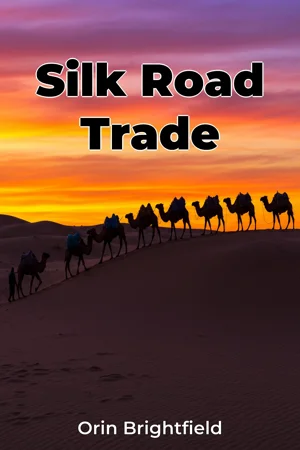
Imagine a world knit together not by digital threads but by camel caravans laden with silk, spices, and the glimmer of precious metals. How did this ancient network, the Silk Road, forge connections between disparate cultures and lay the groundwork for modern global commerce? "Silk Road Trade" delves into the heart of this historical artery, exploring its profound and lasting impact on the economic and cultural landscapes of both Asia and Europe. This book explores three fundamental aspects of the Silk Road: the mechanics of trade, the cultural exchanges it fostered, and its long-term legacy on global business practices. These elements are crucial to understanding how the Silk Road transcended simple bartering, evolving into a complex system of interconnected economies and societies. We examine not only the goods exchanged but also the ideas, technologies, and belief systems that traveled alongside them. Readers will gain essential context for understanding the Silk Road's rise and fall, including the political climates of the empires that controlled its routes, the technological innovations that facilitated long-distance travel, and the social structures that shaped its operations. No prior expert knowledge is needed; the book provides a clear and accessible introduction to the key historical figures, geographical locations, and economic principles that defined this era. The central argument of "Silk Road Trade" is that the Silk Road was not merely a trade route but a catalyst for globalization, shaping economic development, cultural diffusion, and geopolitical power dynamics in ways that continue to resonate today. Understanding its complexities is essential to comprehending the interconnectedness of the modern world and the historical roots of contemporary global trade. The book unfolds in a logical progression, beginning with an introduction to the Silk Road's origins and geographical scope. It then explores the commodities that fueled its trade, such as silk, spices, tea, porcelain, and precious metals. A significant portion of the book is dedicated to examining the cultural exchanges that occurred along the Silk Road, including the spread of religions like Buddhism and Islam, the transmission of scientific knowledge, and the artistic influences that blended Eastern and Western traditions. Finally, the book culminates by analyzing the Silk Road's decline and its lasting impact on modern trade routes, economic systems, and cultural interactions. The arguments presented are supported by a wealth of historical evidence, including primary source documents, archaeological findings, and scholarly research. The book draws upon trade records, diplomatic correspondence, and travelogues from the period to provide a nuanced and evidence-based account of the Silk Road's operations. Additionally, it incorporates data from contemporary economic studies to analyze the long-term effects of the Silk Road on global trade patterns. "Silk Road Trade" establishes insightful connections to other fields of study, including anthropology, religious studies, and political science. By examining the cultural and religious exchanges, it contributes to a broader understanding of human interaction and cultural diffusion. By exploring the political dynamics of the empires that controlled the Silk Road, it provides valuable insights into the relationship between power, trade, and geopolitical strategy. This book offers a comprehensive and accessible overview of the Silk Road, emphasizing its multifaceted impact on global commerce and culture. It avoids romanticizing the past, instead opting for a fact-based analysis that highlights both the positive and negative consequences of this historical trade network. "Silk Road Trade" is aimed at readers interested in history, economics, and global affairs. It is particularly relevant for students, business professionals, and anyone seeking to understand the historical roots of globalization. By providing a clear and concise overview of this complex topic, the book offers valuable insights into the forces that have shaped the modern world. As a work of history and business, this book adheres to the genre's emphasis on factual accuracy, thorough research, and objective analysis. It strives to present a balanced and nuanced perspective, acknowledging the complexities and contradictions inherent in the historical record. The scope of "Silk Road Trade" is broad, encompassing the entire network of trade routes that connected Asia and Europe for centuries. However, it also acknowledges its limitations, focusing primarily on the overland routes and devoting less attention to maritime trade. The lessons learned from the Silk Road have practical applications for modern businesses and policymakers. By understanding the principles of intercultural trade and the importance of building strong relationships across borders, readers can gain valuable insights into the challenges and opportunities of globalization. While this book presents a comprehensive overview of the Silk Road, it also acknowledges the ongoing debates and controversies surrounding its legacy. Scholars continue to debate the extent of its economic impact, the nature of its cultural exchanges, and its role in shaping modern geopolitics. This book aims to contribute to these discussions by presenting a balanced and evidence-based analysis of this important historical phenomenon.
Imagine a world knit together not by digital threads but by camel caravans laden with silk, spices, and the glimmer of precious metals. How did this ancient network, the Silk Road, forge connections between disparate cultures and lay the groundwork for modern global commerce? "Silk Road Trade" delves into the heart of this historical artery, exploring its profound and lasting impact on the economic and cultural landscapes of both Asia and Europe. This book explores three fundamental aspects of the Silk Road: the mechanics of trade, the cultural exchanges it fostered, and its long-term legacy on global business practices. These elements are crucial to understanding how the Silk Road transcended simple bartering, evolving into a complex system of interconnected economies and societies. We examine not only the goods exchanged but also the ideas, technologies, and belief systems that traveled alongside them. Readers will gain essential context for understanding the Silk Road's rise and fall, including the political climates of the empires that controlled its routes, the technological innovations that facilitated long-distance travel, and the social structures that shaped its operations. No prior expert knowledge is needed; the book provides a clear and accessible introduction to the key historical figures, geographical locations, and economic principles that defined this era. The central argument of "Silk Road Trade" is that the Silk Road was not merely a trade route but a catalyst for globalization, shaping economic development, cultural diffusion, and geopolitical power dynamics in ways that continue to resonate today. Understanding its complexities is essential to comprehending the interconnectedness of the modern world and the historical roots of contemporary global trade. The book unfolds in a logical progression, beginning with an introduction to the Silk Road's origins and geographical scope. It then explores the commodities that fueled its trade, such as silk, spices, tea, porcelain, and precious metals. A significant portion of the book is dedicated to examining the cultural exchanges that occurred along the Silk Road, including the spread of religions like Buddhism and Islam, the transmission of scientific knowledge, and the artistic influences that blended Eastern and Western traditions. Finally, the book culminates by analyzing the Silk Road's decline and its lasting impact on modern trade routes, economic systems, and cultural interactions. The arguments presented are supported by a wealth of historical evidence, including primary source documents, archaeological findings, and scholarly research. The book draws upon trade records, diplomatic correspondence, and travelogues from the period to provide a nuanced and evidence-based account of the Silk Road's operations. Additionally, it incorporates data from contemporary economic studies to analyze the long-term effects of the Silk Road on global trade patterns. "Silk Road Trade" establishes insightful connections to other fields of study, including anthropology, religious studies, and political science. By examining the cultural and religious exchanges, it contributes to a broader understanding of human interaction and cultural diffusion. By exploring the political dynamics of the empires that controlled the Silk Road, it provides valuable insights into the relationship between power, trade, and geopolitical strategy. This book offers a comprehensive and accessible overview of the Silk Road, emphasizing its multifaceted impact on global commerce and culture. It avoids romanticizing the past, instead opting for a fact-based analysis that highlights both the positive and negative consequences of this historical trade network. "Silk Road Trade" is aimed at readers interested in history, economics, and global affairs. It is particularly relevant for students, business professionals, and anyone seeking to understand the historical roots of globalization. By providing a clear and concise overview of this complex topic, the book offers valuable insights into the forces that have shaped the modern world. As a work of history and business, this book adheres to the genre's emphasis on factual accuracy, thorough research, and objective analysis. It strives to present a balanced and nuanced perspective, acknowledging the complexities and contradictions inherent in the historical record. The scope of "Silk Road Trade" is broad, encompassing the entire network of trade routes that connected Asia and Europe for centuries. However, it also acknowledges its limitations, focusing primarily on the overland routes and devoting less attention to maritime trade. The lessons learned from the Silk Road have practical applications for modern businesses and policymakers. By understanding the principles of intercultural trade and the importance of building strong relationships across borders, readers can gain valuable insights into the challenges and opportunities of globalization. While this book presents a comprehensive overview of the Silk Road, it also acknowledges the ongoing debates and controversies surrounding its legacy. Scholars continue to debate the extent of its economic impact, the nature of its cultural exchanges, and its role in shaping modern geopolitics. This book aims to contribute to these discussions by presenting a balanced and evidence-based analysis of this important historical phenomenon.
"Silk Road Trade" explores the historical significance of the Silk Road, a network that fostered globalization long before the digital age. This book examines how camel caravans laden with goods like silk and spices connected disparate cultures across Asia and Europe, laying the foundation for modern global commerce. The Silk Road wasn't just about trade; it also facilitated cultural exchange, with religions like Buddhism spreading along its routes, and it profoundly shaped economic development. The book uniquely presents the Silk Road's evolution, from its origins and geographical scope to the commodities exchanged and the cultural interactions that occurred. It highlights how the Silk Road acted as a catalyst for globalization, impacting economic systems and geopolitical power dynamics. For example, the book discusses how technologies and ideas traveled alongside goods, contributing to the blend of Eastern and Western traditions. The book progresses logically, starting with the Silk Road's origins, then delving into the commodities traded, and finally analyzing its decline and lasting impact. By examining historical evidence and trade records, the book offers a comprehensive overview of this influential trade network, making it valuable for those interested in history, economics, and understanding the roots of today's interconnected world.
Book Details
ISBN
9788235292353
Publisher
Publifye AS
Your Licenses
You don't own any licenses for this book
Purchase a license below to unlock this book and download the EPUB.
Purchase License
Select a tier to unlock this book
Need bulk licensing?
Contact us for enterprise agreements.