
About This Book
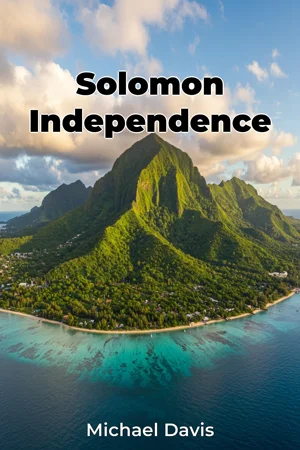
What does it truly mean for a nation to forge its own destiny after decades of colonial rule? *Solomon Independence* delves into the multifaceted journey of the Solomon Islands, from its status as a British Protectorate to its emergence as an independent nation, grappling with the complex realities of political self-determination and economic sustainability. This book examines the key factors that shaped this transition, focusing on political evolution, economic development, and the enduring legacy of colonial influence. These topics are important because they illuminate the challenges and triumphs inherent in post-colonial nation-building, offering valuable lessons applicable to other countries navigating similar paths. The narrative begins within the historical context of British colonialism in the Pacific, specifically in the late 19th and 20th centuries. It explores the initial establishment of the British Solomon Islands Protectorate and its subsequent administration, highlighting the social and economic structures imposed during this period. Understanding this colonial backdrop is crucial for grasping the subsequent political and economic struggles the Solomon Islands faced as it moved toward independence. The central argument of *Solomon Independence* is that the nation’s path to self-governance was not a linear progression but a complex interplay of internal political dynamics, external economic pressures, and the enduring impact of colonial legacies. This argument is important because it challenges simplistic narratives of independence, emphasizing the long-term consequences of colonial rule and the ongoing struggles for genuine self-determination. The book unfolds in three major parts. First, it introduces the historical context of the British Solomon Islands Protectorate, detailing the colonial administration and the initial seeds of political consciousness among the indigenous population. Second, it examines the burgeoning political movements that emerged in the mid-20th century, analyzing the key figures, ideologies, and events that propelled the Solomon Islands toward self-governance. This section will cover the constitutional developments, the negotiations with the British government, and the internal political divisions that shaped the independence process. The third part scrutinizes the economic challenges faced by the newly independent nation, including issues such as resource management, dependence on foreign aid, and the pursuit of sustainable development. It concludes by assessing the long-term impact of independence on the Solomon Islands, evaluating its successes and failures in achieving genuine self-determination and charting a course for a prosperous future. The evidence presented in *Solomon Independence* draws upon a wide range of sources, including archival documents from British colonial records, transcripts of political debates and negotiations, economic data from international organizations, and oral histories collected from Solomon Islanders who lived through this transformative period. The book also incorporates analysis of contemporary political and economic developments, providing a comprehensive and nuanced account of the Solomon Islands' journey. Interdisciplinary connections enhance the book’s arguments, linking political history with economic analysis and sociological studies of cultural identity. The book connects to the fields of post-colonial studies, international relations, and development economics, offering insights into the broader dynamics of decolonization and nation-building in the 20th and 21st centuries. *Solomon Independence* adopts a balanced and objective tone, presenting information in a clear and accessible style. While grounded in rigorous research, the book aims to engage a broad audience, including students, researchers, policymakers, and anyone interested in the history and politics of the Pacific region. The target audience includes those interested in post-colonial studies, Pacific history, and international development. The book would be valuable to those seeking a well-researched and accessible account of the Solomon Islands' journey to independence and the challenges it has faced in the decades since. The book's scope focuses specifically on the period from the late colonial era to the present day, examining the political and economic developments that have shaped the Solomon Islands. While acknowledging the broader context of Pacific history, the book concentrates its analysis on the specific experiences of the Solomon Islands. The information presented in *Solomon Independence* provides practical insights into the challenges of nation-building, the importance of sustainable development, and the enduring impact of colonial legacies. It offers valuable lessons for policymakers and development practitioners working in post-colonial contexts. Through rigorous analysis and compelling storytelling, *Solomon Independence* offers a comprehensive and insightful account of the Solomon Islands' journey from British rule to independence, providing a valuable contribution to the understanding of post-colonial nation-building in the Pacific.
What does it truly mean for a nation to forge its own destiny after decades of colonial rule? *Solomon Independence* delves into the multifaceted journey of the Solomon Islands, from its status as a British Protectorate to its emergence as an independent nation, grappling with the complex realities of political self-determination and economic sustainability. This book examines the key factors that shaped this transition, focusing on political evolution, economic development, and the enduring legacy of colonial influence. These topics are important because they illuminate the challenges and triumphs inherent in post-colonial nation-building, offering valuable lessons applicable to other countries navigating similar paths. The narrative begins within the historical context of British colonialism in the Pacific, specifically in the late 19th and 20th centuries. It explores the initial establishment of the British Solomon Islands Protectorate and its subsequent administration, highlighting the social and economic structures imposed during this period. Understanding this colonial backdrop is crucial for grasping the subsequent political and economic struggles the Solomon Islands faced as it moved toward independence. The central argument of *Solomon Independence* is that the nation’s path to self-governance was not a linear progression but a complex interplay of internal political dynamics, external economic pressures, and the enduring impact of colonial legacies. This argument is important because it challenges simplistic narratives of independence, emphasizing the long-term consequences of colonial rule and the ongoing struggles for genuine self-determination. The book unfolds in three major parts. First, it introduces the historical context of the British Solomon Islands Protectorate, detailing the colonial administration and the initial seeds of political consciousness among the indigenous population. Second, it examines the burgeoning political movements that emerged in the mid-20th century, analyzing the key figures, ideologies, and events that propelled the Solomon Islands toward self-governance. This section will cover the constitutional developments, the negotiations with the British government, and the internal political divisions that shaped the independence process. The third part scrutinizes the economic challenges faced by the newly independent nation, including issues such as resource management, dependence on foreign aid, and the pursuit of sustainable development. It concludes by assessing the long-term impact of independence on the Solomon Islands, evaluating its successes and failures in achieving genuine self-determination and charting a course for a prosperous future. The evidence presented in *Solomon Independence* draws upon a wide range of sources, including archival documents from British colonial records, transcripts of political debates and negotiations, economic data from international organizations, and oral histories collected from Solomon Islanders who lived through this transformative period. The book also incorporates analysis of contemporary political and economic developments, providing a comprehensive and nuanced account of the Solomon Islands' journey. Interdisciplinary connections enhance the book’s arguments, linking political history with economic analysis and sociological studies of cultural identity. The book connects to the fields of post-colonial studies, international relations, and development economics, offering insights into the broader dynamics of decolonization and nation-building in the 20th and 21st centuries. *Solomon Independence* adopts a balanced and objective tone, presenting information in a clear and accessible style. While grounded in rigorous research, the book aims to engage a broad audience, including students, researchers, policymakers, and anyone interested in the history and politics of the Pacific region. The target audience includes those interested in post-colonial studies, Pacific history, and international development. The book would be valuable to those seeking a well-researched and accessible account of the Solomon Islands' journey to independence and the challenges it has faced in the decades since. The book's scope focuses specifically on the period from the late colonial era to the present day, examining the political and economic developments that have shaped the Solomon Islands. While acknowledging the broader context of Pacific history, the book concentrates its analysis on the specific experiences of the Solomon Islands. The information presented in *Solomon Independence* provides practical insights into the challenges of nation-building, the importance of sustainable development, and the enduring impact of colonial legacies. It offers valuable lessons for policymakers and development practitioners working in post-colonial contexts. Through rigorous analysis and compelling storytelling, *Solomon Independence* offers a comprehensive and insightful account of the Solomon Islands' journey from British rule to independence, providing a valuable contribution to the understanding of post-colonial nation-building in the Pacific.
Solomon Islands' path to self-determination is explored in *Solomon Independence*, which analyzes the nation's evolution from a British Protectorate to an independent country. The book examines the complex interplay of political evolution, economic development, and the enduring colonial legacy that shaped the Solomon Islands. Readers will discover how the nation grappled with sustainable development and resource management in its post-colonial era. The book's narrative unfolds across three key sections: the historical context of British colonialism, the rise of political movements, and the economic challenges faced post-independence. For example, the book highlights the initial establishment of the British Solomon Islands Protectorate and its subsequent administration, revealing the social and economic structures imposed during this period. This journey wasn't linear; it was marked by internal political dynamics and external economic pressures. The book offers a balanced account of the Solomon Islands' journey, appealing to those interested in History, Politics, and post-colonial studies.
Book Details
ISBN
9788235292124
Publisher
Publifye AS
Your Licenses
You don't own any licenses for this book
Purchase a license below to unlock this book and download the EPUB.
Purchase License
Select a tier to unlock this book
Need bulk licensing?
Contact us for enterprise agreements.