
About This Book
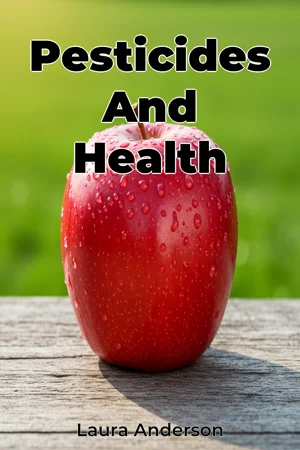
Are the pesticides meant to protect our food supply silently compromising our health? "Pesticides and Health" delves into the multifaceted impacts of these chemicals on human well-being, with a particular emphasis on their potential to disrupt hormonal balance and practical strategies for minimizing exposure through dietary and environmental choices. Understanding these impacts is crucial in today's world, where pesticide use is pervasive in agriculture and their residues are commonly found in our food and environment. This book aims to bridge the gap between scientific research and public understanding, providing accessible insights into a complex and often alarming issue. This book offers a comprehensive exploration of pesticides, their effects on the human endocrine system, and actionable methods for reducing exposure. We begin by laying the historical and scientific groundwork, tracing the evolution of pesticide use from its origins to its current widespread application in agriculture and public health. Readers will gain an understanding of various classes of pesticides, their intended targets, and their unintended consequences for non-target organisms, including humans. A foundational understanding of toxicology and endocrinology provides a basis for grasping the mechanisms by which pesticides can interfere with hormonal signaling pathways. The central argument of "Pesticides and Health" is that widespread pesticide exposure poses a significant threat to human health, primarily through endocrine disruption, and that informed dietary and lifestyle choices can substantially mitigate these risks. This argument is vital because it challenges the conventional narrative that solely focuses on the benefits of pesticides for crop production, while frequently overlooking their potential health consequences. The book is structured to progressively build upon foundational knowledge. It begins by defining pesticides, outlining their history, and describing their various classifications. It provides the scientific community’s current understanding of how the endocrine system functions and presents the evidence linking specific pesticides to hormonal imbalances. Major points covered include examining the research methodologies used to assess pesticide toxicity, analyzing epidemiological studies that correlate pesticide exposure with adverse health outcomes, and identifying vulnerable populations, such as pregnant women and children, who are disproportionately affected. The book culminates in a practical guide for reducing pesticide exposure through informed food choices, home gardening practices, and advocacy for policy changes. The evidence presented comes from a wide range of sources, including peer-reviewed scientific publications, government reports, and data from independent research institutions. The book critically evaluates existing research, highlighting strengths and limitations, and identifies areas where further investigation is needed. "Pesticides and Health" connects to fields such as environmental science, public health, and nutrition. It examines the environmental fate and transport of pesticides, analyzes the social and economic factors that influence pesticide use, and offers nutritional strategies for detoxifying the body and supporting overall health. The book adopts a balanced and evidence-based approach, presenting scientific findings in a clear and accessible manner while acknowledging the complexities and uncertainties inherent in the field. This book is written for a broad audience, including health-conscious consumers, gardeners, healthcare professionals, and policymakers. It aims to empower readers with the knowledge and tools needed to make informed decisions about pesticide exposure and to advocate for safer and more sustainable agricultural practices. The book follows the conventions of the Health & Fitness genre, offering practical advice and evidence-based recommendations for improving health and well-being. While the book covers a wide range of pesticides and their health impacts, it is not intended to be an exhaustive review of every chemical compound or every possible health outcome. Rather, it focuses on the most prevalent and concerning pesticides, and it emphasizes the underlying biological mechanisms and practical strategies for risk reduction. The information in this book can be applied to everyday life through conscious food purchasing, implementing safer pest control methods in homes and gardens, and advocating for policies that promote sustainable agriculture. The topic of pesticide regulation and use is often fraught with controversy. This book will address conflicting opinions and scientific debates surrounding pesticide safety, presenting different perspectives and critically evaluating the evidence supporting each viewpoint.
Are the pesticides meant to protect our food supply silently compromising our health? "Pesticides and Health" delves into the multifaceted impacts of these chemicals on human well-being, with a particular emphasis on their potential to disrupt hormonal balance and practical strategies for minimizing exposure through dietary and environmental choices. Understanding these impacts is crucial in today's world, where pesticide use is pervasive in agriculture and their residues are commonly found in our food and environment. This book aims to bridge the gap between scientific research and public understanding, providing accessible insights into a complex and often alarming issue. This book offers a comprehensive exploration of pesticides, their effects on the human endocrine system, and actionable methods for reducing exposure. We begin by laying the historical and scientific groundwork, tracing the evolution of pesticide use from its origins to its current widespread application in agriculture and public health. Readers will gain an understanding of various classes of pesticides, their intended targets, and their unintended consequences for non-target organisms, including humans. A foundational understanding of toxicology and endocrinology provides a basis for grasping the mechanisms by which pesticides can interfere with hormonal signaling pathways. The central argument of "Pesticides and Health" is that widespread pesticide exposure poses a significant threat to human health, primarily through endocrine disruption, and that informed dietary and lifestyle choices can substantially mitigate these risks. This argument is vital because it challenges the conventional narrative that solely focuses on the benefits of pesticides for crop production, while frequently overlooking their potential health consequences. The book is structured to progressively build upon foundational knowledge. It begins by defining pesticides, outlining their history, and describing their various classifications. It provides the scientific community’s current understanding of how the endocrine system functions and presents the evidence linking specific pesticides to hormonal imbalances. Major points covered include examining the research methodologies used to assess pesticide toxicity, analyzing epidemiological studies that correlate pesticide exposure with adverse health outcomes, and identifying vulnerable populations, such as pregnant women and children, who are disproportionately affected. The book culminates in a practical guide for reducing pesticide exposure through informed food choices, home gardening practices, and advocacy for policy changes. The evidence presented comes from a wide range of sources, including peer-reviewed scientific publications, government reports, and data from independent research institutions. The book critically evaluates existing research, highlighting strengths and limitations, and identifies areas where further investigation is needed. "Pesticides and Health" connects to fields such as environmental science, public health, and nutrition. It examines the environmental fate and transport of pesticides, analyzes the social and economic factors that influence pesticide use, and offers nutritional strategies for detoxifying the body and supporting overall health. The book adopts a balanced and evidence-based approach, presenting scientific findings in a clear and accessible manner while acknowledging the complexities and uncertainties inherent in the field. This book is written for a broad audience, including health-conscious consumers, gardeners, healthcare professionals, and policymakers. It aims to empower readers with the knowledge and tools needed to make informed decisions about pesticide exposure and to advocate for safer and more sustainable agricultural practices. The book follows the conventions of the Health & Fitness genre, offering practical advice and evidence-based recommendations for improving health and well-being. While the book covers a wide range of pesticides and their health impacts, it is not intended to be an exhaustive review of every chemical compound or every possible health outcome. Rather, it focuses on the most prevalent and concerning pesticides, and it emphasizes the underlying biological mechanisms and practical strategies for risk reduction. The information in this book can be applied to everyday life through conscious food purchasing, implementing safer pest control methods in homes and gardens, and advocating for policies that promote sustainable agriculture. The topic of pesticide regulation and use is often fraught with controversy. This book will address conflicting opinions and scientific debates surrounding pesticide safety, presenting different perspectives and critically evaluating the evidence supporting each viewpoint.
Pesticides And Health explores the significant impact of pesticides on human health, particularly their role as endocrine disruptors. It reveals how these chemicals, designed to protect our food, can interfere with hormonal balance. The book highlights that pesticide exposure isn't just an agricultural issue; residues are commonly found in our food and environment, making informed choices crucial. The book progresses from the history of pesticide use to understanding their effects on the endocrine system. It presents evidence linking pesticide exposure to adverse health outcomes, especially for vulnerable groups like pregnant women and children. You'll learn about the research methodologies used to assess pesticide toxicity, offering a foundation for grasping the complex issue. Ultimately, Pesticides And Health serves as a practical guide. It empowers readers with actionable methods for reducing exposure through informed food choices, sustainable gardening practices, and advocacy for policy changes that promote healthier environments and pesticide regulation. It connects environmental science with public health, providing nutritional strategies for supporting overall health and well-being.
Book Details
ISBN
9788235292063
Publisher
Publifye AS
Your Licenses
You don't own any licenses for this book
Purchase a license below to unlock this book and download the EPUB.
Purchase License
Select a tier to unlock this book
Need bulk licensing?
Contact us for enterprise agreements.