
About This Book
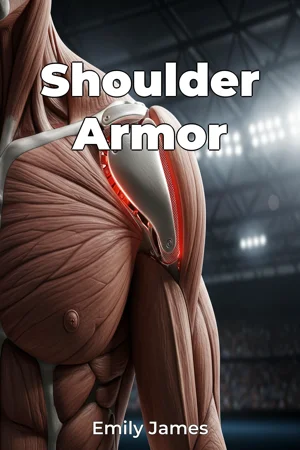
Are you tired of shoulder pain sidelining you from the sports and activities you love? "Shoulder Armor" provides a comprehensive guide to understanding, strengthening, and protecting your rotator cuffs and shoulders, ensuring these critical joints are resilient and ready for action. This book addresses the alarming rate of shoulder injuries in sports and everyday life, offering practical strategies to enhance performance and minimize the risk of pain and dysfunction. This book focuses on three core pillars: building foundational strength, increasing functional mobility, and developing proactive injury resistance. These topics are crucial because a weak or inflexible shoulder complex is vulnerable to injury, limiting athletic potential and hindering daily activities. We delve into the biomechanics of the shoulder joint, explaining how its unique structure contributes to both its remarkable range of motion and its inherent instability. Understanding this intricate interplay is the first step toward building true shoulder resilience. "Shoulder Armor" presents a multi-faceted approach, combining the latest research in exercise science, sports medicine, and rehabilitation. It bridges the gap between theoretical knowledge and practical application, providing actionable advice for athletes, coaches, physical therapists, and anyone seeking to improve their shoulder health. We explore the historical context of shoulder training, examining traditional methods and contrasting them with evidence-based practices. The central argument of "Shoulder Armor" is that a holistic, preventative approach to shoulder health is essential for long-term well-being and athletic success. Traditional rehabilitation often focuses on treating injuries *after* they occur. This book champions a proactive model, emphasizing prehabilitation and functional training to build robust, injury-resistant shoulders from the outset. The book is structured in three parts. Part 1 introduces the anatomy and biomechanics of the shoulder, explaining common injuries and risk factors. Part 2 details a comprehensive strength training program, featuring exercises targeting all major muscles surrounding the shoulder joint. We break down proper form and technique to maximize effectiveness and minimize risk. Part 3 focuses on mobility and flexibility, providing stretches and self-myofascial release techniques to improve range of motion and reduce muscle imbalances. The culmination ties these elements together, offering practical strategies for integrating shoulder care into your training regimen and daily life. The book's recommendations are supported by a wealth of scientific evidence, including peer-reviewed studies, meta-analyses, and expert opinions from leading sports medicine professionals. We rely on data from biomechanical analyses to illustrate the forces acting on the shoulder joint during various activities, and we draw upon epidemiological studies to highlight the prevalence of different shoulder injuries in specific sports. "Shoulder Armor" connects to several disciplines, including kinesiology, athletic training, and physical therapy. By integrating knowledge from these fields, we provide a well-rounded perspective on shoulder health. Further, it addresses the psychological aspect of injury prevention, emphasizing the importance of mindfulness and body awareness. A unique aspect of this book is its emphasis on functional movement patterns. Rather than isolating individual muscles, we focus on exercises that mimic real-world activities and athletic movements. This approach ensures that the shoulder is prepared for the demands of sport and daily life. The tone is informative and practical, using clear language and detailed illustrations to explain complex concepts. "Shoulder Armor" is intended for athletes of all levels, from weekend warriors to elite competitors. It is also valuable for coaches, trainers, and physical therapists who want to enhance their knowledge of shoulder health and rehabilitation. Anyone experiencing chronic shoulder pain or seeking to prevent future injuries will find this book to be a valuable resource. As a health and fitness guide, this book provides practical advice and actionable strategies, while grounding its recommendations in scientific evidence. While "Shoulder Armor" provides a comprehensive guide to shoulder health, it does not offer medical advice. Readers are encouraged to consult with a qualified healthcare professional before starting any new exercise program. The information presented in "Shoulder Armor" has real-world applications for athletes, fitness enthusiasts, and anyone seeking to improve their shoulder function and reduce their risk of injury. By following the principles outlined in this book, readers can build strong, resilient shoulders that will support their active lifestyles for years to come. This book also addresses the ongoing debate surrounding the effectiveness of different shoulder rehabilitation protocols, offering a balanced perspective based on the latest research.
Are you tired of shoulder pain sidelining you from the sports and activities you love? "Shoulder Armor" provides a comprehensive guide to understanding, strengthening, and protecting your rotator cuffs and shoulders, ensuring these critical joints are resilient and ready for action. This book addresses the alarming rate of shoulder injuries in sports and everyday life, offering practical strategies to enhance performance and minimize the risk of pain and dysfunction. This book focuses on three core pillars: building foundational strength, increasing functional mobility, and developing proactive injury resistance. These topics are crucial because a weak or inflexible shoulder complex is vulnerable to injury, limiting athletic potential and hindering daily activities. We delve into the biomechanics of the shoulder joint, explaining how its unique structure contributes to both its remarkable range of motion and its inherent instability. Understanding this intricate interplay is the first step toward building true shoulder resilience. "Shoulder Armor" presents a multi-faceted approach, combining the latest research in exercise science, sports medicine, and rehabilitation. It bridges the gap between theoretical knowledge and practical application, providing actionable advice for athletes, coaches, physical therapists, and anyone seeking to improve their shoulder health. We explore the historical context of shoulder training, examining traditional methods and contrasting them with evidence-based practices. The central argument of "Shoulder Armor" is that a holistic, preventative approach to shoulder health is essential for long-term well-being and athletic success. Traditional rehabilitation often focuses on treating injuries *after* they occur. This book champions a proactive model, emphasizing prehabilitation and functional training to build robust, injury-resistant shoulders from the outset. The book is structured in three parts. Part 1 introduces the anatomy and biomechanics of the shoulder, explaining common injuries and risk factors. Part 2 details a comprehensive strength training program, featuring exercises targeting all major muscles surrounding the shoulder joint. We break down proper form and technique to maximize effectiveness and minimize risk. Part 3 focuses on mobility and flexibility, providing stretches and self-myofascial release techniques to improve range of motion and reduce muscle imbalances. The culmination ties these elements together, offering practical strategies for integrating shoulder care into your training regimen and daily life. The book's recommendations are supported by a wealth of scientific evidence, including peer-reviewed studies, meta-analyses, and expert opinions from leading sports medicine professionals. We rely on data from biomechanical analyses to illustrate the forces acting on the shoulder joint during various activities, and we draw upon epidemiological studies to highlight the prevalence of different shoulder injuries in specific sports. "Shoulder Armor" connects to several disciplines, including kinesiology, athletic training, and physical therapy. By integrating knowledge from these fields, we provide a well-rounded perspective on shoulder health. Further, it addresses the psychological aspect of injury prevention, emphasizing the importance of mindfulness and body awareness. A unique aspect of this book is its emphasis on functional movement patterns. Rather than isolating individual muscles, we focus on exercises that mimic real-world activities and athletic movements. This approach ensures that the shoulder is prepared for the demands of sport and daily life. The tone is informative and practical, using clear language and detailed illustrations to explain complex concepts. "Shoulder Armor" is intended for athletes of all levels, from weekend warriors to elite competitors. It is also valuable for coaches, trainers, and physical therapists who want to enhance their knowledge of shoulder health and rehabilitation. Anyone experiencing chronic shoulder pain or seeking to prevent future injuries will find this book to be a valuable resource. As a health and fitness guide, this book provides practical advice and actionable strategies, while grounding its recommendations in scientific evidence. While "Shoulder Armor" provides a comprehensive guide to shoulder health, it does not offer medical advice. Readers are encouraged to consult with a qualified healthcare professional before starting any new exercise program. The information presented in "Shoulder Armor" has real-world applications for athletes, fitness enthusiasts, and anyone seeking to improve their shoulder function and reduce their risk of injury. By following the principles outlined in this book, readers can build strong, resilient shoulders that will support their active lifestyles for years to come. This book also addresses the ongoing debate surrounding the effectiveness of different shoulder rehabilitation protocols, offering a balanced perspective based on the latest research.
"Shoulder Armor" tackles the pervasive issue of shoulder pain and injuries, presenting a proactive strategy for strengthening and protecting this crucial joint. It addresses the high incidence of rotator cuff issues and other shoulder problems, emphasizing functional mobility and proactive injury resistance to enhance athletic performance and daily life. A key insight reveals the shoulder's remarkable range of motion is intertwined with its inherent instability, making targeted training essential. The book uniquely blends exercise science, sports medicine, and rehabilitation to provide actionable advice for athletes, coaches, and anyone interested in shoulder health. Rather than solely focusing on post-injury treatment, it champions prehabilitation. "Shoulder Armor" progresses systematically, beginning with shoulder anatomy and biomechanics, then detailing a comprehensive strength training program. Finally, it addresses mobility and flexibility. This comprehensive guide offers a holistic approach to shoulder care, highlighting the importance of building foundational strength to avoid injuries. The book goes beyond isolated muscle exercises, emphasizing functional movement patterns that mimic real-world activities. By understanding the forces acting on the shoulder joint and implementing preventative strategies, readers can build robust shoulders and support an active lifestyle.
Book Details
ISBN
9788235291660
Publisher
Publifye AS
Your Licenses
You don't own any licenses for this book
Purchase a license below to unlock this book and download the EPUB.
Purchase License
Select a tier to unlock this book
Need bulk licensing?
Contact us for enterprise agreements.