
About This Book
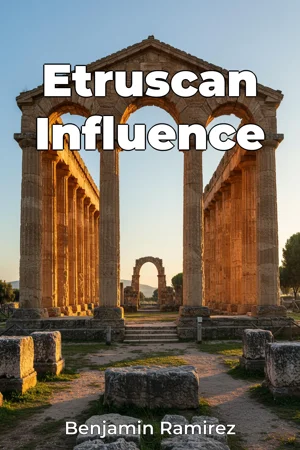
What if the foundations of Roman greatness were not entirely Roman? "Etruscan Influence" explores the profound and often overlooked impact of Etruscan civilization on the rise of Rome, revealing how deeply Etruscan culture shaped Roman architecture, religion, political structures, and military strategies. This book addresses two central and significant questions: To what extent did Etruscan innovations provide the blueprint for Roman success, and why has their contribution been historically understated? Understanding the interplay between these two cultures is crucial for comprehending the true origins of one of history’s most influential empires. Before Rome became the dominant power in Italy, the Etruscans flourished. Their advanced civilization, characterized by sophisticated engineering, religious practices, and artistic achievements, established a cultural and economic dominance predating the Roman Republic. This book delves into this period, providing crucial context for understanding the subsequent transfer of knowledge and practices from Etruria to Rome. A basic understanding of ancient Italian geography and the timeline of pre-Roman Italy is helpful but not mandatory. The central argument of “Etruscan Influence” asserts that the Etruscans were not merely precursors to the Romans but active and vital contributors to the very fabric of Roman society. Their influence, often downplayed in traditional historical narratives, was pivotal in shaping Rome’s early development and subsequent imperial expansion. This argument challenges the conventional view of Roman self-reliance and underscores the importance of cultural exchange in the ancient world. This book is structured to provide a comprehensive understanding of Etruscan influence on Rome. It begins by introducing the reader to Etruscan civilization, its origins, and its unique cultural characteristics. The narrative then develops through three major themes: Firstly, the book analyzes Etruscan architectural and engineering prowess, highlighting their innovations in urban planning, temple construction, and hydraulic engineering, and demonstrating how these techniques were adopted and adapted by the Romans. Secondly, it explores the realms of religion and ritual, examining Etruscan divination practices, funerary customs, and pantheon of gods, and tracing their influence on Roman religious beliefs and practices. Thirdly, the volume examines the influence of Etruscan political organization and military tactics on early Rome, and how the adoption of Etruscan systems of governance and military technology contributed to Rome's early military successes. The book culminates by assessing the long-term legacy of Etruscan influence on Roman identity, offering a nuanced perspective on the complex relationship between these two civilizations. The arguments presented in the book are supported by a wealth of evidence, including archaeological findings, inscriptions, and analyses of Roman texts. It draws upon recent archaeological discoveries that shed new light on Etruscan material culture and employs comparative analysis to highlight similarities and differences between Etruscan and Roman practices. Original data from museum collections and recent excavations are also incorporated to provide a fresh perspective on the topic. "Etruscan Influence" connects to several interdisciplinary fields, including art history, archaeology, and religious studies. By examining Etruscan art and architecture, it sheds light on the artistic traditions that influenced early Roman art. Its use of archaeological evidence contributes to a better understanding of ancient material culture; furthermore, by exploring religious beliefs and rituals, it offers insights into the spiritual world of the Etruscans and its impact on Roman religious practices. This book offers a unique perspective by focusing specifically on the multifaceted contributions of the Etruscans, challenging the traditional Roman-centric view of ancient Italian history. It adopts a balanced and evidence-based approach, avoiding romanticized notions of either culture and instead focusing on the tangible ways in which the Etruscans shaped the Roman world. The writing style is academic yet accessible, aiming to engage both scholars and general readers with an interest in ancient history. The intended audience includes students of ancient history, archaeology enthusiasts, and anyone with an interest in the origins of Roman civilization. It will be valuable to those seeking a deeper understanding of the cultural exchanges that shaped the ancient world. The book adheres to the conventions of academic historical writing, emphasizing factual accuracy, rigorous analysis, and clear presentation of evidence. The scope of the book is limited to the period of Etruscan influence on early Rome, from the early Iron Age to the Roman Republic. It does not delve into the later history of the Etruscans under Roman rule. The information in this book can be applied to a better understanding of ancient civilizations and the processes of cultural exchange. For example, museum curators can use the book's findings to create more accurate and nuanced displays of Etruscan artifacts. The ongoing debates regarding the extent of Etruscan influence are addressed, presenting different viewpoints and offering a balanced assessment of the available evidence.
What if the foundations of Roman greatness were not entirely Roman? "Etruscan Influence" explores the profound and often overlooked impact of Etruscan civilization on the rise of Rome, revealing how deeply Etruscan culture shaped Roman architecture, religion, political structures, and military strategies. This book addresses two central and significant questions: To what extent did Etruscan innovations provide the blueprint for Roman success, and why has their contribution been historically understated? Understanding the interplay between these two cultures is crucial for comprehending the true origins of one of history’s most influential empires. Before Rome became the dominant power in Italy, the Etruscans flourished. Their advanced civilization, characterized by sophisticated engineering, religious practices, and artistic achievements, established a cultural and economic dominance predating the Roman Republic. This book delves into this period, providing crucial context for understanding the subsequent transfer of knowledge and practices from Etruria to Rome. A basic understanding of ancient Italian geography and the timeline of pre-Roman Italy is helpful but not mandatory. The central argument of “Etruscan Influence” asserts that the Etruscans were not merely precursors to the Romans but active and vital contributors to the very fabric of Roman society. Their influence, often downplayed in traditional historical narratives, was pivotal in shaping Rome’s early development and subsequent imperial expansion. This argument challenges the conventional view of Roman self-reliance and underscores the importance of cultural exchange in the ancient world. This book is structured to provide a comprehensive understanding of Etruscan influence on Rome. It begins by introducing the reader to Etruscan civilization, its origins, and its unique cultural characteristics. The narrative then develops through three major themes: Firstly, the book analyzes Etruscan architectural and engineering prowess, highlighting their innovations in urban planning, temple construction, and hydraulic engineering, and demonstrating how these techniques were adopted and adapted by the Romans. Secondly, it explores the realms of religion and ritual, examining Etruscan divination practices, funerary customs, and pantheon of gods, and tracing their influence on Roman religious beliefs and practices. Thirdly, the volume examines the influence of Etruscan political organization and military tactics on early Rome, and how the adoption of Etruscan systems of governance and military technology contributed to Rome's early military successes. The book culminates by assessing the long-term legacy of Etruscan influence on Roman identity, offering a nuanced perspective on the complex relationship between these two civilizations. The arguments presented in the book are supported by a wealth of evidence, including archaeological findings, inscriptions, and analyses of Roman texts. It draws upon recent archaeological discoveries that shed new light on Etruscan material culture and employs comparative analysis to highlight similarities and differences between Etruscan and Roman practices. Original data from museum collections and recent excavations are also incorporated to provide a fresh perspective on the topic. "Etruscan Influence" connects to several interdisciplinary fields, including art history, archaeology, and religious studies. By examining Etruscan art and architecture, it sheds light on the artistic traditions that influenced early Roman art. Its use of archaeological evidence contributes to a better understanding of ancient material culture; furthermore, by exploring religious beliefs and rituals, it offers insights into the spiritual world of the Etruscans and its impact on Roman religious practices. This book offers a unique perspective by focusing specifically on the multifaceted contributions of the Etruscans, challenging the traditional Roman-centric view of ancient Italian history. It adopts a balanced and evidence-based approach, avoiding romanticized notions of either culture and instead focusing on the tangible ways in which the Etruscans shaped the Roman world. The writing style is academic yet accessible, aiming to engage both scholars and general readers with an interest in ancient history. The intended audience includes students of ancient history, archaeology enthusiasts, and anyone with an interest in the origins of Roman civilization. It will be valuable to those seeking a deeper understanding of the cultural exchanges that shaped the ancient world. The book adheres to the conventions of academic historical writing, emphasizing factual accuracy, rigorous analysis, and clear presentation of evidence. The scope of the book is limited to the period of Etruscan influence on early Rome, from the early Iron Age to the Roman Republic. It does not delve into the later history of the Etruscans under Roman rule. The information in this book can be applied to a better understanding of ancient civilizations and the processes of cultural exchange. For example, museum curators can use the book's findings to create more accurate and nuanced displays of Etruscan artifacts. The ongoing debates regarding the extent of Etruscan influence are addressed, presenting different viewpoints and offering a balanced assessment of the available evidence.
"Etruscan Influence" explores the significant role Etruscan civilization played in shaping the rise of Rome, challenging the traditional view of Roman self-reliance. The book reveals how Etruscan culture profoundly influenced Roman architecture, religion, political structures, and military strategies. For example, Etruscan innovations in urban planning, such as temple construction and hydraulic engineering, were later adopted and adapted by the Romans. Another key insight involves the Etruscan religious practices, including divination and funerary customs, which left a lasting imprint on Roman beliefs. The book argues that the Etruscans were vital contributors to Roman society, not merely precursors. It presents evidence from archaeological findings and Roman texts to support this assertion. Organized thematically, the book begins by introducing Etruscan civilization and then delves into architecture, religion, and political/military influence. This approach provides a comprehensive understanding of how Etruscan innovations paved the way for Roman success and underscores the importance of cultural exchange in ancient civilizations.
Book Details
ISBN
9788235291646
Publisher
Publifye AS
Your Licenses
You don't own any licenses for this book
Purchase a license below to unlock this book and download the EPUB.
Purchase License
Select a tier to unlock this book
Need bulk licensing?
Contact us for enterprise agreements.