
About This Book
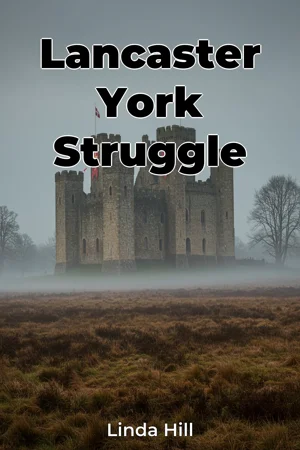
Were the Wars of the Roses merely a chaotic bloodbath between ambitious nobles, or did they represent something more profound about the nature of English monarchy and governance? "Lancaster York Struggle" delves into the complex political and dynastic conflict between the Houses of Lancaster and York, exploring the roots, key events, and lasting consequences of this tumultuous period in English history. This book argues that the Wars of the Roses were not simply a series of battles, but a protracted crisis exposing fundamental weaknesses in the English political system and the succession laws, ultimately reshaping the monarchy and the aristocracy. Three key topics form the core of this analysis: the contested claims to the throne, the role of powerful noble families, and the impact of the wars on English society and governance. Understanding these elements is crucial to grasp the long-term trajectory of English history, revealing how the conflict laid the groundwork for the Tudor dynasty and the more centralized state that followed. To fully appreciate the intricacies of this conflict, a basic understanding of medieval English history, including the reign of Edward III and the concept of feudalism, is beneficial. The book provides a concise overview of the historical context, tracing the descent of both Lancaster and York from Edward III, highlighting the ambiguities in the line of succession that fueled the conflict. "Lancaster York Struggle" contends that the Wars of the Roses exposed the fragility of the English crown and the dangers of a fractured aristocracy. The book demonstrates how the weakness of Henry VI and the ambition of rival claimants created a power vacuum that led to decades of unrest and bloodshed. This argument is vital because it challenges simplistic narratives of the wars as mere factional infighting, revealing the deeper structural issues at play. The book unfolds in a structured manner. First, it introduces the key players and the origins of the conflict, examining the reigns of Richard II and Henry IV. Second, it analyzes the major battles and political maneuvers, from the deposition of Richard II to the Battle of Bosworth Field. This section focuses on key figures such as Richard, Duke of York, Margaret of Anjou, and Richard III. Third, it explores the social and economic consequences of the wars, including the impact on trade, agriculture, and the lives of ordinary people. Finally, the book concludes by examining the rise of the Tudor dynasty and the long-term legacy of the Wars of the Roses, demonstrating how Henry VII consolidated power and established a new political order. The analysis rests on a range of primary and secondary sources. Chronicles, letters, and parliamentary records offer insights into the political and military events. Genealogical records are analyzed to clarify the complex relationships between the various claimants to the throne. Furthermore, the book draws on contemporary analyses of the period to provide a well-rounded and fact-based account. Interdisciplinary connections enhance the book's argument. Firstly, legal history sheds light on the disputed claims to the throne and the evolution of English succession laws. Secondly, social history provides a deeper understanding of the impact of the wars on different segments of society. Thirdly, military history helps to analyze the strategies and tactics employed during the major battles. "Lancaster York Struggle" offers a fresh perspective by examining the Wars of the Roses through the lens of political dysfunction. It moves beyond simple narrative accounts of battles and personalities to explore the underlying causes and consequences of the conflict, presenting a comprehensive analysis of the era. The book adopts a professional yet accessible writing style, aiming to engage both scholars and general readers interested in English history. Complex political and legal concepts are explained in plain language, making the book accessible to a wide audience. The target audience includes students of history, history enthusiasts, and anyone interested in learning more about the Wars of the Roses. The book will equip readers with a deeper understanding of the conflict, its causes, and its consequences for English history. As a work of history, this book adheres to the conventions of academic rigor, providing detailed citations and a comprehensive bibliography. It avoids speculation and relies on verifiable evidence to support its arguments. The book focuses exclusively on the Wars of the Roses in England, excluding other contemporary conflicts in Europe. It also does not delve into fictional adaptations or popular culture representations of the period, keeping the focus on historical analysis. The insights offered by "Lancaster York Struggle" have real-world applications for understanding political instability and conflict resolution. By examining the causes and consequences of the Wars of the Roses, readers can gain a better understanding of the challenges facing modern political systems and the importance of strong institutions and clear lines of succession. The book addresses ongoing debates among historians regarding the motivations and actions of key figures, such as Richard III, and the extent of the social and economic disruption caused by the wars. By presenting a balanced assessment of the evidence, the book encourages readers to form their own informed opinions on these contentious issues.
Were the Wars of the Roses merely a chaotic bloodbath between ambitious nobles, or did they represent something more profound about the nature of English monarchy and governance? "Lancaster York Struggle" delves into the complex political and dynastic conflict between the Houses of Lancaster and York, exploring the roots, key events, and lasting consequences of this tumultuous period in English history. This book argues that the Wars of the Roses were not simply a series of battles, but a protracted crisis exposing fundamental weaknesses in the English political system and the succession laws, ultimately reshaping the monarchy and the aristocracy. Three key topics form the core of this analysis: the contested claims to the throne, the role of powerful noble families, and the impact of the wars on English society and governance. Understanding these elements is crucial to grasp the long-term trajectory of English history, revealing how the conflict laid the groundwork for the Tudor dynasty and the more centralized state that followed. To fully appreciate the intricacies of this conflict, a basic understanding of medieval English history, including the reign of Edward III and the concept of feudalism, is beneficial. The book provides a concise overview of the historical context, tracing the descent of both Lancaster and York from Edward III, highlighting the ambiguities in the line of succession that fueled the conflict. "Lancaster York Struggle" contends that the Wars of the Roses exposed the fragility of the English crown and the dangers of a fractured aristocracy. The book demonstrates how the weakness of Henry VI and the ambition of rival claimants created a power vacuum that led to decades of unrest and bloodshed. This argument is vital because it challenges simplistic narratives of the wars as mere factional infighting, revealing the deeper structural issues at play. The book unfolds in a structured manner. First, it introduces the key players and the origins of the conflict, examining the reigns of Richard II and Henry IV. Second, it analyzes the major battles and political maneuvers, from the deposition of Richard II to the Battle of Bosworth Field. This section focuses on key figures such as Richard, Duke of York, Margaret of Anjou, and Richard III. Third, it explores the social and economic consequences of the wars, including the impact on trade, agriculture, and the lives of ordinary people. Finally, the book concludes by examining the rise of the Tudor dynasty and the long-term legacy of the Wars of the Roses, demonstrating how Henry VII consolidated power and established a new political order. The analysis rests on a range of primary and secondary sources. Chronicles, letters, and parliamentary records offer insights into the political and military events. Genealogical records are analyzed to clarify the complex relationships between the various claimants to the throne. Furthermore, the book draws on contemporary analyses of the period to provide a well-rounded and fact-based account. Interdisciplinary connections enhance the book's argument. Firstly, legal history sheds light on the disputed claims to the throne and the evolution of English succession laws. Secondly, social history provides a deeper understanding of the impact of the wars on different segments of society. Thirdly, military history helps to analyze the strategies and tactics employed during the major battles. "Lancaster York Struggle" offers a fresh perspective by examining the Wars of the Roses through the lens of political dysfunction. It moves beyond simple narrative accounts of battles and personalities to explore the underlying causes and consequences of the conflict, presenting a comprehensive analysis of the era. The book adopts a professional yet accessible writing style, aiming to engage both scholars and general readers interested in English history. Complex political and legal concepts are explained in plain language, making the book accessible to a wide audience. The target audience includes students of history, history enthusiasts, and anyone interested in learning more about the Wars of the Roses. The book will equip readers with a deeper understanding of the conflict, its causes, and its consequences for English history. As a work of history, this book adheres to the conventions of academic rigor, providing detailed citations and a comprehensive bibliography. It avoids speculation and relies on verifiable evidence to support its arguments. The book focuses exclusively on the Wars of the Roses in England, excluding other contemporary conflicts in Europe. It also does not delve into fictional adaptations or popular culture representations of the period, keeping the focus on historical analysis. The insights offered by "Lancaster York Struggle" have real-world applications for understanding political instability and conflict resolution. By examining the causes and consequences of the Wars of the Roses, readers can gain a better understanding of the challenges facing modern political systems and the importance of strong institutions and clear lines of succession. The book addresses ongoing debates among historians regarding the motivations and actions of key figures, such as Richard III, and the extent of the social and economic disruption caused by the wars. By presenting a balanced assessment of the evidence, the book encourages readers to form their own informed opinions on these contentious issues.
"Lancaster York Struggle" examines the Wars of the Roses, arguing it was more than just noble infighting but a crisis exposing weaknesses in the English monarchy and succession laws. This tumultuous period reshaped the English political landscape, ultimately paving the way for the Tudor dynasty. One key insight is how the weakness of Henry VI created a power vacuum, leading to decades of unrest. The conflict's impact extended beyond battles, significantly affecting English society and governance. The book explores the contested claims to the throne and the roles of powerful families within the context of Medieval English History. Beginning with the origins of the conflict in the reigns of Richard II and Henry IV, it progresses through major battles like the Battle of Bosworth Field, then concludes by analyzing the Wars' social and economic consequences, plus the rise of Henry VII. By examining the Wars of the Roses through the lens of political dysfunction, this book offers a fresh perspective on this vital era in English history.
Book Details
ISBN
9788235291622
Publisher
Publifye AS
Your Licenses
You don't own any licenses for this book
Purchase a license below to unlock this book and download the EPUB.
Purchase License
Select a tier to unlock this book
Need bulk licensing?
Contact us for enterprise agreements.