
About This Book
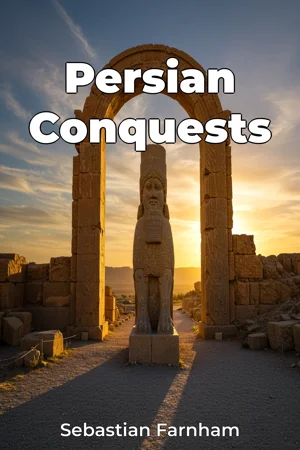
How did a relatively small kingdom in ancient Persia rise to become one of the largest and most influential empires the world has ever known? "Persian Conquests" meticulously examines the astonishing expansion of the Persian Empire, exploring not only its formidable military campaigns but also its sophisticated governance system and the lasting impact it had on the development of Middle Eastern civilizations. This book argues that the success of the Persian Empire was not solely due to military prowess, but also to a complex interplay of effective administration, religious tolerance, and strategic infrastructure development that allowed it to maintain control over a vast and diverse territory for centuries. This is crucial because understanding the Persian model of empire-building provides valuable insights into the dynamics of power, cultural exchange, and the challenges of managing large-scale political entities, lessons still relevant today. The book begins by establishing the historical context of ancient Persia, examining the political landscape of the region before the rise of Cyrus the Great. It then details the key military campaigns that led to the empire's rapid expansion, including the conquests of Lydia, Babylon, and Egypt. It goes beyond simply narrating battles; it analyzes the Persian military organization, strategy, and logistics that enabled their success. The subsequent chapters delve into the administrative structure of the empire, focusing on the role of satraps, the implementation of standardized laws and coinage, and the construction of the Royal Road, which facilitated communication and trade throughout the vast realm. Special attention is paid to the empire's policy of religious tolerance, which allowed diverse populations to coexist and contribute to the empire's stability. The book meticulously analyzes primary sources such as the Behistun Inscription and the Cyrus Cylinder, as well as secondary scholarly works, to reconstruct a comprehensive picture of Persian imperial power. It connects the Persian Empire to other fields of study, such as comparative empire studies, ancient economics, and the history of religion, enriching the understanding of its place in world history. "Persian Conquests" uniquely emphasizes the long-term cultural and political legacy of the Persian Empire, exploring its influence on subsequent empires and civilizations in the Middle East and beyond. The tone is academic, but accessible to a broad audience interested in military history, world history, and the history of the Middle East. It is specifically aimed at students, researchers, and general readers who want a detailed and nuanced understanding of the Persian Empire beyond popular stereotypes. It fulfills expectations of military history by offering detailed analysis of campaigns and military structures, while also adhering to world history conventions by analyzing cultural exchange and long-term impact. The scope of the book is limited to the Achaemenid Empire (c. 550–330 BC), with only brief references to later Persian dynasties. The information presented can be applied to understand modern-day geopolitical dynamics in the Middle East, the challenges of multicultural governance, and the long-term consequences of imperial policies. Finally, the book engages with ongoing debates about the nature of Persian rule, challenging the traditional view of the empire as simply an oppressive force and presenting a more balanced assessment of its contributions to civilization.
How did a relatively small kingdom in ancient Persia rise to become one of the largest and most influential empires the world has ever known? "Persian Conquests" meticulously examines the astonishing expansion of the Persian Empire, exploring not only its formidable military campaigns but also its sophisticated governance system and the lasting impact it had on the development of Middle Eastern civilizations. This book argues that the success of the Persian Empire was not solely due to military prowess, but also to a complex interplay of effective administration, religious tolerance, and strategic infrastructure development that allowed it to maintain control over a vast and diverse territory for centuries. This is crucial because understanding the Persian model of empire-building provides valuable insights into the dynamics of power, cultural exchange, and the challenges of managing large-scale political entities, lessons still relevant today. The book begins by establishing the historical context of ancient Persia, examining the political landscape of the region before the rise of Cyrus the Great. It then details the key military campaigns that led to the empire's rapid expansion, including the conquests of Lydia, Babylon, and Egypt. It goes beyond simply narrating battles; it analyzes the Persian military organization, strategy, and logistics that enabled their success. The subsequent chapters delve into the administrative structure of the empire, focusing on the role of satraps, the implementation of standardized laws and coinage, and the construction of the Royal Road, which facilitated communication and trade throughout the vast realm. Special attention is paid to the empire's policy of religious tolerance, which allowed diverse populations to coexist and contribute to the empire's stability. The book meticulously analyzes primary sources such as the Behistun Inscription and the Cyrus Cylinder, as well as secondary scholarly works, to reconstruct a comprehensive picture of Persian imperial power. It connects the Persian Empire to other fields of study, such as comparative empire studies, ancient economics, and the history of religion, enriching the understanding of its place in world history. "Persian Conquests" uniquely emphasizes the long-term cultural and political legacy of the Persian Empire, exploring its influence on subsequent empires and civilizations in the Middle East and beyond. The tone is academic, but accessible to a broad audience interested in military history, world history, and the history of the Middle East. It is specifically aimed at students, researchers, and general readers who want a detailed and nuanced understanding of the Persian Empire beyond popular stereotypes. It fulfills expectations of military history by offering detailed analysis of campaigns and military structures, while also adhering to world history conventions by analyzing cultural exchange and long-term impact. The scope of the book is limited to the Achaemenid Empire (c. 550–330 BC), with only brief references to later Persian dynasties. The information presented can be applied to understand modern-day geopolitical dynamics in the Middle East, the challenges of multicultural governance, and the long-term consequences of imperial policies. Finally, the book engages with ongoing debates about the nature of Persian rule, challenging the traditional view of the empire as simply an oppressive force and presenting a more balanced assessment of its contributions to civilization.
"Persian Conquests" explores the rise of ancient Persia into a dominant empire, emphasizing not only its military successes but also its sophisticated methods of governance. The book argues that the empire's expansion under leaders like Cyrus the Great resulted from military strength, strategic infrastructure, and a surprising degree of religious tolerance. A key insight is how the Achaemenid Empire managed to control a diverse territory for centuries through a network of satraps and standardized laws. The book starts by setting the stage, detailing the political environment before Cyrus, then moves through pivotal military campaigns like the conquests of Lydia and Babylon. It analyzes Persian military organization and logistics, before examining the administrative structure, including the role of satraps and the construction of the Royal Road. The work uniquely emphasizes the lasting cultural and political legacy of the Persian Empire, demonstrating its influence on subsequent Middle Eastern civilizations. By analyzing primary sources like the Behistun Inscription, "Persian Conquests" provides a balanced assessment of the empire's contributions, challenging traditional views of Persian rule as purely oppressive. This approach is valuable for students and general readers, offering a nuanced understanding of ancient warfare, imperialism, and cultural exchange within the context of world history. The book's insights can even be applied to understanding modern geopolitical dynamics and the challenges of multicultural governance.
Book Details
ISBN
9788235291608
Publisher
Publifye AS
Your Licenses
You don't own any licenses for this book
Purchase a license below to unlock this book and download the EPUB.
Purchase License
Select a tier to unlock this book
Need bulk licensing?
Contact us for enterprise agreements.