
About This Book
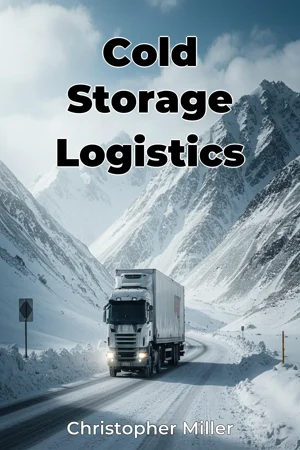
Imagine a world without readily available fresh food. "Cold Storage Logistics" examines the indispensable role of refrigeration technology in enabling the global food supply chain, significantly impacting our diets, economies, and lifestyles. This book delves into the intricate systems and processes that keep food fresh from farm to table, focusing on the technology and business aspects of this critical industry. We explore two primary topics: the evolution and engineering of refrigeration technologies, and the complex logistical networks that depend on them. Understanding the science behind cooling and preservation is fundamental to grasping the challenges of maintaining consistent temperatures across vast distances. The second key area investigates how businesses manage and optimize cold chains to minimize waste, maximize efficiency, and ensure food safety. These topics are paramount because they directly affect food security, public health, and global trade balances. Historically, food preservation relied on rudimentary methods like salting and drying. The advent of mechanical refrigeration in the 19th century revolutionized the industry, permitting the long-distance transport of perishable goods. This book assumes a basic understanding of supply chain management and food science principles, but provides sufficient context to make the material accessible to readers from various backgrounds. At its core, "Cold Storage Logistics" argues that efficient and sustainable cold chain logistics are essential for alleviating food insecurity and promoting economic growth in a globalized world. Innovations in refrigeration technology and improvements in logistical strategies offer the potential to reduce food waste, extend shelf life, and open new markets for producers. The book unfolds by first introducing the fundamental principles of refrigeration and their application in food preservation. It then examines the components of a cold chain, from initial cooling and storage at production sites to refrigerated transportation and warehousing, culminating in delivery to retailers and consumers. Major points include analyses of different refrigeration technologies, such as vapor compression and absorption systems; explorations of temperature monitoring and control strategies; and discussions of packaging and handling techniques to minimize spoilage. A dedicated section explores the integration of digital technologies, like IoT sensors and blockchain, for enhancing traceability and transparency within cold chains. The book concludes by assessing the environmental impact of cold storage and exploring opportunities for sustainable practices, such as energy-efficient refrigeration and alternative refrigerants. The arguments presented are supported by a combination of scientific research, industry reports, case studies, and statistical data. Emphasis is placed on peer-reviewed academic articles and empirical evidence gathered from real-world cold chain operations. Additionally, the book incorporates insights from interviews with industry experts and analyses of best practices implemented by leading companies in the cold storage sector. "Cold Storage Logistics" draws connections to several other fields, including environmental science (assessing the impact of refrigerants), economics (analyzing the cost-benefit of cold chain investments), and public policy (examining regulations related to food safety and waste reduction). These interdisciplinary connections enrich the book's analysis and demonstrate the far-reaching implications of cold storage logistics. This book offers a unique perspective by combining technical expertise with business acumen. It moves beyond a purely engineering focus by considering the economic and social factors that shape the cold storage industry. The tone is informative and analytical, presenting complex information in a clear and accessible manner. The writing style is professional but not overly academic, aiming to engage a broad audience of readers. The target audience includes supply chain professionals, logistics managers, food scientists, engineers, policymakers, and students interested in the intersection of technology, business, and food security. This book will be valuable to anyone seeking a comprehensive understanding of the cold storage industry and its role in the global economy. As a non-fiction book, "Cold Storage Logistics" adheres to the conventions of accuracy, objectivity, and evidence-based analysis. The scope is broad, covering various aspects of cold storage technology and logistics, but it does not delve into specific product categories or regional markets in excessive detail, maintaining a global perspective. The information presented can be applied practically by readers to improve cold chain operations, reduce food waste, optimize energy consumption, and make informed investment decisions. The book addresses ongoing debates within the field, such as the push for replacing hydrofluorocarbon (HFC) refrigerants with more environmentally friendly alternatives and the challenges of ensuring cold chain integrity in developing countries. By presenting different perspectives and analyzing the available evidence, it aims to contribute to a more informed discussion and guide future research and policy.
Imagine a world without readily available fresh food. "Cold Storage Logistics" examines the indispensable role of refrigeration technology in enabling the global food supply chain, significantly impacting our diets, economies, and lifestyles. This book delves into the intricate systems and processes that keep food fresh from farm to table, focusing on the technology and business aspects of this critical industry. We explore two primary topics: the evolution and engineering of refrigeration technologies, and the complex logistical networks that depend on them. Understanding the science behind cooling and preservation is fundamental to grasping the challenges of maintaining consistent temperatures across vast distances. The second key area investigates how businesses manage and optimize cold chains to minimize waste, maximize efficiency, and ensure food safety. These topics are paramount because they directly affect food security, public health, and global trade balances. Historically, food preservation relied on rudimentary methods like salting and drying. The advent of mechanical refrigeration in the 19th century revolutionized the industry, permitting the long-distance transport of perishable goods. This book assumes a basic understanding of supply chain management and food science principles, but provides sufficient context to make the material accessible to readers from various backgrounds. At its core, "Cold Storage Logistics" argues that efficient and sustainable cold chain logistics are essential for alleviating food insecurity and promoting economic growth in a globalized world. Innovations in refrigeration technology and improvements in logistical strategies offer the potential to reduce food waste, extend shelf life, and open new markets for producers. The book unfolds by first introducing the fundamental principles of refrigeration and their application in food preservation. It then examines the components of a cold chain, from initial cooling and storage at production sites to refrigerated transportation and warehousing, culminating in delivery to retailers and consumers. Major points include analyses of different refrigeration technologies, such as vapor compression and absorption systems; explorations of temperature monitoring and control strategies; and discussions of packaging and handling techniques to minimize spoilage. A dedicated section explores the integration of digital technologies, like IoT sensors and blockchain, for enhancing traceability and transparency within cold chains. The book concludes by assessing the environmental impact of cold storage and exploring opportunities for sustainable practices, such as energy-efficient refrigeration and alternative refrigerants. The arguments presented are supported by a combination of scientific research, industry reports, case studies, and statistical data. Emphasis is placed on peer-reviewed academic articles and empirical evidence gathered from real-world cold chain operations. Additionally, the book incorporates insights from interviews with industry experts and analyses of best practices implemented by leading companies in the cold storage sector. "Cold Storage Logistics" draws connections to several other fields, including environmental science (assessing the impact of refrigerants), economics (analyzing the cost-benefit of cold chain investments), and public policy (examining regulations related to food safety and waste reduction). These interdisciplinary connections enrich the book's analysis and demonstrate the far-reaching implications of cold storage logistics. This book offers a unique perspective by combining technical expertise with business acumen. It moves beyond a purely engineering focus by considering the economic and social factors that shape the cold storage industry. The tone is informative and analytical, presenting complex information in a clear and accessible manner. The writing style is professional but not overly academic, aiming to engage a broad audience of readers. The target audience includes supply chain professionals, logistics managers, food scientists, engineers, policymakers, and students interested in the intersection of technology, business, and food security. This book will be valuable to anyone seeking a comprehensive understanding of the cold storage industry and its role in the global economy. As a non-fiction book, "Cold Storage Logistics" adheres to the conventions of accuracy, objectivity, and evidence-based analysis. The scope is broad, covering various aspects of cold storage technology and logistics, but it does not delve into specific product categories or regional markets in excessive detail, maintaining a global perspective. The information presented can be applied practically by readers to improve cold chain operations, reduce food waste, optimize energy consumption, and make informed investment decisions. The book addresses ongoing debates within the field, such as the push for replacing hydrofluorocarbon (HFC) refrigerants with more environmentally friendly alternatives and the challenges of ensuring cold chain integrity in developing countries. By presenting different perspectives and analyzing the available evidence, it aims to contribute to a more informed discussion and guide future research and policy.
"Cold Storage Logistics" explores the critical role of refrigeration technology in the global food supply chain, impacting everything from our diets to global trade. It examines how maintaining consistent temperatures across vast distances is essential for food security and reducing waste. The book highlights the evolution of refrigeration from rudimentary methods to advanced systems used today. One intriguing fact is how mechanical refrigeration, developed in the 19th century, enabled long-distance transport of perishable goods, revolutionizing food availability. The book delves into both the engineering of refrigeration technologies and the business strategies involved in cold chain management. It progresses from the fundamental principles of refrigeration and their application in food preservation to the complexities of refrigerated transportation, warehousing, and the integration of digital technologies like IoT for enhanced traceability. A key aspect is the emphasis on sustainable practices, exploring energy-efficient refrigeration and alternative refrigerants to reduce the environmental impact of cold storage. What makes this book unique is its combination of technical detail with business insights, offering a comprehensive understanding of the cold storage industry. Supported by research, case studies, and expert interviews, it provides practical information for improving cold chain operations, optimizing energy consumption, and making informed decisions in the logistics and food supply chain sectors.
Book Details
ISBN
9788235291370
Publisher
Publifye AS
Your Licenses
You don't own any licenses for this book
Purchase a license below to unlock this book and download the EPUB.
Purchase License
Select a tier to unlock this book
Need bulk licensing?
Contact us for enterprise agreements.