
About This Book
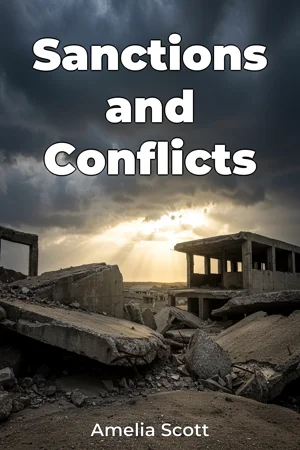
Are economic sanctions simply tools of diplomacy, or do they constitute acts of war by other means? "Sanctions and Conflicts" delves into this complex question, offering a rigorous examination of how economic sanctions function as instruments of statecraft and their profound consequences on global relations. This book explores the intricate intersections of economics and politics, providing readers with a comprehensive understanding of the strategic deployment and multifaceted impacts of sanctions in the modern world. The book centers on three core concepts: the theoretical underpinnings of economic sanctions, their practical application in diverse geopolitical contexts, and their measurable impacts on targeted states and international systems. Understanding these areas is crucial given the increasing reliance on sanctions as a primary foreign policy tool, often employed in lieu of military intervention. As nations increasingly turn to economic coercion, it becomes imperative to analyze their effectiveness, ethical implications, and unintended consequences. To contextualize these issues, "Sanctions and Conflicts" draws on historical examples from the post-World War II era to the present day. We examine case studies involving nations across various continents, exploring instances where sanctions achieved their intended objectives, failed spectacularly, or produced unforeseen outcomes. This analysis necessitates a baseline understanding of international relations theory, particularly the concepts of power balance, deterrence, and coercion. The central argument of this book is that economic sanctions, while often presented as non-violent alternatives to war, frequently function as tools of economic warfare, inflicting significant harm on civilian populations and destabilizing political systems. We contend that the long-term effects of sanctions often exacerbate conflicts, undermine democratic institutions, and create humanitarian crises, challenging the conventional wisdom of their efficacy and moral justification. "Sanctions and Conflicts" is structured to provide a thorough analysis of the topic. The introduction lays the theoretical groundwork, defining key terms and exploring the historical evolution of sanctions. The subsequent sections delve into specific case studies, examining the application of sanctions against countries such as Iran, Russia, and Venezuela. These chapters analyze the economic, social, and political impacts of sanctions, considering factors such as trade disruption, financial constraints, and humanitarian consequences. The concluding chapters synthesize the evidence, offering a nuanced assessment of the effectiveness and ethical implications of sanctions, and proposing alternative strategies for conflict resolution and international cooperation. The analysis presented relies on a combination of quantitative data, including trade statistics, GDP growth rates, and measures of social welfare, alongside qualitative assessments derived from policy documents, government reports, and scholarly research. Where available, we incorporate data from international organizations such as the United Nations, the World Bank, and the International Monetary Fund. This book inherently connects to several other fields of study, including international law, human rights, and development economics. By examining the legality and ethical implications of sanctions, we engage with questions of international law and human rights. Moreover, the analysis of the socio-economic impacts of sanctions necessitates an understanding of development economics and the factors that contribute to societal resilience and vulnerability. "Sanctions and Conflicts" adopts a multidisciplinary approach, integrating insights from economics, political science, and international relations to provide a comprehensive understanding of the complex dynamics surrounding economic sanctions. Written in an accessible yet rigorous academic style, "Sanctions and Conflicts" is aimed at policymakers, scholars, students of international relations, and anyone seeking a deeper understanding of the role of economic sanctions in contemporary global politics. This book provides valuable insights for those interested in foreign policy, international security, and human rights. The scope of this book is limited to the study of state-imposed economic sanctions, excluding other forms of economic coercion, such as boycotts by non-state actors or private firms. While we acknowledge the importance of these alternative forms of economic pressure, our focus remains on the strategic use of sanctions by governments. The information presented in this book has real-world applications for policymakers, international organizations, and advocacy groups working to promote peace and human rights. By providing a comprehensive analysis of the impacts of sanctions, we aim to inform evidence-based policy decisions and promote more effective strategies for conflict resolution and international cooperation. "Sanctions and Conflicts" directly addresses ongoing debates regarding the effectiveness and morality of economic sanctions. We engage with arguments both for and against their use, presenting a balanced and nuanced assessment of their role in international relations.
Are economic sanctions simply tools of diplomacy, or do they constitute acts of war by other means? "Sanctions and Conflicts" delves into this complex question, offering a rigorous examination of how economic sanctions function as instruments of statecraft and their profound consequences on global relations. This book explores the intricate intersections of economics and politics, providing readers with a comprehensive understanding of the strategic deployment and multifaceted impacts of sanctions in the modern world. The book centers on three core concepts: the theoretical underpinnings of economic sanctions, their practical application in diverse geopolitical contexts, and their measurable impacts on targeted states and international systems. Understanding these areas is crucial given the increasing reliance on sanctions as a primary foreign policy tool, often employed in lieu of military intervention. As nations increasingly turn to economic coercion, it becomes imperative to analyze their effectiveness, ethical implications, and unintended consequences. To contextualize these issues, "Sanctions and Conflicts" draws on historical examples from the post-World War II era to the present day. We examine case studies involving nations across various continents, exploring instances where sanctions achieved their intended objectives, failed spectacularly, or produced unforeseen outcomes. This analysis necessitates a baseline understanding of international relations theory, particularly the concepts of power balance, deterrence, and coercion. The central argument of this book is that economic sanctions, while often presented as non-violent alternatives to war, frequently function as tools of economic warfare, inflicting significant harm on civilian populations and destabilizing political systems. We contend that the long-term effects of sanctions often exacerbate conflicts, undermine democratic institutions, and create humanitarian crises, challenging the conventional wisdom of their efficacy and moral justification. "Sanctions and Conflicts" is structured to provide a thorough analysis of the topic. The introduction lays the theoretical groundwork, defining key terms and exploring the historical evolution of sanctions. The subsequent sections delve into specific case studies, examining the application of sanctions against countries such as Iran, Russia, and Venezuela. These chapters analyze the economic, social, and political impacts of sanctions, considering factors such as trade disruption, financial constraints, and humanitarian consequences. The concluding chapters synthesize the evidence, offering a nuanced assessment of the effectiveness and ethical implications of sanctions, and proposing alternative strategies for conflict resolution and international cooperation. The analysis presented relies on a combination of quantitative data, including trade statistics, GDP growth rates, and measures of social welfare, alongside qualitative assessments derived from policy documents, government reports, and scholarly research. Where available, we incorporate data from international organizations such as the United Nations, the World Bank, and the International Monetary Fund. This book inherently connects to several other fields of study, including international law, human rights, and development economics. By examining the legality and ethical implications of sanctions, we engage with questions of international law and human rights. Moreover, the analysis of the socio-economic impacts of sanctions necessitates an understanding of development economics and the factors that contribute to societal resilience and vulnerability. "Sanctions and Conflicts" adopts a multidisciplinary approach, integrating insights from economics, political science, and international relations to provide a comprehensive understanding of the complex dynamics surrounding economic sanctions. Written in an accessible yet rigorous academic style, "Sanctions and Conflicts" is aimed at policymakers, scholars, students of international relations, and anyone seeking a deeper understanding of the role of economic sanctions in contemporary global politics. This book provides valuable insights for those interested in foreign policy, international security, and human rights. The scope of this book is limited to the study of state-imposed economic sanctions, excluding other forms of economic coercion, such as boycotts by non-state actors or private firms. While we acknowledge the importance of these alternative forms of economic pressure, our focus remains on the strategic use of sanctions by governments. The information presented in this book has real-world applications for policymakers, international organizations, and advocacy groups working to promote peace and human rights. By providing a comprehensive analysis of the impacts of sanctions, we aim to inform evidence-based policy decisions and promote more effective strategies for conflict resolution and international cooperation. "Sanctions and Conflicts" directly addresses ongoing debates regarding the effectiveness and morality of economic sanctions. We engage with arguments both for and against their use, presenting a balanced and nuanced assessment of their role in international relations.
"Sanctions and Conflicts" explores the multifaceted role of economic sanctions in international relations, examining whether they truly serve as diplomatic tools or function as acts of economic warfare. The book delves into the strategic deployment of sanctions, their impact on targeted states, and their broader consequences for global stability. It highlights that while sanctions are often presented as non-violent alternatives to military intervention, they can inflict significant harm on civilian populations, potentially exacerbating conflicts and undermining democratic institutions. Did you know that nations increasingly employ economic coercion as a primary foreign policy tool? Case studies, like those of Iran, Russia, and Venezuela, illustrate the economic, social, and political impacts, including trade disruption and humanitarian consequences. The book adopts a multidisciplinary approach, drawing from economics, political science, and international relations. It progresses from laying the theoretical groundwork to exploring specific case studies and finally synthesizing evidence to assess the effectiveness and ethical implications of sanctions. By using a combination of quantitative data, such as trade statistics and GDP growth rates, and qualitative assessments from policy documents, "Sanctions and Conflicts" offers a nuanced perspective on the debates surrounding economic sanctions and their role in contemporary global politics.
Book Details
ISBN
9788235291158
Publisher
Publifye AS
Your Licenses
You don't own any licenses for this book
Purchase a license below to unlock this book and download the EPUB.
Purchase License
Select a tier to unlock this book
Need bulk licensing?
Contact us for enterprise agreements.