
About This Book
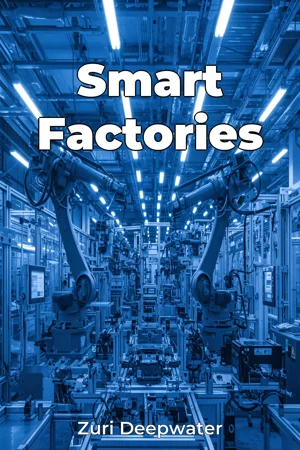
Are you ready to step into the future of manufacturing? "Smart Factories" explores how robots, automation, and artificial intelligence are revolutionizing the creation of products in modern factories, achieving unprecedented levels of precision and efficiency, and reshaping business management strategies. This book delves into the critical intersection of technological innovation and management practices that defines the smart factory paradigm. These technologies promise to boost productivity, reduce waste, and enable mass customization, but their successful implementation requires a deep understanding of both the technology and its impact on organizational structures and workflows. This book provides a comprehensive overview of the smart factory, examining its significance, underlying technologies, and the management strategies required for successful adoption. It moves beyond the hype to offer a balanced perspective on the challenges and opportunities presented by this technological shift. The narrative begins by establishing the historical context of manufacturing, tracing the evolution from traditional methods to the data-driven, automated environments of today. It discusses the rise of technologies like robotics, machine learning, and the Industrial Internet of Things (IIoT), all of which form the backbone of smart factories. The book highlights the importance of understanding these technologies not just as isolated tools but as integral components of a connected ecosystem. At its core, "Smart Factories" argues that the effective integration of technology and management is crucial for realizing the full potential of modern manufacturing. The book demonstrates that technology alone is insufficient; successful smart factories require adaptive management strategies, skilled workforces, and a commitment to continuous improvement. This argument is vital for business leaders and managers looking to navigate the complexities of Industry 4.0 and gain a competitive edge. The book is structured to provide a clear path from foundational concepts to practical applications. It starts by introducing the core principles of smart manufacturing, defining key terms, and outlining the benefits and challenges of implementation. It then explores the technological pillars of smart factories, dedicating chapters to robotics, automation, AI, and the IIoT. The book delves into the application of these technologies in various manufacturing processes, providing case studies and real-world examples to illustrate their impact. Finally, the book culminates in a discussion of management strategies for leading smart factories, covering topics such as workforce development, data-driven decision-making, and cybersecurity. The book draws upon a range of evidence, including industry reports, academic research, case studies of successful smart factory implementations, and interviews with industry experts. It also incorporates data from sources such as government agencies and technology research firms to provide a comprehensive and objective analysis. "Smart Factories" bridges the gap between technology, business management, and industrial engineering. It also touches on elements of computer science and data analytics, highlighting the interdisciplinary nature of smart manufacturing. This approach enriches the book's argument by demonstrating how different fields contribute to the success of smart factories. This book takes a holistic approach, emphasizing the importance of integrating technology with human capital and strategic management. It is written in a clear, professional style, avoiding jargon and technical complexities to make the content accessible to a wide audience. The target audience includes business managers, technology professionals, industrial engineers, and anyone interested in understanding the future of manufacturing. It offers valuable insights for those seeking to implement smart factory solutions, optimize existing operations, or simply stay informed about the latest trends. This exploration of the smart factory paradigm offers a broad overview of the landscape, focusing on key technologies and management strategies applicable across various industries. While it covers a range of topics, it does not delve into the specific technical details of individual technologies or manufacturing processes. The insights offered can be applied to improve efficiency, reduce costs, enhance product quality, and enable greater agility and responsiveness to market demands. The book also addresses ongoing debates, such as the impact of automation on employment and the ethical considerations surrounding the use of AI in manufacturing.
Are you ready to step into the future of manufacturing? "Smart Factories" explores how robots, automation, and artificial intelligence are revolutionizing the creation of products in modern factories, achieving unprecedented levels of precision and efficiency, and reshaping business management strategies. This book delves into the critical intersection of technological innovation and management practices that defines the smart factory paradigm. These technologies promise to boost productivity, reduce waste, and enable mass customization, but their successful implementation requires a deep understanding of both the technology and its impact on organizational structures and workflows. This book provides a comprehensive overview of the smart factory, examining its significance, underlying technologies, and the management strategies required for successful adoption. It moves beyond the hype to offer a balanced perspective on the challenges and opportunities presented by this technological shift. The narrative begins by establishing the historical context of manufacturing, tracing the evolution from traditional methods to the data-driven, automated environments of today. It discusses the rise of technologies like robotics, machine learning, and the Industrial Internet of Things (IIoT), all of which form the backbone of smart factories. The book highlights the importance of understanding these technologies not just as isolated tools but as integral components of a connected ecosystem. At its core, "Smart Factories" argues that the effective integration of technology and management is crucial for realizing the full potential of modern manufacturing. The book demonstrates that technology alone is insufficient; successful smart factories require adaptive management strategies, skilled workforces, and a commitment to continuous improvement. This argument is vital for business leaders and managers looking to navigate the complexities of Industry 4.0 and gain a competitive edge. The book is structured to provide a clear path from foundational concepts to practical applications. It starts by introducing the core principles of smart manufacturing, defining key terms, and outlining the benefits and challenges of implementation. It then explores the technological pillars of smart factories, dedicating chapters to robotics, automation, AI, and the IIoT. The book delves into the application of these technologies in various manufacturing processes, providing case studies and real-world examples to illustrate their impact. Finally, the book culminates in a discussion of management strategies for leading smart factories, covering topics such as workforce development, data-driven decision-making, and cybersecurity. The book draws upon a range of evidence, including industry reports, academic research, case studies of successful smart factory implementations, and interviews with industry experts. It also incorporates data from sources such as government agencies and technology research firms to provide a comprehensive and objective analysis. "Smart Factories" bridges the gap between technology, business management, and industrial engineering. It also touches on elements of computer science and data analytics, highlighting the interdisciplinary nature of smart manufacturing. This approach enriches the book's argument by demonstrating how different fields contribute to the success of smart factories. This book takes a holistic approach, emphasizing the importance of integrating technology with human capital and strategic management. It is written in a clear, professional style, avoiding jargon and technical complexities to make the content accessible to a wide audience. The target audience includes business managers, technology professionals, industrial engineers, and anyone interested in understanding the future of manufacturing. It offers valuable insights for those seeking to implement smart factory solutions, optimize existing operations, or simply stay informed about the latest trends. This exploration of the smart factory paradigm offers a broad overview of the landscape, focusing on key technologies and management strategies applicable across various industries. While it covers a range of topics, it does not delve into the specific technical details of individual technologies or manufacturing processes. The insights offered can be applied to improve efficiency, reduce costs, enhance product quality, and enable greater agility and responsiveness to market demands. The book also addresses ongoing debates, such as the impact of automation on employment and the ethical considerations surrounding the use of AI in manufacturing.
"Smart Factories" explores the transformative impact of automation, artificial intelligence, and robotics on modern manufacturing. It highlights how these technologies, particularly the Industrial Internet of Things (IIoT), are driving unprecedented efficiency and precision in factories, subsequently reshaping business management strategies. A key insight is that while these technologies promise benefits like increased productivity and reduced waste, effective implementation hinges on integrating them with adaptive management strategies and a skilled workforce. The book argues that technology alone is insufficient for creating successful smart factories; a holistic approach involving human capital and strategic management is essential. It begins by tracing the evolution of manufacturing and then delves into the technological pillars of smart factories, dedicating chapters to robotics, AI, and the IIoT. Real-world examples and case studies illustrate the impact of these technologies on various manufacturing processes. The book progresses from foundational concepts to practical applications, culminating in a discussion of management strategies for leading smart factories. Topics covered include workforce development, data-driven decision-making, and cybersecurity, offering valuable insights for business managers and technology professionals navigating Industry 4.0. This comprehensive approach aims to bridge the gap between technology, business management, and industrial engineering, providing a balanced perspective on the challenges and opportunities of this technological shift.
Book Details
ISBN
9788235291127
Publisher
Publifye AS
Your Licenses
You don't own any licenses for this book
Purchase a license below to unlock this book and download the EPUB.
Purchase License
Select a tier to unlock this book
Need bulk licensing?
Contact us for enterprise agreements.