
About This Book
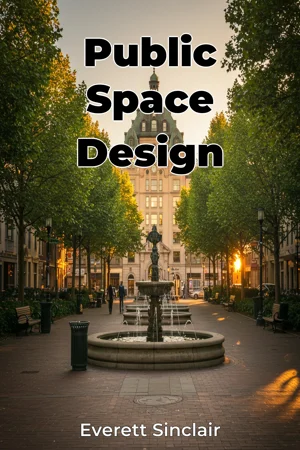
What makes a city truly livable? This book, *Public Space Design*, delves into the essential role of parks, plazas, and other communal areas in shaping vibrant and thriving urban environments. We explore how thoughtfully designed public spaces foster social interaction, promote well-being, and contribute to the overall quality of urban life. The book addresses three key areas: the historical evolution of public spaces, the principles of inclusive design, and the practical strategies for creating successful and sustainable communal areas. These topics are crucial because public spaces serve as the social glue that binds communities together, offering opportunities for recreation, relaxation, and civic engagement. Understanding the historical context of public space is critical. This book traces the development of public spaces from ancient gathering places to modern urban parks, examining how societal changes, technological advancements, and evolving urban planning philosophies have shaped their form and function. No prior knowledge is needed as key historical and design concepts are explained. The central argument of *Public Space Design* is that well-designed public spaces, created with an understanding of social needs and ecological principles, are fundamental to the health and resilience of urban communities. We contend that these spaces should not be viewed as mere amenities but as essential infrastructure that supports social equity, environmental sustainability, and economic vitality. The book is structured to provide a comprehensive understanding of public space design. First, we introduce fundamental concepts, including definitions of public space, principles of urban design, and the importance of community engagement. Then, we examine key elements of successful public spaces, such as accessibility, safety, and environmental quality. The book develops these ideas through case studies of exemplary public spaces around the world, illustrating how different design approaches can address diverse urban contexts. It culminates in a practical guide for designing and managing public spaces, offering actionable strategies for urban planners, architects, landscape architects, and community stakeholders. Evidence is drawn from a range of sources, including academic research, design guidelines, and empirical studies of user behavior in public spaces. We also present original data collected through site visits and interviews with designers, users, and community leaders. *Public Space Design* connects to several related fields, including sociology, environmental studies, and public health. By understanding how public spaces influence social interactions, environmental quality, and physical activity, we can create healthier and more sustainable urban environments. A unique aspect of this book is its emphasis on inclusive design principles. We argue that public spaces should be designed to be accessible and welcoming to all members of the community, regardless of age, ability, ethnicity, or socioeconomic status. The book offers practical guidance on how to create public spaces that are truly inclusive and equitable. The tone is informative and practical, aiming to bridge the gap between academic research and real-world design practice. The writing style is accessible and engaging, making complex concepts understandable to a wide audience. The target audience includes students and professionals in architecture, landscape architecture, urban planning, and related fields. It would also be valuable for community activists, policymakers, and anyone interested in improving the quality of urban life. As a book in the Architecture and Design genres, it incorporates visual elements such as photographs, diagrams, and plans to illustrate key concepts. The scope encompasses a wide range of public spaces, from small neighborhood parks to large urban plazas. While focusing on contemporary design practices, we also acknowledge historical precedents and future trends. Intentional limitations include a focus on physical design rather than social programming, although the importance of programming is acknowledged. The information in *Public Space Design* can be applied directly to the design and management of public spaces in cities around the world. It provides a framework for creating spaces that are not only aesthetically pleasing but also socially meaningful and environmentally sustainable. One ongoing debate in the field is the role of privatization in public space. This book explores this issue, examining the potential benefits and drawbacks of private involvement in the design, management, and funding of public spaces.
What makes a city truly livable? This book, *Public Space Design*, delves into the essential role of parks, plazas, and other communal areas in shaping vibrant and thriving urban environments. We explore how thoughtfully designed public spaces foster social interaction, promote well-being, and contribute to the overall quality of urban life. The book addresses three key areas: the historical evolution of public spaces, the principles of inclusive design, and the practical strategies for creating successful and sustainable communal areas. These topics are crucial because public spaces serve as the social glue that binds communities together, offering opportunities for recreation, relaxation, and civic engagement. Understanding the historical context of public space is critical. This book traces the development of public spaces from ancient gathering places to modern urban parks, examining how societal changes, technological advancements, and evolving urban planning philosophies have shaped their form and function. No prior knowledge is needed as key historical and design concepts are explained. The central argument of *Public Space Design* is that well-designed public spaces, created with an understanding of social needs and ecological principles, are fundamental to the health and resilience of urban communities. We contend that these spaces should not be viewed as mere amenities but as essential infrastructure that supports social equity, environmental sustainability, and economic vitality. The book is structured to provide a comprehensive understanding of public space design. First, we introduce fundamental concepts, including definitions of public space, principles of urban design, and the importance of community engagement. Then, we examine key elements of successful public spaces, such as accessibility, safety, and environmental quality. The book develops these ideas through case studies of exemplary public spaces around the world, illustrating how different design approaches can address diverse urban contexts. It culminates in a practical guide for designing and managing public spaces, offering actionable strategies for urban planners, architects, landscape architects, and community stakeholders. Evidence is drawn from a range of sources, including academic research, design guidelines, and empirical studies of user behavior in public spaces. We also present original data collected through site visits and interviews with designers, users, and community leaders. *Public Space Design* connects to several related fields, including sociology, environmental studies, and public health. By understanding how public spaces influence social interactions, environmental quality, and physical activity, we can create healthier and more sustainable urban environments. A unique aspect of this book is its emphasis on inclusive design principles. We argue that public spaces should be designed to be accessible and welcoming to all members of the community, regardless of age, ability, ethnicity, or socioeconomic status. The book offers practical guidance on how to create public spaces that are truly inclusive and equitable. The tone is informative and practical, aiming to bridge the gap between academic research and real-world design practice. The writing style is accessible and engaging, making complex concepts understandable to a wide audience. The target audience includes students and professionals in architecture, landscape architecture, urban planning, and related fields. It would also be valuable for community activists, policymakers, and anyone interested in improving the quality of urban life. As a book in the Architecture and Design genres, it incorporates visual elements such as photographs, diagrams, and plans to illustrate key concepts. The scope encompasses a wide range of public spaces, from small neighborhood parks to large urban plazas. While focusing on contemporary design practices, we also acknowledge historical precedents and future trends. Intentional limitations include a focus on physical design rather than social programming, although the importance of programming is acknowledged. The information in *Public Space Design* can be applied directly to the design and management of public spaces in cities around the world. It provides a framework for creating spaces that are not only aesthetically pleasing but also socially meaningful and environmentally sustainable. One ongoing debate in the field is the role of privatization in public space. This book explores this issue, examining the potential benefits and drawbacks of private involvement in the design, management, and funding of public spaces.
"Public Space Design" explores the critical role of communal areas like parks and plazas in shaping vibrant urban environments. It examines how well-designed public spaces foster social interaction and contribute to overall urban quality of life. The book uniquely emphasizes inclusive design, arguing that these spaces should be accessible to everyone, regardless of background. Discover how public spaces have evolved from ancient gathering spots to modern urban parks, reflecting societal changes and technological advancements. The book progresses from fundamental concepts to practical strategies for creating successful and sustainable communal areas. Case studies of global public spaces illustrate diverse design approaches addressing varying urban contexts. By understanding the historical context, principles of urban design, and the importance of community engagement, *Public Space Design* provides actionable strategies for urban planners, architects, and community stakeholders. Ultimately, the book argues that thoughtfully designed public spaces are essential infrastructure, supporting social equity, environmental sustainability, and economic vitality. It highlights how these spaces should be viewed as more than just amenities, but as integral components of healthy and resilient urban communities.
Book Details
ISBN
9788235290953
Publisher
Publifye AS
Your Licenses
You don't own any licenses for this book
Purchase a license below to unlock this book and download the EPUB.
Purchase License
Select a tier to unlock this book
Need bulk licensing?
Contact us for enterprise agreements.