
About This Book
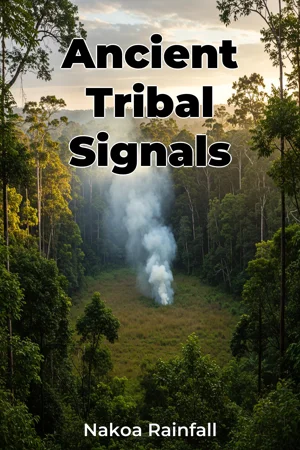
How did civilizations communicate across vast distances before the advent of the written word or electronic signals? "Ancient Tribal Signals" delves into the intricate world of non-verbal communication employed by indigenous groups across the globe, revealing the sophisticated systems they developed for conveying vital information. This book explores the key methods of communication, including smoke signals, the rhythmic language of drumming, and the enduring messages etched into carved markers, underlining their critical role in survival, social cohesion, and the transmission of knowledge. This exploration is significant because it sheds light on the ingenuity and resourcefulness of these societies, challenging the often-held perception of pre-literate cultures as primitive. Understanding these communication methods provides valuable insights into the complex social structures, belief systems, and environmental knowledge of indigenous peoples. A crucial aspect of this study is the historical and social context in which these signals were developed and used. Readers will gain an understanding of the environmental factors that influenced the choice of specific signals, the social hierarchies that governed their use, and the impact of these communication systems on inter-tribal relations. The central argument of "Ancient Tribal Signals" is that non-verbal communication systems were not merely rudimentary forms of signaling but rather sophisticated, culturally embedded practices that played a vital role in shaping the social, economic, and political landscapes of indigenous societies. They represent a wealth of knowledge and ingenuity that is often overlooked in conventional historical narratives. The book's structure will begin with an introduction to the fundamental principles of non-verbal communication in indigenous cultures, setting the stage for a deeper exploration of specific techniques. Subsequent chapters will focus on the three primary methods: smoke signals, examining their diverse forms and uses across different geographical regions; drumming, analyzing its rhythmic codes and cultural significance in transmitting messages and fostering community; and carved markers, investigating their role in marking territory, conveying warnings, and preserving historical records. The book will culminate in an analysis of the interconnectedness of these systems and their lasting legacy in the modern world. The evidence presented will draw upon a wide range of sources, including archaeological findings, ethnographic studies, historical accounts, and linguistic analysis. Special attention will be given to oral histories and traditional knowledge passed down through generations, providing valuable perspectives on the meaning and significance of these signals. The study of ancient tribal signals naturally intersects with fields such as anthropology, linguistics, and archaeology. Anthropological perspectives provide insights into the cultural context and social functions of these communication systems. Linguistic analysis helps decipher the symbolic meanings embedded in the signals. Archaeological findings offer tangible evidence of their existence and evolution. "Ancient Tribal Signals" adopts a multidisciplinary approach, integrating historical research, cultural analysis, and scientific investigation to provide a holistic understanding of non-verbal communication in indigenous societies. The book is written in an accessible and engaging style, making it suitable for a broad audience, including students, researchers, and anyone interested in anthropology, history, or indigenous cultures. The intended readership includes those seeking a deeper understanding of human communication and cultural diversity. This book offers valuable insights into the ingenuity and resilience of indigenous peoples. While the book aims to provide a comprehensive overview, it acknowledges the vastness and diversity of indigenous cultures worldwide, focusing on representative examples to illustrate key concepts and themes. The information presented in "Ancient Tribal Signals" has practical applications in fields such as cultural preservation, education, and cross-cultural communication. By understanding the principles and practices of ancient tribal signals, we can gain a deeper appreciation for the richness and complexity of human communication and work towards preserving these valuable cultural traditions for future generations.
How did civilizations communicate across vast distances before the advent of the written word or electronic signals? "Ancient Tribal Signals" delves into the intricate world of non-verbal communication employed by indigenous groups across the globe, revealing the sophisticated systems they developed for conveying vital information. This book explores the key methods of communication, including smoke signals, the rhythmic language of drumming, and the enduring messages etched into carved markers, underlining their critical role in survival, social cohesion, and the transmission of knowledge. This exploration is significant because it sheds light on the ingenuity and resourcefulness of these societies, challenging the often-held perception of pre-literate cultures as primitive. Understanding these communication methods provides valuable insights into the complex social structures, belief systems, and environmental knowledge of indigenous peoples. A crucial aspect of this study is the historical and social context in which these signals were developed and used. Readers will gain an understanding of the environmental factors that influenced the choice of specific signals, the social hierarchies that governed their use, and the impact of these communication systems on inter-tribal relations. The central argument of "Ancient Tribal Signals" is that non-verbal communication systems were not merely rudimentary forms of signaling but rather sophisticated, culturally embedded practices that played a vital role in shaping the social, economic, and political landscapes of indigenous societies. They represent a wealth of knowledge and ingenuity that is often overlooked in conventional historical narratives. The book's structure will begin with an introduction to the fundamental principles of non-verbal communication in indigenous cultures, setting the stage for a deeper exploration of specific techniques. Subsequent chapters will focus on the three primary methods: smoke signals, examining their diverse forms and uses across different geographical regions; drumming, analyzing its rhythmic codes and cultural significance in transmitting messages and fostering community; and carved markers, investigating their role in marking territory, conveying warnings, and preserving historical records. The book will culminate in an analysis of the interconnectedness of these systems and their lasting legacy in the modern world. The evidence presented will draw upon a wide range of sources, including archaeological findings, ethnographic studies, historical accounts, and linguistic analysis. Special attention will be given to oral histories and traditional knowledge passed down through generations, providing valuable perspectives on the meaning and significance of these signals. The study of ancient tribal signals naturally intersects with fields such as anthropology, linguistics, and archaeology. Anthropological perspectives provide insights into the cultural context and social functions of these communication systems. Linguistic analysis helps decipher the symbolic meanings embedded in the signals. Archaeological findings offer tangible evidence of their existence and evolution. "Ancient Tribal Signals" adopts a multidisciplinary approach, integrating historical research, cultural analysis, and scientific investigation to provide a holistic understanding of non-verbal communication in indigenous societies. The book is written in an accessible and engaging style, making it suitable for a broad audience, including students, researchers, and anyone interested in anthropology, history, or indigenous cultures. The intended readership includes those seeking a deeper understanding of human communication and cultural diversity. This book offers valuable insights into the ingenuity and resilience of indigenous peoples. While the book aims to provide a comprehensive overview, it acknowledges the vastness and diversity of indigenous cultures worldwide, focusing on representative examples to illustrate key concepts and themes. The information presented in "Ancient Tribal Signals" has practical applications in fields such as cultural preservation, education, and cross-cultural communication. By understanding the principles and practices of ancient tribal signals, we can gain a deeper appreciation for the richness and complexity of human communication and work towards preserving these valuable cultural traditions for future generations.
"Ancient Tribal Signals" explores the sophisticated non-verbal communication methods developed by indigenous cultures worldwide. It delves into how pre-literate societies conveyed vital information across distances using techniques like smoke signals, drumming, and carved markers. These methods weren't rudimentary; they were intricately woven into the social fabric, reflecting complex belief systems and environmental knowledge. For example, the specific type of wood used for smoke signals could carry different meanings, illustrating the depth of this communication form. The book examines the historical and social contexts surrounding these signals, revealing how environmental factors and social hierarchies shaped their use. It progresses from an introduction to non-verbal communication principles to detailed analyses of smoke signals, drumming's rhythmic codes, and the stories etched in carved markers. Ultimately, "Ancient Tribal Signals" argues that these systems were crucial in shaping the social, economic, and political landscapes of indigenous societies and highlights their enduring legacy.
Book Details
ISBN
9788235290748
Publisher
Publifye AS
Your Licenses
You don't own any licenses for this book
Purchase a license below to unlock this book and download the EPUB.
Purchase License
Select a tier to unlock this book
Need bulk licensing?
Contact us for enterprise agreements.