
About This Book
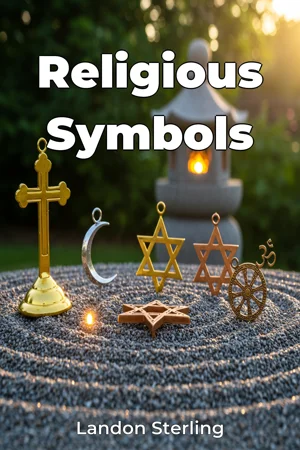
Have you ever paused to consider the profound stories told not through words, but through the silent language of symbols that punctuate our world? Religious symbols, from the familiar cross to the enigmatic lotus flower, are powerful visual representations of faith, belief, and cultural identity. 'Religious Symbols' delves into the rich tapestry of these emblems, exploring their multifaceted meanings and enduring significance across diverse religious traditions. This book examines the core symbols of major world religions, focusing on how these symbols encapsulate complex theological concepts and shape religious practices. Understanding these symbols is crucial for fostering interfaith dialogue, appreciating cultural diversity, and gaining a deeper insight into the human quest for meaning. This book examines the historical context that shaped the evolution of ubiquitous symbols such as the Christian cross, the Islamic crescent, the Star of David in Judaism, the Dharma wheel in Buddhism, and the Om in Hinduism. It also considers lesser-known but equally significant symbols within smaller or indigenous religious traditions. No prior knowledge of religious studies is required, as the book provides clear explanations and historical background. The central argument of 'Religious Symbols' is that religious symbols are not merely decorative or arbitrary; they are essential vehicles for transmitting religious narratives, values, and identities across generations. They serve as focal points for ritual and devotion, and they often embody the core tenets of a particular faith tradition. This argument is important because it highlights the active role symbols play in shaping religious experience and cultural understanding. The book is structured to provide a comprehensive exploration of religious symbols. a) The introduction lays the groundwork by defining 'religious symbol,' discussing the nature of symbolism, and establishing a framework for analyzing the diverse forms these symbols take. b) The book systematically examines major religious traditions, dedicating chapters to Christianity, Islam, Judaism, Hinduism, Buddhism, and other significant faiths. Each chapter explores the key symbols associated with that tradition, tracing their origins, evolution, and current usage. Special attention is given to the interpretation of these symbols within their respective religious contexts. c) In the concluding section, the book synthesizes the findings from the individual chapters, drawing comparisons and identifying common themes across religious traditions. It reflects on the ongoing relevance of religious symbols in the modern world, considering how they are used in contemporary art, architecture, and popular culture. d) Finally, the book discusses the practical implications of understanding religious symbols, emphasizing their role in promoting interfaith understanding and conflict resolution. The analysis presented in the book draws on a range of evidence, including religious texts, archaeological findings, historical documents, and ethnographic studies. It also incorporates insights from art history, semiotics, and cultural anthropology. The book employs a comparative approach, analyzing symbols within their specific religious contexts while also identifying shared patterns and universal themes. 'Religious Symbols' also connects to other fields of study, such as art history, anthropology, and sociology. Art history provides insight into the aesthetic dimensions of religious symbols and their representation in various art forms. Anthropology offers tools for understanding the cultural context in which symbols are created and interpreted. Sociology sheds light on the role of symbols in shaping social identities and group dynamics. This book offers a unique perspective by examining religious symbols not as static objects but as dynamic and evolving entities that are constantly reinterpreted and adapted within their respective cultural and religious contexts. It also emphasizes the importance of understanding the lived experience of religious practitioners in order to fully grasp the meaning of these symbols. The tone of the book is informative and accessible, aiming to make complex concepts understandable to a broad audience. The writing style is clear, concise, and engaging, avoiding jargon and using concrete examples to illustrate key points. The target audience for this book includes students of religion, theology, and cultural studies, as well as anyone interested in learning more about the world's diverse religious traditions. It would also be valuable for educators, interfaith leaders, and individuals seeking to deepen their understanding of cultural diversity. As a work of non-fiction in the realm of religious studies, 'Religious Symbols' adheres to the genre's emphasis on factual accuracy, objectivity, and scholarly rigor. It cites sources appropriately and presents information in a balanced and unbiased manner. The scope of the book is broad, covering a wide range of religious traditions and symbols. However, it is also limited in that it does not delve into the specific symbols of every single religious group or sect. The focus is on the major world religions and their most prominent symbols, providing a foundation for further exploration. Understanding the meanings of religious symbols can be applied in various real-world contexts, such as cross-cultural communication, interfaith dialogue, and conflict resolution. It can also enhance our appreciation of religious art, architecture, and literature. While the interpretation of religious symbols is often a matter of faith and personal belief, there are also ongoing debates and controversies surrounding their use and meaning. For example, some symbols have been appropriated for political purposes or used to justify acts of violence. This book acknowledges these controversies and encourages readers to engage with them critically while respecting the diversity of religious beliefs and practices. 'Religious Symbols' aims to equip readers with the knowledge and critical thinking skills necessary to navigate this complex and fascinating landscape.
Have you ever paused to consider the profound stories told not through words, but through the silent language of symbols that punctuate our world? Religious symbols, from the familiar cross to the enigmatic lotus flower, are powerful visual representations of faith, belief, and cultural identity. 'Religious Symbols' delves into the rich tapestry of these emblems, exploring their multifaceted meanings and enduring significance across diverse religious traditions. This book examines the core symbols of major world religions, focusing on how these symbols encapsulate complex theological concepts and shape religious practices. Understanding these symbols is crucial for fostering interfaith dialogue, appreciating cultural diversity, and gaining a deeper insight into the human quest for meaning. This book examines the historical context that shaped the evolution of ubiquitous symbols such as the Christian cross, the Islamic crescent, the Star of David in Judaism, the Dharma wheel in Buddhism, and the Om in Hinduism. It also considers lesser-known but equally significant symbols within smaller or indigenous religious traditions. No prior knowledge of religious studies is required, as the book provides clear explanations and historical background. The central argument of 'Religious Symbols' is that religious symbols are not merely decorative or arbitrary; they are essential vehicles for transmitting religious narratives, values, and identities across generations. They serve as focal points for ritual and devotion, and they often embody the core tenets of a particular faith tradition. This argument is important because it highlights the active role symbols play in shaping religious experience and cultural understanding. The book is structured to provide a comprehensive exploration of religious symbols. a) The introduction lays the groundwork by defining 'religious symbol,' discussing the nature of symbolism, and establishing a framework for analyzing the diverse forms these symbols take. b) The book systematically examines major religious traditions, dedicating chapters to Christianity, Islam, Judaism, Hinduism, Buddhism, and other significant faiths. Each chapter explores the key symbols associated with that tradition, tracing their origins, evolution, and current usage. Special attention is given to the interpretation of these symbols within their respective religious contexts. c) In the concluding section, the book synthesizes the findings from the individual chapters, drawing comparisons and identifying common themes across religious traditions. It reflects on the ongoing relevance of religious symbols in the modern world, considering how they are used in contemporary art, architecture, and popular culture. d) Finally, the book discusses the practical implications of understanding religious symbols, emphasizing their role in promoting interfaith understanding and conflict resolution. The analysis presented in the book draws on a range of evidence, including religious texts, archaeological findings, historical documents, and ethnographic studies. It also incorporates insights from art history, semiotics, and cultural anthropology. The book employs a comparative approach, analyzing symbols within their specific religious contexts while also identifying shared patterns and universal themes. 'Religious Symbols' also connects to other fields of study, such as art history, anthropology, and sociology. Art history provides insight into the aesthetic dimensions of religious symbols and their representation in various art forms. Anthropology offers tools for understanding the cultural context in which symbols are created and interpreted. Sociology sheds light on the role of symbols in shaping social identities and group dynamics. This book offers a unique perspective by examining religious symbols not as static objects but as dynamic and evolving entities that are constantly reinterpreted and adapted within their respective cultural and religious contexts. It also emphasizes the importance of understanding the lived experience of religious practitioners in order to fully grasp the meaning of these symbols. The tone of the book is informative and accessible, aiming to make complex concepts understandable to a broad audience. The writing style is clear, concise, and engaging, avoiding jargon and using concrete examples to illustrate key points. The target audience for this book includes students of religion, theology, and cultural studies, as well as anyone interested in learning more about the world's diverse religious traditions. It would also be valuable for educators, interfaith leaders, and individuals seeking to deepen their understanding of cultural diversity. As a work of non-fiction in the realm of religious studies, 'Religious Symbols' adheres to the genre's emphasis on factual accuracy, objectivity, and scholarly rigor. It cites sources appropriately and presents information in a balanced and unbiased manner. The scope of the book is broad, covering a wide range of religious traditions and symbols. However, it is also limited in that it does not delve into the specific symbols of every single religious group or sect. The focus is on the major world religions and their most prominent symbols, providing a foundation for further exploration. Understanding the meanings of religious symbols can be applied in various real-world contexts, such as cross-cultural communication, interfaith dialogue, and conflict resolution. It can also enhance our appreciation of religious art, architecture, and literature. While the interpretation of religious symbols is often a matter of faith and personal belief, there are also ongoing debates and controversies surrounding their use and meaning. For example, some symbols have been appropriated for political purposes or used to justify acts of violence. This book acknowledges these controversies and encourages readers to engage with them critically while respecting the diversity of religious beliefs and practices. 'Religious Symbols' aims to equip readers with the knowledge and critical thinking skills necessary to navigate this complex and fascinating landscape.
"Religious Symbols" explores the profound meanings embedded within visual representations of faith across diverse religious traditions. From the Christian cross to the Islamic crescent, these symbols encapsulate complex theological concepts and shape religious practices. Understanding these emblems is crucial for fostering interfaith dialogue and appreciating cultural diversity. Did you know that religious symbols are not merely decorative; they actively transmit religious narratives and identities across generations? The book systematically examines major religious traditions like Christianity, Islam, Judaism, Hinduism, and Buddhism, dedicating chapters to each. It traces the origins, evolution, and current usage of key symbols within their specific contexts. The analysis incorporates insights from religious texts, archaeological findings, and ethnographic studies. The concluding section synthesizes findings, identifying common themes and reflecting on the ongoing relevance of religious symbols. This book uniquely presents religious symbols as dynamic entities, constantly reinterpreted within cultural and religious contexts. It emphasizes understanding the lived experiences surrounding them. By exploring these symbols, readers gain critical thinking skills necessary to navigate the complex landscape of religious beliefs and practices, promoting interfaith understanding and conflict resolution.
Book Details
ISBN
9788235290724
Publisher
Publifye AS
Your Licenses
You don't own any licenses for this book
Purchase a license below to unlock this book and download the EPUB.
Purchase License
Select a tier to unlock this book
Need bulk licensing?
Contact us for enterprise agreements.