
About This Book
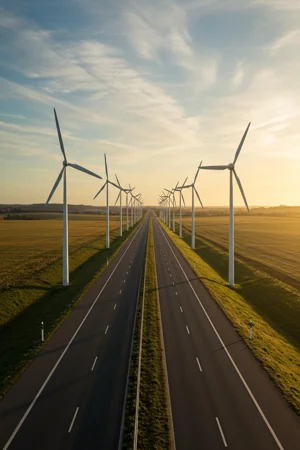
Can our roads do more than just connect us? "Wind Roads" explores the groundbreaking possibility of integrating wind turbine technology directly into our roadways, transforming them into sources of clean, renewable energy. This book delves into the science, engineering, and environmental implications of this innovative approach to energy generation, offering a comprehensive look at a potentially transformative technology. The central argument of "Wind Roads" is that road-integrated wind turbines can significantly contribute to a sustainable energy future by harnessing the underutilized power of moving vehicles. This argument is critical because it addresses the urgent need for renewable energy solutions in the face of climate change and dwindling fossil fuel reserves. It also challenges conventional thinking about infrastructure, proposing a dual-purpose use for roads that could revolutionize energy production and distribution. “Wind Roads” examines several key topics. First, it details the core technology: how small-scale wind turbines can be embedded within or adjacent to roadways to capture energy from passing vehicles. Second, the book assesses the environmental impact, examining both the advantages (reduced carbon emissions) and potential disadvantages (noise pollution, wildlife effects) of this technology. Third, it explores the economic feasibility of road-integrated wind turbines, analyzing the costs of installation and maintenance against the potential energy output and revenue generation. The book begins by laying the groundwork with an overview of the current energy landscape, emphasizing the growing demand for renewable sources and the limitations of existing technologies such as solar and large-scale wind farms. It then transitions into a detailed explanation of the physics and engineering principles behind road-integrated wind turbines, including factors such as turbine design, placement optimization, and energy conversion efficiency. The subsequent chapters delve into specific case studies and pilot projects, showcasing real-world examples of road-integrated turbine installations and their performance data. The book analyzes the successes and failures of these projects, drawing valuable lessons for future development and implementation. It will also consider potential scalability issues, from individual installations to integration into large, national road networks. "Wind Roads" builds its arguments on a foundation of scientific research and engineering data. It draws upon peer-reviewed studies, technical reports, and field experiments to support its claims. The book also includes a detailed analysis of environmental impact assessments and economic feasibility studies. Furthermore, it includes interviews with engineers, policymakers, and environmental scientists who are actively involved in the development and deployment of road-integrated wind turbine technology. The book weaves connections between environmental science, civil engineering, and economics. The environmental perspective assesses the overall sustainability of road-integrated wind turbines, including their impacts on air quality, noise pollution, and wildlife. The engineering perspective focuses on the design, construction, and maintenance of the turbines and their integration into existing road infrastructure. The economic perspective evaluates the financial viability of road-integrated wind turbines, considering factors such as installation costs, energy production, and government subsidies. "Wind Roads" offers a unique perspective by framing roads not just as transportation arteries, but also as potential energy-generating assets. This innovative concept challenges existing paradigms and opens new possibilities for sustainable infrastructure development. The book adopts an accessible yet informative writing style, making complex technical concepts understandable to a broad audience. It targets readers interested in renewable energy, sustainable transportation, environmental policy, and engineering innovation. This includes policymakers, urban planners, engineers, environmental advocates, and anyone curious about the future of energy. The scope of the book encompasses various types of road-integrated wind turbine designs, from vertical-axis turbines embedded in the road surface to horizontal-axis turbines positioned alongside highways. However, it primarily focuses on practical applications and tested technologies, acknowledging the limitations of current technology and areas needing further refinement and research. The information presented in "Wind Roads" can be applied in several practical ways. For example, urban planners can use the book's insights to evaluate the potential of road-integrated wind turbines for reducing carbon emissions and generating local energy in their communities. Engineers can apply the technical data and design principles to develop and optimize road-integrated turbine systems. Policymakers can utilize the economic analysis to inform decisions about investments in renewable energy infrastructure. Finally, the book acknowledges ongoing debates surrounding the effectiveness and feasibility of road-integrated wind turbines. These include concerns about noise pollution, visual impact, and potential safety hazards. The book addresses these controversies head-on, providing a balanced and objective assessment of the pros and cons of this innovative technology.
Can our roads do more than just connect us? "Wind Roads" explores the groundbreaking possibility of integrating wind turbine technology directly into our roadways, transforming them into sources of clean, renewable energy. This book delves into the science, engineering, and environmental implications of this innovative approach to energy generation, offering a comprehensive look at a potentially transformative technology. The central argument of "Wind Roads" is that road-integrated wind turbines can significantly contribute to a sustainable energy future by harnessing the underutilized power of moving vehicles. This argument is critical because it addresses the urgent need for renewable energy solutions in the face of climate change and dwindling fossil fuel reserves. It also challenges conventional thinking about infrastructure, proposing a dual-purpose use for roads that could revolutionize energy production and distribution. “Wind Roads” examines several key topics. First, it details the core technology: how small-scale wind turbines can be embedded within or adjacent to roadways to capture energy from passing vehicles. Second, the book assesses the environmental impact, examining both the advantages (reduced carbon emissions) and potential disadvantages (noise pollution, wildlife effects) of this technology. Third, it explores the economic feasibility of road-integrated wind turbines, analyzing the costs of installation and maintenance against the potential energy output and revenue generation. The book begins by laying the groundwork with an overview of the current energy landscape, emphasizing the growing demand for renewable sources and the limitations of existing technologies such as solar and large-scale wind farms. It then transitions into a detailed explanation of the physics and engineering principles behind road-integrated wind turbines, including factors such as turbine design, placement optimization, and energy conversion efficiency. The subsequent chapters delve into specific case studies and pilot projects, showcasing real-world examples of road-integrated turbine installations and their performance data. The book analyzes the successes and failures of these projects, drawing valuable lessons for future development and implementation. It will also consider potential scalability issues, from individual installations to integration into large, national road networks. "Wind Roads" builds its arguments on a foundation of scientific research and engineering data. It draws upon peer-reviewed studies, technical reports, and field experiments to support its claims. The book also includes a detailed analysis of environmental impact assessments and economic feasibility studies. Furthermore, it includes interviews with engineers, policymakers, and environmental scientists who are actively involved in the development and deployment of road-integrated wind turbine technology. The book weaves connections between environmental science, civil engineering, and economics. The environmental perspective assesses the overall sustainability of road-integrated wind turbines, including their impacts on air quality, noise pollution, and wildlife. The engineering perspective focuses on the design, construction, and maintenance of the turbines and their integration into existing road infrastructure. The economic perspective evaluates the financial viability of road-integrated wind turbines, considering factors such as installation costs, energy production, and government subsidies. "Wind Roads" offers a unique perspective by framing roads not just as transportation arteries, but also as potential energy-generating assets. This innovative concept challenges existing paradigms and opens new possibilities for sustainable infrastructure development. The book adopts an accessible yet informative writing style, making complex technical concepts understandable to a broad audience. It targets readers interested in renewable energy, sustainable transportation, environmental policy, and engineering innovation. This includes policymakers, urban planners, engineers, environmental advocates, and anyone curious about the future of energy. The scope of the book encompasses various types of road-integrated wind turbine designs, from vertical-axis turbines embedded in the road surface to horizontal-axis turbines positioned alongside highways. However, it primarily focuses on practical applications and tested technologies, acknowledging the limitations of current technology and areas needing further refinement and research. The information presented in "Wind Roads" can be applied in several practical ways. For example, urban planners can use the book's insights to evaluate the potential of road-integrated wind turbines for reducing carbon emissions and generating local energy in their communities. Engineers can apply the technical data and design principles to develop and optimize road-integrated turbine systems. Policymakers can utilize the economic analysis to inform decisions about investments in renewable energy infrastructure. Finally, the book acknowledges ongoing debates surrounding the effectiveness and feasibility of road-integrated wind turbines. These include concerns about noise pollution, visual impact, and potential safety hazards. The book addresses these controversies head-on, providing a balanced and objective assessment of the pros and cons of this innovative technology.
"Wind Roads" explores the innovative concept of transforming roads into renewable energy sources using road-integrated wind turbines. This book examines the potential of harnessing the energy from moving vehicles to generate clean energy, addressing the growing demand for sustainable solutions. Roads could do more than connect destinations; they could generate power. The book provides a comprehensive look at the technology, environmental impact, and economic feasibility of this approach. The book examines the core technology, assessing the environmental impact and exploring the economic feasibility of road-integrated wind turbines. It begins with an overview of the current energy landscape, transitions into the physics and engineering principles, and then delves into case studies and pilot projects. For instance, small-scale turbines embedded in roadways could capture energy from passing cars, reducing carbon emissions. However, the book also addresses potential drawbacks like noise pollution and effects on wildlife. "Wind Roads" offers a unique perspective by framing roads as potential energy-generating assets. The information presented in the book can be applied in several practical ways. Urban planners can evaluate the potential of road-integrated wind turbines for reducing carbon emissions, engineers can apply the technical data and design principles to develop and optimize road-integrated turbine systems, and policymakers can utilize the economic analysis to inform decisions about investments in renewable energy infrastructure.
Book Details
ISBN
9788235290472
Publisher
Publifye AS
Your Licenses
You don't own any licenses for this book
Purchase a license below to unlock this book and download the EPUB.
Purchase License
Select a tier to unlock this book
Need bulk licensing?
Contact us for enterprise agreements.