
About This Book
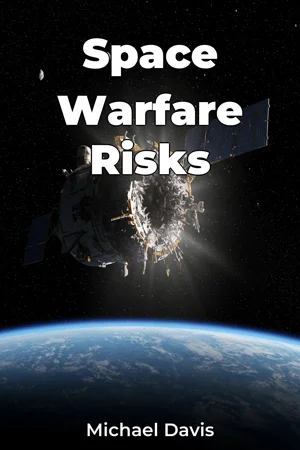
Are we prepared for conflict beyond Earth? "Space Warfare Risks" investigates the growing potential for military confrontations in space, analyzing the geopolitical, technological, and historical factors that make such conflicts increasingly plausible. This book argues that while the concept of space warfare may seem like science fiction, the reliance on space-based assets for communications, navigation, and surveillance makes them attractive targets, demanding a thorough examination of the risks and potential consequences. The book centers around three key themes: the weaponization of space, the vulnerability of satellites, and the legal and political vacuum surrounding off-world conflict. The increasing development and deployment of anti-satellite (ASAT) weapons, both kinetic and non-kinetic, highlights the escalating arms race in space. The inherent vulnerabilities of satellite systems to cyberattacks, jamming, and physical destruction are examined in detail, revealing how easily these vital assets could be compromised. Furthermore, the lack of clear international laws governing military activities in space creates a dangerous grey area, increasing the risk of miscalculation and escalation. "Space Warfare Risks" provides essential historical context by tracing the evolution of space technology from its origins in ballistic missile development to its current pervasive integration into military and civilian life, outlining the early treaties designed to prevent weaponization and their subsequent erosion. The book then delves into the specifics of current space-based military capabilities, analyzing the technologies and strategies being developed by major world powers. The central argument is that the absence of robust international agreements and enforcement mechanisms, coupled with the increasing strategic importance of space-based assets and the development of ASAT capabilities, has created a dangerous instability that could lead to conflict. This argument is vital because the disruption of space-based services would have catastrophic consequences for global communications, financial systems, and military operations, potentially dwarfing the impact of traditional warfare. The book unfolds in a structured manner. It begins by introducing the core concepts of space warfare and the actors involved. The following sections analyze specific threats, such as ASAT weapons, cyber warfare targeting satellites, and the potential for space-based offensive systems. Case studies of past incidents and near-misses in space are examined to illustrate the fragility of the current situation. A significant portion of the book is devoted to exploring the legal and political challenges of regulating military activities in space, highlighting the limitations of existing treaties and the difficulties in achieving consensus on new agreements. The book culminates with a discussion of potential solutions, including arms control measures, improved space situational awareness, and the development of more resilient satellite systems. The analysis relies on a diverse range of sources, including governmental reports, technical analyses of satellite systems, military doctrines, and international law documents. Data from organizations tracking space debris and satellite deployments provide empirical evidence of the growing congestion and weaponization of space. Interdisciplinary connections enrich the argument. Political science provides frameworks for understanding international relations and arms control negotiations. Technological analysis offers insights into the capabilities and vulnerabilities of space systems. Legal analysis clarifies the existing laws and treaties governing space activities and their shortcomings. "Space Warfare Risks" stands out by taking a holistic view, integrating technological, political, and legal considerations. It offers a balanced assessment of the dangers and opportunities in the emerging field of space warfare. Written in a fact-based and analytical style, the book targets policymakers, military strategists, academics, and anyone interested in the future of space exploration and national security. It will appeal to readers seeking a comprehensive and objective analysis of the risks associated with military activities in space. As a work of military and political history, this book adheres to principles of factual accuracy and balanced analysis. While covering diverse technologies, it remains accessible to a broad audience without requiring specialized technical knowledge. The book focuses on the period from the beginning of the space age to the present day, with limited speculation about future technologies beyond those currently in development. It is concerned primarily with the potential for conflict between nation-states, with less emphasis on non-state actors. Ultimately, "Space Warfare Risks" seeks to inform readers about the potential for military conflicts beyond Earth, arguing that understanding these threats is essential for promoting responsible behavior in space and preventing a future war among the stars. The insights provided can inform policy decisions, guide the development of more secure space systems, and contribute to international efforts to maintain peace in space. The ongoing debates surrounding space weaponization and the interpretation of existing treaties are thoroughly examined, providing readers with a nuanced understanding of the complex issues at stake.
Are we prepared for conflict beyond Earth? "Space Warfare Risks" investigates the growing potential for military confrontations in space, analyzing the geopolitical, technological, and historical factors that make such conflicts increasingly plausible. This book argues that while the concept of space warfare may seem like science fiction, the reliance on space-based assets for communications, navigation, and surveillance makes them attractive targets, demanding a thorough examination of the risks and potential consequences. The book centers around three key themes: the weaponization of space, the vulnerability of satellites, and the legal and political vacuum surrounding off-world conflict. The increasing development and deployment of anti-satellite (ASAT) weapons, both kinetic and non-kinetic, highlights the escalating arms race in space. The inherent vulnerabilities of satellite systems to cyberattacks, jamming, and physical destruction are examined in detail, revealing how easily these vital assets could be compromised. Furthermore, the lack of clear international laws governing military activities in space creates a dangerous grey area, increasing the risk of miscalculation and escalation. "Space Warfare Risks" provides essential historical context by tracing the evolution of space technology from its origins in ballistic missile development to its current pervasive integration into military and civilian life, outlining the early treaties designed to prevent weaponization and their subsequent erosion. The book then delves into the specifics of current space-based military capabilities, analyzing the technologies and strategies being developed by major world powers. The central argument is that the absence of robust international agreements and enforcement mechanisms, coupled with the increasing strategic importance of space-based assets and the development of ASAT capabilities, has created a dangerous instability that could lead to conflict. This argument is vital because the disruption of space-based services would have catastrophic consequences for global communications, financial systems, and military operations, potentially dwarfing the impact of traditional warfare. The book unfolds in a structured manner. It begins by introducing the core concepts of space warfare and the actors involved. The following sections analyze specific threats, such as ASAT weapons, cyber warfare targeting satellites, and the potential for space-based offensive systems. Case studies of past incidents and near-misses in space are examined to illustrate the fragility of the current situation. A significant portion of the book is devoted to exploring the legal and political challenges of regulating military activities in space, highlighting the limitations of existing treaties and the difficulties in achieving consensus on new agreements. The book culminates with a discussion of potential solutions, including arms control measures, improved space situational awareness, and the development of more resilient satellite systems. The analysis relies on a diverse range of sources, including governmental reports, technical analyses of satellite systems, military doctrines, and international law documents. Data from organizations tracking space debris and satellite deployments provide empirical evidence of the growing congestion and weaponization of space. Interdisciplinary connections enrich the argument. Political science provides frameworks for understanding international relations and arms control negotiations. Technological analysis offers insights into the capabilities and vulnerabilities of space systems. Legal analysis clarifies the existing laws and treaties governing space activities and their shortcomings. "Space Warfare Risks" stands out by taking a holistic view, integrating technological, political, and legal considerations. It offers a balanced assessment of the dangers and opportunities in the emerging field of space warfare. Written in a fact-based and analytical style, the book targets policymakers, military strategists, academics, and anyone interested in the future of space exploration and national security. It will appeal to readers seeking a comprehensive and objective analysis of the risks associated with military activities in space. As a work of military and political history, this book adheres to principles of factual accuracy and balanced analysis. While covering diverse technologies, it remains accessible to a broad audience without requiring specialized technical knowledge. The book focuses on the period from the beginning of the space age to the present day, with limited speculation about future technologies beyond those currently in development. It is concerned primarily with the potential for conflict between nation-states, with less emphasis on non-state actors. Ultimately, "Space Warfare Risks" seeks to inform readers about the potential for military conflicts beyond Earth, arguing that understanding these threats is essential for promoting responsible behavior in space and preventing a future war among the stars. The insights provided can inform policy decisions, guide the development of more secure space systems, and contribute to international efforts to maintain peace in space. The ongoing debates surrounding space weaponization and the interpretation of existing treaties are thoroughly examined, providing readers with a nuanced understanding of the complex issues at stake.
"Space Warfare Risks" explores the escalating potential for military clashes in space, driven by geopolitical tensions and technological advancements. The book highlights how our reliance on space-based assets like satellites for vital services, such as communication and navigation, ironically makes them prime targets. One intriguing fact is the increasing development of anti-satellite (ASAT) weapons, designed to disrupt or destroy these crucial systems. Another key insight is the dangerous lack of comprehensive international laws governing military activities in space, which creates a risk of miscalculation and escalation. The book traces the evolution of space technology from ballistic missiles to its current integration into military and civilian life, examining the erosion of early treaties intended to prevent weaponization. It delves into current military space capabilities and strategies of major world powers, arguing that the absence of robust international agreements, combined with the growing importance of space assets, has created instability. The approach is holistic, integrating technological, political, and legal considerations. Beginning with core concepts and key players, the book analyzes threats like ASAT weapons and cyber warfare targeting satellites. It examines case studies of past incidents and near misses to illustrate the fragility of the current situation. Finally, it discusses potential solutions, including arms control and improved space situational awareness, offering a balanced assessment of the dangers and opportunities in space warfare.
Book Details
ISBN
9788235290274
Publisher
Publifye AS
Your Licenses
You don't own any licenses for this book
Purchase a license below to unlock this book and download the EPUB.
Purchase License
Select a tier to unlock this book
Need bulk licensing?
Contact us for enterprise agreements.