
About This Book
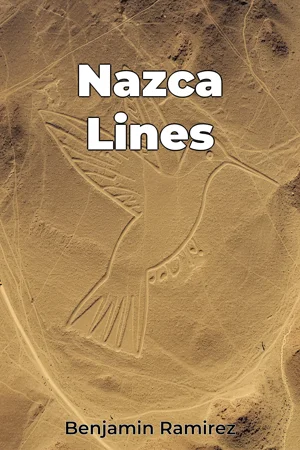
What secrets lie etched upon the arid plains of southern Peru, visible only from the sky? This book, "Nazca Lines," delves into the enigmatic world of the Nazca geoglyphs – colossal figures carved into the desert landscape around 500 BCE – exploring their creation, purpose, and the culture that brought them into existence. These vast lines and figures represent more than just ancient artistry; they are a window into a complex civilization grappling with its environment, beliefs, and social structures. The book examines the Nazca Lines through three primary lenses: archaeological evidence, astronomical alignments, and anthropological studies of Nazca cultural practices. Understanding the context of the Nazca people, their environment, and their worldview is paramount. The Nazca civilization thrived in a challenging desert environment, and this book will show how that environment shaped their culture and belief systems. "Nazca Lines" posits that the geoglyphs were not simply random artistic expressions but carefully planned and executed constructions designed to serve a multifaceted purpose. Based on current understanding, these purposes were deeply intertwined with agricultural rituals, water management, and the Nazca society’s relationship with the cosmos. The book unfolds in distinct sections, beginning with an introduction to the Nazca civilization, its geographical setting, and the initial discovery and documentation of the lines. It then systematically examines the various theories surrounding their creation and function. First, it presents the archaeological evidence, analyzing the construction techniques, tools, and labor organization required to create such massive figures. This section draws upon the work of prominent archaeologists who have dedicated years to studying the site and the cultural remains found in the area. Second, the book explores the astronomical alignments of the geoglyphs, investigating whether they were used as celestial calendars or observatories linked to agricultural cycles. This involves an analysis of the lines' orientation and their correlation with significant astronomical events. Third, the research explores anthropological studies of Nazca cultural practices, examining their religious beliefs, social structures, and rituals to understand the deeper symbolic meaning of the geoglyphs. This section will synthesize ethnographic data and interpretations of Nazca iconography to shed light on the cultural context of the lines. The culmination of these investigations leads to a comprehensive interpretation of the geoglyphs as a vital component of Nazca society, serving both practical and symbolic functions. The evidence presented will encompass a wide spectrum of sources, including archaeological excavations, aerial surveys, satellite imagery, and analyses of pottery and textile designs. It also considers early Spanish chronicles and their potential insights into pre-Columbian beliefs and practices. The book will explore how recent dating techniques have refined our understanding of the geoglyphs' chronology. "Nazca Lines" intersects with various fields of study, including archaeology, astronomy, anthropology, art history, and landscape architecture. By examining the geoglyphs through these diverse perspectives, the book offers a holistic understanding of their significance. Its analysis includes the societal organization needed to create the lines. This book offers a balanced and evidence-based exploration of the Nazca Lines. It is written in an accessible style, steering clear of sensationalism and focusing on presenting the available evidence and interpretations in a clear and engaging manner. The book is targeted towards anyone with an interest in ancient civilizations, archaeology, and the mysteries of the past. It will appeal to both general readers and students seeking a comprehensive overview of the Nazca Lines. "Nazca Lines" concentrates primarily on the geoglyphs themselves and their connection to the Nazca civilization. While it acknowledges the broader context of ancient Andean cultures, it does not attempt to provide an exhaustive history of the region. The knowledge gained from studying the Nazca Lines has practical applications in fields such as cultural heritage management, landscape preservation, and sustainable tourism. Understanding the past can inform how we preserve and protect cultural sites for future generations. The interpretation of the Nazca Lines has been subject to ongoing debate, with some researchers proposing alternative theories. This book will address these controversies and present different viewpoints, encouraging readers to critically evaluate the evidence and draw their conclusions.
What secrets lie etched upon the arid plains of southern Peru, visible only from the sky? This book, "Nazca Lines," delves into the enigmatic world of the Nazca geoglyphs – colossal figures carved into the desert landscape around 500 BCE – exploring their creation, purpose, and the culture that brought them into existence. These vast lines and figures represent more than just ancient artistry; they are a window into a complex civilization grappling with its environment, beliefs, and social structures. The book examines the Nazca Lines through three primary lenses: archaeological evidence, astronomical alignments, and anthropological studies of Nazca cultural practices. Understanding the context of the Nazca people, their environment, and their worldview is paramount. The Nazca civilization thrived in a challenging desert environment, and this book will show how that environment shaped their culture and belief systems. "Nazca Lines" posits that the geoglyphs were not simply random artistic expressions but carefully planned and executed constructions designed to serve a multifaceted purpose. Based on current understanding, these purposes were deeply intertwined with agricultural rituals, water management, and the Nazca society’s relationship with the cosmos. The book unfolds in distinct sections, beginning with an introduction to the Nazca civilization, its geographical setting, and the initial discovery and documentation of the lines. It then systematically examines the various theories surrounding their creation and function. First, it presents the archaeological evidence, analyzing the construction techniques, tools, and labor organization required to create such massive figures. This section draws upon the work of prominent archaeologists who have dedicated years to studying the site and the cultural remains found in the area. Second, the book explores the astronomical alignments of the geoglyphs, investigating whether they were used as celestial calendars or observatories linked to agricultural cycles. This involves an analysis of the lines' orientation and their correlation with significant astronomical events. Third, the research explores anthropological studies of Nazca cultural practices, examining their religious beliefs, social structures, and rituals to understand the deeper symbolic meaning of the geoglyphs. This section will synthesize ethnographic data and interpretations of Nazca iconography to shed light on the cultural context of the lines. The culmination of these investigations leads to a comprehensive interpretation of the geoglyphs as a vital component of Nazca society, serving both practical and symbolic functions. The evidence presented will encompass a wide spectrum of sources, including archaeological excavations, aerial surveys, satellite imagery, and analyses of pottery and textile designs. It also considers early Spanish chronicles and their potential insights into pre-Columbian beliefs and practices. The book will explore how recent dating techniques have refined our understanding of the geoglyphs' chronology. "Nazca Lines" intersects with various fields of study, including archaeology, astronomy, anthropology, art history, and landscape architecture. By examining the geoglyphs through these diverse perspectives, the book offers a holistic understanding of their significance. Its analysis includes the societal organization needed to create the lines. This book offers a balanced and evidence-based exploration of the Nazca Lines. It is written in an accessible style, steering clear of sensationalism and focusing on presenting the available evidence and interpretations in a clear and engaging manner. The book is targeted towards anyone with an interest in ancient civilizations, archaeology, and the mysteries of the past. It will appeal to both general readers and students seeking a comprehensive overview of the Nazca Lines. "Nazca Lines" concentrates primarily on the geoglyphs themselves and their connection to the Nazca civilization. While it acknowledges the broader context of ancient Andean cultures, it does not attempt to provide an exhaustive history of the region. The knowledge gained from studying the Nazca Lines has practical applications in fields such as cultural heritage management, landscape preservation, and sustainable tourism. Understanding the past can inform how we preserve and protect cultural sites for future generations. The interpretation of the Nazca Lines has been subject to ongoing debate, with some researchers proposing alternative theories. This book will address these controversies and present different viewpoints, encouraging readers to critically evaluate the evidence and draw their conclusions.
The book "Nazca Lines" explores the awe-inspiring Nazca geoglyphs of ancient Peru, massive figures etched into the desert that offer a glimpse into a sophisticated pre-Columbian society. These geoglyphs, created around 500 BCE, showcase the remarkable architectural and engineering skills of the Nazca civilization. The book examines how these lines may have served as astronomical calendars, aligning with celestial events crucial for agricultural planning, demonstrating a deep understanding of the cosmos. Presented through archaeological evidence, astronomical alignments, and anthropological studies, the book unfolds by first introducing the Nazca civilization and the discovery of the lines. It then systematically examines the creation and function theories. The book carefully considers the environmental context, revealing how the harsh desert landscape shaped the Nazca's beliefs and practices. Understanding the geoglyphs provides insight into the societal organization required to create them. The book synthesizes diverse perspectives, including art history and landscape architecture, to provide a holistic understanding of these enigmatic figures.
Book Details
ISBN
9788235290021
Publisher
Publifye AS
Your Licenses
You don't own any licenses for this book
Purchase a license below to unlock this book and download the EPUB.
Purchase License
Select a tier to unlock this book
Need bulk licensing?
Contact us for enterprise agreements.