
About This Book
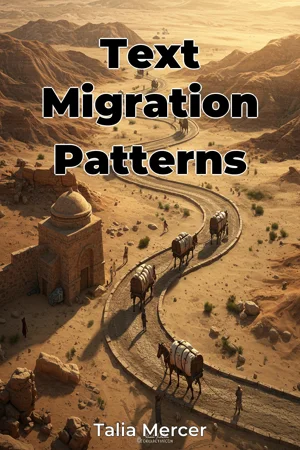
How have texts shaped the world we live in, traversing geographical and cultural boundaries to influence societies in profound ways? "Text Migration Patterns" explores the dynamic journey of texts throughout history, charting their movement through migration, education, and trade to understand their global impact. This book delves into how texts, in various forms, have acted as agents of change, cultural ambassadors, and tools of power across different eras and regions. Three main topics form the core of this investigation: the role of migration in disseminating texts, the function of education systems in standardizing and spreading textual knowledge, and the impact of trade routes on the exchange of written materials. These areas are crucial to understanding how societies adopted, adapted, and reinterpreted textual information, shaping their intellectual, cultural, and economic landscapes. Historically, the movement of texts has been closely tied to human movement. Migrations, whether voluntary or forced, have carried texts across borders, enabling the transmission of ideas, religious beliefs, and scientific knowledge. Education systems, from ancient scribal schools to modern universities, serve as hubs for the codification and propagation of canonical texts, creating standardized knowledge bases. Simultaneously, the expansion of trade networks facilitated the broad distribution of texts, including literary works, commercial documents, and technical manuals, spurring innovation and cultural exchange. The central argument of "Text Migration Patterns" is that the global circulation of texts is not a passive process but an active force in shaping cultural identities, social structures, and historical trajectories. This book contends that by tracing the pathways of textual transmission, it is possible to reveal the complex dynamics of cultural interaction and intellectual development across the globe. The book is structured to first introduce the theoretical framework for understanding text migration, then to explore specific case studies that illustrate the impact of migration, education, and trade by examining historical examples from different regions and time periods. Chapters will cover the spread of religious texts along pilgrimage routes, the diffusion of scientific treatises through academic networks, and the impact of printed materials on the rise of global commerce. The conclusion synthesizes these findings to offer a nuanced perspective on the power of text in shaping global interactions. The analysis is supported by evidence drawn from diverse sources, including historical archives, literary analysis, economic data, and sociological studies of migration patterns. Unique data include digitized collections of historical manuscripts, trade records from various eras, and comparative analyses of educational curricula across different countries. This book also draws connections to several other academic fields. It intersects with sociology by examining the social impact of text dissemination; anthropology, by exploring how texts contribute to cultural identity; and economics, by analyzing the economic implications of textual exchange. These interdisciplinary connections enrich the book's analysis, providing a more holistic understanding of the role of texts in shaping human societies. "Text Migration Patterns" takes a unique approach by combining historical analysis with contemporary theories of globalization and cultural exchange. It stands apart by focusing not only on the content of texts but also on the mechanisms and pathways through which they travel and transform societies. Written in an academic style, the book is intended for researchers, students, and anyone interested in history, sociology, anthropology, and cultural studies. It will be particularly valuable to those seeking a deeper understanding of the processes of globalization and the impact of textual communication on human societies. The book's scope encompasses a broad range of geographical regions and time periods, from ancient civilizations to the modern era. However, it focuses primarily on the movement of texts in Europe, Asia, and the Americas, with some limitations in its coverage of Africa and Oceania due to data availability. The insights from "Text Migration Patterns" can be applied in various real-world contexts. Educators can use its findings to design more inclusive and globally aware curricula. Policymakers may find it useful in formulating strategies to promote cross-cultural understanding and address issues related to migration and cultural integration. Finally, it's important to acknowledge that the study of text migration is not without its controversies. Ongoing debates surround the interpretation of historical sources, the impact of colonialism on textual traditions, and the challenges of preserving cultural heritage in the digital age.
How have texts shaped the world we live in, traversing geographical and cultural boundaries to influence societies in profound ways? "Text Migration Patterns" explores the dynamic journey of texts throughout history, charting their movement through migration, education, and trade to understand their global impact. This book delves into how texts, in various forms, have acted as agents of change, cultural ambassadors, and tools of power across different eras and regions. Three main topics form the core of this investigation: the role of migration in disseminating texts, the function of education systems in standardizing and spreading textual knowledge, and the impact of trade routes on the exchange of written materials. These areas are crucial to understanding how societies adopted, adapted, and reinterpreted textual information, shaping their intellectual, cultural, and economic landscapes. Historically, the movement of texts has been closely tied to human movement. Migrations, whether voluntary or forced, have carried texts across borders, enabling the transmission of ideas, religious beliefs, and scientific knowledge. Education systems, from ancient scribal schools to modern universities, serve as hubs for the codification and propagation of canonical texts, creating standardized knowledge bases. Simultaneously, the expansion of trade networks facilitated the broad distribution of texts, including literary works, commercial documents, and technical manuals, spurring innovation and cultural exchange. The central argument of "Text Migration Patterns" is that the global circulation of texts is not a passive process but an active force in shaping cultural identities, social structures, and historical trajectories. This book contends that by tracing the pathways of textual transmission, it is possible to reveal the complex dynamics of cultural interaction and intellectual development across the globe. The book is structured to first introduce the theoretical framework for understanding text migration, then to explore specific case studies that illustrate the impact of migration, education, and trade by examining historical examples from different regions and time periods. Chapters will cover the spread of religious texts along pilgrimage routes, the diffusion of scientific treatises through academic networks, and the impact of printed materials on the rise of global commerce. The conclusion synthesizes these findings to offer a nuanced perspective on the power of text in shaping global interactions. The analysis is supported by evidence drawn from diverse sources, including historical archives, literary analysis, economic data, and sociological studies of migration patterns. Unique data include digitized collections of historical manuscripts, trade records from various eras, and comparative analyses of educational curricula across different countries. This book also draws connections to several other academic fields. It intersects with sociology by examining the social impact of text dissemination; anthropology, by exploring how texts contribute to cultural identity; and economics, by analyzing the economic implications of textual exchange. These interdisciplinary connections enrich the book's analysis, providing a more holistic understanding of the role of texts in shaping human societies. "Text Migration Patterns" takes a unique approach by combining historical analysis with contemporary theories of globalization and cultural exchange. It stands apart by focusing not only on the content of texts but also on the mechanisms and pathways through which they travel and transform societies. Written in an academic style, the book is intended for researchers, students, and anyone interested in history, sociology, anthropology, and cultural studies. It will be particularly valuable to those seeking a deeper understanding of the processes of globalization and the impact of textual communication on human societies. The book's scope encompasses a broad range of geographical regions and time periods, from ancient civilizations to the modern era. However, it focuses primarily on the movement of texts in Europe, Asia, and the Americas, with some limitations in its coverage of Africa and Oceania due to data availability. The insights from "Text Migration Patterns" can be applied in various real-world contexts. Educators can use its findings to design more inclusive and globally aware curricula. Policymakers may find it useful in formulating strategies to promote cross-cultural understanding and address issues related to migration and cultural integration. Finally, it's important to acknowledge that the study of text migration is not without its controversies. Ongoing debates surround the interpretation of historical sources, the impact of colonialism on textual traditions, and the challenges of preserving cultural heritage in the digital age.
"Text Migration Patterns" explores how texts have traversed geographical and cultural boundaries, profoundly influencing societies throughout history. It examines the dynamic journey of texts via migration, education, and trade, highlighting their role as agents of change. Did you know that migrations, both voluntary and forced, have carried texts across borders, transmitting ideas and religious beliefs? Education systems, from ancient scribal schools to modern universities, have also codified and spread textual knowledge, creating standardized knowledge bases. The book uniquely combines historical analysis with contemporary theories of globalization, focusing on the mechanisms through which texts travel and transform societies. It argues that the global circulation of texts actively shapes cultural identities and social structures. Beginning with a theoretical framework, the book progresses through case studies that illustrate the impact of migration, education, and trade, examining historical examples from various regions and eras to reveal the complex dynamics of cultural interaction and intellectual development across the globe.
Book Details
ISBN
9788235287731
Publisher
Publifye AS
Your Licenses
You don't own any licenses for this book
Purchase a license below to unlock this book and download the EPUB.
Purchase License
Select a tier to unlock this book
Need bulk licensing?
Contact us for enterprise agreements.