
About This Book
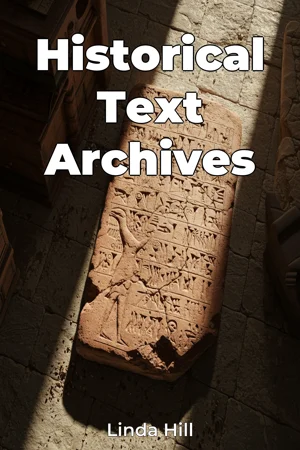
How have archives served as vital guardians of cultural heritage, ensuring that literary works, particularly those of ancient origins or facing the threat of extinction, endure for future generations? "Historical Text Archives" delves into the crucial role archives play in the preservation of global literary history. This book explores the multifaceted ways in which archives function not merely as repositories of documents, but as dynamic institutions actively safeguarding and promoting access to invaluable texts. It is important to consider the fragility of ancient materials and the ongoing threats to endangered languages, making archival preservation a critical endeavor. This book investigates three primary areas: the historical development of archival practices related to literary preservation, the technological advancements impacting the preservation and accessibility of texts, and the ethical considerations surrounding the ownership and dissemination of culturally significant materials. These topics are significant because they highlight the evolving relationship between societies and their textual heritage, emphasizing the responsibility of preserving and interpreting these resources for contemporary and future scholars. Drawing upon historical examples from ancient libraries to modern digital archives, "Historical Text Archives" provides a contextual understanding of literary preservation. Understanding the evolution of writing materials, from clay tablets to digital media, is fundamental to appreciating the challenges and innovations within archival science. The central argument of this book is that archives are not passive storage facilities but active agents in shaping our understanding of history and culture through the preservation and interpretation of literary works. This argument is essential because it challenges traditional perceptions of archives and emphasizes their proactive role in constructing narratives and fostering cultural continuity. The book is structured to first introduce core archival concepts and the historical context of literary preservation. It then develops key ideas through examinations of: 1. The evolution of archival technologies and their impact on preserving diverse literary forms across different cultures. 2. Case studies of specific archives and their successful strategies for preserving endangered texts, including collaborations with communities and indigenous groups. 3. The ethical and legal frameworks governing the preservation and access to historical texts, including issues of copyright, cultural ownership, and digital rights management. The culmination of the argument highlights the ongoing challenges and future directions for literary preservation in the digital age, emphasizing the need for international cooperation and innovative approaches. This includes practical proposals for enhancing archival infrastructure and promoting digital literacy to ensure broader access to preserved materials. Evidence presented will include case studies of specific archives, analysis of archival policies and practices, and comparative studies of different preservation techniques. Unique data sources will involve digitized historical documents, oral histories from archivists and community members involved in preservation efforts, and analyses of archival metadata. This book connects to other fields such as linguistics through the preservation of endangered languages, computer science in the application of digital preservation technologies, and law through the legal frameworks governing cultural heritage. These interdisciplinary connections enrich the book’s argument by demonstrating the multifaceted nature of archival preservation. "Historical Text Archives" offers a unique perspective by integrating historical analysis with practical considerations for contemporary archival practices. It also emphasizes the importance of community engagement and ethical considerations in preserving literary heritage. The tone is academic yet accessible, aiming to engage both scholars and general readers interested in history, literature, and information science. The writing style is clear and concise, avoiding jargon where possible and providing definitions for technical terms. The target audience includes students and scholars of history, literature, archival studies, and information science, as well as librarians, archivists, and anyone interested in the preservation of cultural heritage. This book would be valuable to them by providing a comprehensive overview of the field, highlighting best practices, and stimulating critical thinking about the role of archives in society. As a work of history, this book adheres to the conventions of academic research, including thorough citations, rigorous analysis, and a balanced presentation of different perspectives. The scope of the book is limited to the preservation of literary texts, focusing primarily on written materials and excluding other forms of cultural heritage. The information can be applied practically by archivists and librarians seeking to improve their preservation practices, as well as by policymakers developing cultural heritage policies. It also serves as a valuable resource for researchers and students interested in exploring the history and significance of archives. The book addresses ongoing debates in the field, such as the tension between open access and copyright protection, the challenges of preserving digital materials, and the ethical implications of digitizing and disseminating culturally sensitive texts.
How have archives served as vital guardians of cultural heritage, ensuring that literary works, particularly those of ancient origins or facing the threat of extinction, endure for future generations? "Historical Text Archives" delves into the crucial role archives play in the preservation of global literary history. This book explores the multifaceted ways in which archives function not merely as repositories of documents, but as dynamic institutions actively safeguarding and promoting access to invaluable texts. It is important to consider the fragility of ancient materials and the ongoing threats to endangered languages, making archival preservation a critical endeavor. This book investigates three primary areas: the historical development of archival practices related to literary preservation, the technological advancements impacting the preservation and accessibility of texts, and the ethical considerations surrounding the ownership and dissemination of culturally significant materials. These topics are significant because they highlight the evolving relationship between societies and their textual heritage, emphasizing the responsibility of preserving and interpreting these resources for contemporary and future scholars. Drawing upon historical examples from ancient libraries to modern digital archives, "Historical Text Archives" provides a contextual understanding of literary preservation. Understanding the evolution of writing materials, from clay tablets to digital media, is fundamental to appreciating the challenges and innovations within archival science. The central argument of this book is that archives are not passive storage facilities but active agents in shaping our understanding of history and culture through the preservation and interpretation of literary works. This argument is essential because it challenges traditional perceptions of archives and emphasizes their proactive role in constructing narratives and fostering cultural continuity. The book is structured to first introduce core archival concepts and the historical context of literary preservation. It then develops key ideas through examinations of: 1. The evolution of archival technologies and their impact on preserving diverse literary forms across different cultures. 2. Case studies of specific archives and their successful strategies for preserving endangered texts, including collaborations with communities and indigenous groups. 3. The ethical and legal frameworks governing the preservation and access to historical texts, including issues of copyright, cultural ownership, and digital rights management. The culmination of the argument highlights the ongoing challenges and future directions for literary preservation in the digital age, emphasizing the need for international cooperation and innovative approaches. This includes practical proposals for enhancing archival infrastructure and promoting digital literacy to ensure broader access to preserved materials. Evidence presented will include case studies of specific archives, analysis of archival policies and practices, and comparative studies of different preservation techniques. Unique data sources will involve digitized historical documents, oral histories from archivists and community members involved in preservation efforts, and analyses of archival metadata. This book connects to other fields such as linguistics through the preservation of endangered languages, computer science in the application of digital preservation technologies, and law through the legal frameworks governing cultural heritage. These interdisciplinary connections enrich the book’s argument by demonstrating the multifaceted nature of archival preservation. "Historical Text Archives" offers a unique perspective by integrating historical analysis with practical considerations for contemporary archival practices. It also emphasizes the importance of community engagement and ethical considerations in preserving literary heritage. The tone is academic yet accessible, aiming to engage both scholars and general readers interested in history, literature, and information science. The writing style is clear and concise, avoiding jargon where possible and providing definitions for technical terms. The target audience includes students and scholars of history, literature, archival studies, and information science, as well as librarians, archivists, and anyone interested in the preservation of cultural heritage. This book would be valuable to them by providing a comprehensive overview of the field, highlighting best practices, and stimulating critical thinking about the role of archives in society. As a work of history, this book adheres to the conventions of academic research, including thorough citations, rigorous analysis, and a balanced presentation of different perspectives. The scope of the book is limited to the preservation of literary texts, focusing primarily on written materials and excluding other forms of cultural heritage. The information can be applied practically by archivists and librarians seeking to improve their preservation practices, as well as by policymakers developing cultural heritage policies. It also serves as a valuable resource for researchers and students interested in exploring the history and significance of archives. The book addresses ongoing debates in the field, such as the tension between open access and copyright protection, the challenges of preserving digital materials, and the ethical implications of digitizing and disseminating culturally sensitive texts.
"Historical Text Archives" explores the vital role archives play in preserving literary history for future generations, focusing on how these institutions actively safeguard and promote access to invaluable texts, especially those ancient or endangered. Archives are portrayed not just as storage facilities, but as dynamic agents shaping our understanding of history and culture. The book highlights the fragility of ancient materials and the threats to endangered languages, emphasizing the critical importance of archival preservation. The book delves into the evolution of archival practices, technological advancements, and ethical considerations surrounding cultural materials. It examines how archives have adapted from ancient libraries to modern digital repositories, addressing challenges such as copyright and digital rights management. For instance, the evolution of writing materials from clay tablets to digital formats illustrates the constant need for innovation in archival science. Beginning with core concepts and historical context, the book progresses through the evolution of archival technologies, case studies of successful preservation strategies, and ethical frameworks. It culminates in a discussion of ongoing challenges and future directions, advocating for international cooperation and digital literacy to ensure broader access to preserved materials, making it valuable for scholars, archivists, and anyone interested in cultural heritage.
Book Details
ISBN
9788235283009
Publisher
Publifye AS
Your Licenses
You don't own any licenses for this book
Purchase a license below to unlock this book and download the EPUB.
Purchase License
Select a tier to unlock this book
Need bulk licensing?
Contact us for enterprise agreements.