
About This Book
How does the carefully constructed world of detective fiction reflect, distort, or even influence the realities of criminal investigation? "Crime Logic" delves into this intriguing question, examining the logical frameworks underpinning both fictional and factual crime-solving. This book explores the core principles of investigative reasoning, bridging the gap between the often-glamorized portrayals in literature and the gritty realities faced by law enforcement professionals. This examination is important because understanding the interplay between fiction and reality not only enriches our appreciation of the genre but also offers valuable insights for improving investigative techniques and shedding light on potential biases within the justice system. The central argument of "Crime Logic" is that while detective fiction provides a stylized and often idealized version of criminal investigation, it can nonetheless illuminate fundamental cognitive processes involved in problem-solving, inference, and decision-making under uncertainty. By analyzing recurring tropes, narrative structures, and character archetypes in detective fiction, we can extract key principles of logical reasoning that have parallels in real-world investigations. This book emphasizes that despite the differences in pace and dramatic license, both fictional detectives and real-world investigators rely on similar cognitive skills to piece together evidence, formulate hypotheses, and identify culprits. This book is structured to progressively build on core concepts, beginning with an exploration of the history of detective fiction and its evolving relationship with real-world policing. We trace the development of iconic detectives from Sherlock Holmes to modern-day protagonists, analyzing how their methods reflect changing societal attitudes toward crime and justice. The book then systematically examines key elements of criminal investigation in both realms, focusing on topics such as evidence gathering, witness interrogation, suspect profiling, and the role of forensic science. Each chapter compares and contrasts fictional depictions with real-world practices, highlighting both the similarities and the divergences. This will be supported by case studies, academic research, and insights from law enforcement professionals. Each chapter will feature cross-disciplinary connections to fields such as psychology (cognitive biases, perception, memory), criminology (criminal behavior, crime scene analysis), and law (evidence admissibility, legal procedure). For example, the discussion of witness testimony draws on psychological research regarding the fallibility of human memory and the impact of suggestion. The analysis of suspect profiling considers criminological theories of criminal behavior and the potential for bias in profiling practices. These interdisciplinary connections reinforce the book's central argument by demonstrating the relevance of a wide range of academic disciplines to the study of criminal investigation. "Crime Logic" takes a unique approach by combining literary analysis, psychological insights, and real-world case studies to provide a comprehensive and nuanced examination of criminal investigation. The tone is largely academic and non-fiction but remains accessible to a wide audience. This book is targeted toward readers interested in detective fiction, true crime, psychology, and criminal justice. It would be valuable to students, researchers, and anyone seeking a deeper understanding of the cognitive processes underlying criminal investigation. The scope of "Crime Logic" is intentionally broad, covering a wide range of detective fiction subgenres and criminal investigation techniques. However, the book focuses primarily on investigative reasoning and does not delve into the more technical aspects of forensic science or legal procedure. The real-world applications of the information in this book are diverse. Law enforcement professionals can benefit from the analysis of cognitive biases and the exploration of innovative investigative techniques. Readers interested in detective fiction can gain a greater appreciation of the genre and its underlying principles. The book addresses relevant controversies in the field, such as the debate over the reliability of eyewitness testimony, the ethics of suspect profiling, and the impact of forensic science on jury decision-making. By exploring these debates, the book provides a balanced and nuanced perspective on the complexities of criminal investigation.
How does the carefully constructed world of detective fiction reflect, distort, or even influence the realities of criminal investigation? "Crime Logic" delves into this intriguing question, examining the logical frameworks underpinning both fictional and factual crime-solving. This book explores the core principles of investigative reasoning, bridging the gap between the often-glamorized portrayals in literature and the gritty realities faced by law enforcement professionals. This examination is important because understanding the interplay between fiction and reality not only enriches our appreciation of the genre but also offers valuable insights for improving investigative techniques and shedding light on potential biases within the justice system. The central argument of "Crime Logic" is that while detective fiction provides a stylized and often idealized version of criminal investigation, it can nonetheless illuminate fundamental cognitive processes involved in problem-solving, inference, and decision-making under uncertainty. By analyzing recurring tropes, narrative structures, and character archetypes in detective fiction, we can extract key principles of logical reasoning that have parallels in real-world investigations. This book emphasizes that despite the differences in pace and dramatic license, both fictional detectives and real-world investigators rely on similar cognitive skills to piece together evidence, formulate hypotheses, and identify culprits. This book is structured to progressively build on core concepts, beginning with an exploration of the history of detective fiction and its evolving relationship with real-world policing. We trace the development of iconic detectives from Sherlock Holmes to modern-day protagonists, analyzing how their methods reflect changing societal attitudes toward crime and justice. The book then systematically examines key elements of criminal investigation in both realms, focusing on topics such as evidence gathering, witness interrogation, suspect profiling, and the role of forensic science. Each chapter compares and contrasts fictional depictions with real-world practices, highlighting both the similarities and the divergences. This will be supported by case studies, academic research, and insights from law enforcement professionals. Each chapter will feature cross-disciplinary connections to fields such as psychology (cognitive biases, perception, memory), criminology (criminal behavior, crime scene analysis), and law (evidence admissibility, legal procedure). For example, the discussion of witness testimony draws on psychological research regarding the fallibility of human memory and the impact of suggestion. The analysis of suspect profiling considers criminological theories of criminal behavior and the potential for bias in profiling practices. These interdisciplinary connections reinforce the book's central argument by demonstrating the relevance of a wide range of academic disciplines to the study of criminal investigation. "Crime Logic" takes a unique approach by combining literary analysis, psychological insights, and real-world case studies to provide a comprehensive and nuanced examination of criminal investigation. The tone is largely academic and non-fiction but remains accessible to a wide audience. This book is targeted toward readers interested in detective fiction, true crime, psychology, and criminal justice. It would be valuable to students, researchers, and anyone seeking a deeper understanding of the cognitive processes underlying criminal investigation. The scope of "Crime Logic" is intentionally broad, covering a wide range of detective fiction subgenres and criminal investigation techniques. However, the book focuses primarily on investigative reasoning and does not delve into the more technical aspects of forensic science or legal procedure. The real-world applications of the information in this book are diverse. Law enforcement professionals can benefit from the analysis of cognitive biases and the exploration of innovative investigative techniques. Readers interested in detective fiction can gain a greater appreciation of the genre and its underlying principles. The book addresses relevant controversies in the field, such as the debate over the reliability of eyewitness testimony, the ethics of suspect profiling, and the impact of forensic science on jury decision-making. By exploring these debates, the book provides a balanced and nuanced perspective on the complexities of criminal investigation.
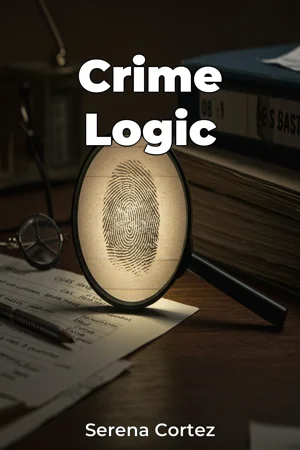
"Crime Logic" explores the fascinating intersection of detective fiction and real-world criminal investigation, revealing how fictional narratives both mirror and shape the realities of law enforcement. It argues that despite the dramatization inherent in detective stories, fundamental principles of logical reasoning, problem-solving, and decision-making under uncertainty are shared between fictional detectives and real investigators. For instance, the book examines recurring tropes like suspect profiling and crime scene analysis, comparing their fictional representations with actual investigative techniques. The book delves into the history of detective fiction, tracing the evolution of iconic detectives and their methods alongside changing societal attitudes towards crime. By analyzing elements such as witness testimony, the book highlights potential cognitive biases that affect both fictional and real investigations. It uniquely combines literary analysis, psychological insights, and true crime case studies, making it valuable for anyone interested in psychology, law enforcement, or the true crime genre. The book progresses systematically across chapters, building from the history of detective fiction to detailed examinations of evidence gathering, witness interrogation, and forensic science. Each chapter connects these topics to wider disciplines such as psychology and criminology, enhancing the reader's understanding of the cognitive processes behind criminal investigation. Controversies like the ethics of suspect profiling are also addressed, offering a balanced perspective on the complexities within the field.
Book Details
ISBN
9788235279965
Publisher
Publifye AS
Your Licenses
You don't own any licenses for this book
Purchase a license below to unlock this book and download the EPUB.
Purchase License
Select a tier to unlock this book
Need bulk licensing?
Contact us for enterprise agreements.