
About This Book
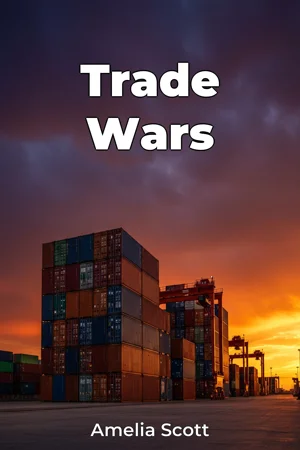
In an increasingly interconnected world, what are the true costs of escalating trade tensions? "Trade Wars" delves into the complex web of global trade conflicts, tariffs, and their far-reaching consequences on international economies and financial markets. This book examines the rise of protectionist policies, their impact on global economic stability, and the winners and losers in an era of shifting trade alliances. The book primarily focuses on three main topics: first, the underlying causes and motivations behind contemporary trade conflicts, exploring the political, economic, and social factors that drive nations to impose tariffs and other trade barriers. Second, it analyzes the direct and indirect effects of these trade policies on international economies, including impacts on GDP growth, employment, inflation, and supply chains. Third, it investigates the responses of financial markets to trade-related news and policies, assessing investor sentiment, currency fluctuations, and the performance of key industries. These topics are crucial for understanding the current global landscape and the potential risks and opportunities that lie ahead. "Trade Wars" provides a comprehensive analysis, asserting that escalating trade conflicts disrupt established international norms and create significant uncertainty, ultimately hindering long-term economic growth and stability. This argument is vital because it challenges conventional wisdom, which often simplifies trade disputes as isolated events with limited consequences. The book begins by establishing a historical context, tracing the evolution of global trade agreements and the resurgence of protectionism in recent decades. It then examines specific trade disputes, such as those between the United States and China, the European Union, and other major economies. The core of the book is divided into three sections. The first details the theoretical underpinnings of trade wars using established economics principles, supported by empirical analysis of historical trade conflicts. The second section analyzes key trade disputes, assessing the actual economic outcomes. Finally, the book concludes with a discussion of potential solutions and strategies for mitigating the negative impacts of trade conflicts, offering practical recommendations for policymakers and businesses. Evidence presented includes macroeconomic data from international organizations such as the World Bank, the International Monetary Fund, and the World Trade Organization, as well as proprietary data on trade flows, tariff rates, and financial market indicators. Case studies of specific industries and countries will further illustrate the real-world effects of trade policies. "Trade Wars" intersects with several related fields, including political science (analyzing the political motivations behind trade policies), international relations (examining the geopolitical implications of trade disputes), and finance (assessing the impact of trade tensions on investment decisions and financial markets). The book adopts a rigorous, fact-based approach, presenting information in a clear and accessible style suitable for both academic and non-academic audiences. "Trade Wars" targets economists, policymakers, business leaders, investors, and anyone seeking a deeper understanding of the forces shaping the global economy. It provides valuable insights into the complexities of international trade and the challenges of navigating an increasingly uncertain world. The book acknowledges its limitations, focusing primarily on the economic and financial impacts of trade conflicts, while recognizing the importance of other factors such as national security and social welfare. The content can inform investment strategies, corporate decision-making, and public policy development. "Trade Wars" also tackles the ongoing debates surrounding the effectiveness of tariffs as a tool for achieving trade objectives and the potential for alternative approaches to promote fair and balanced trade.
In an increasingly interconnected world, what are the true costs of escalating trade tensions? "Trade Wars" delves into the complex web of global trade conflicts, tariffs, and their far-reaching consequences on international economies and financial markets. This book examines the rise of protectionist policies, their impact on global economic stability, and the winners and losers in an era of shifting trade alliances. The book primarily focuses on three main topics: first, the underlying causes and motivations behind contemporary trade conflicts, exploring the political, economic, and social factors that drive nations to impose tariffs and other trade barriers. Second, it analyzes the direct and indirect effects of these trade policies on international economies, including impacts on GDP growth, employment, inflation, and supply chains. Third, it investigates the responses of financial markets to trade-related news and policies, assessing investor sentiment, currency fluctuations, and the performance of key industries. These topics are crucial for understanding the current global landscape and the potential risks and opportunities that lie ahead. "Trade Wars" provides a comprehensive analysis, asserting that escalating trade conflicts disrupt established international norms and create significant uncertainty, ultimately hindering long-term economic growth and stability. This argument is vital because it challenges conventional wisdom, which often simplifies trade disputes as isolated events with limited consequences. The book begins by establishing a historical context, tracing the evolution of global trade agreements and the resurgence of protectionism in recent decades. It then examines specific trade disputes, such as those between the United States and China, the European Union, and other major economies. The core of the book is divided into three sections. The first details the theoretical underpinnings of trade wars using established economics principles, supported by empirical analysis of historical trade conflicts. The second section analyzes key trade disputes, assessing the actual economic outcomes. Finally, the book concludes with a discussion of potential solutions and strategies for mitigating the negative impacts of trade conflicts, offering practical recommendations for policymakers and businesses. Evidence presented includes macroeconomic data from international organizations such as the World Bank, the International Monetary Fund, and the World Trade Organization, as well as proprietary data on trade flows, tariff rates, and financial market indicators. Case studies of specific industries and countries will further illustrate the real-world effects of trade policies. "Trade Wars" intersects with several related fields, including political science (analyzing the political motivations behind trade policies), international relations (examining the geopolitical implications of trade disputes), and finance (assessing the impact of trade tensions on investment decisions and financial markets). The book adopts a rigorous, fact-based approach, presenting information in a clear and accessible style suitable for both academic and non-academic audiences. "Trade Wars" targets economists, policymakers, business leaders, investors, and anyone seeking a deeper understanding of the forces shaping the global economy. It provides valuable insights into the complexities of international trade and the challenges of navigating an increasingly uncertain world. The book acknowledges its limitations, focusing primarily on the economic and financial impacts of trade conflicts, while recognizing the importance of other factors such as national security and social welfare. The content can inform investment strategies, corporate decision-making, and public policy development. "Trade Wars" also tackles the ongoing debates surrounding the effectiveness of tariffs as a tool for achieving trade objectives and the potential for alternative approaches to promote fair and balanced trade.
"Trade Wars" explores the escalating tensions in international trade, examining how tariffs and protectionist policies impact global economies and financial markets. The book dives into why nations instigate trade conflicts, highlighting the political, economic, and social factors at play. For instance, it analyzes the consequences of trade disputes on GDP growth, employment rates, and supply chains, demonstrating that these conflicts disrupt established international norms. The book provides a detailed analysis of specific trade disputes, such as those between the United States and China, using macroeconomic data from organizations like the World Bank. It emphasizes that escalating trade tensions create uncertainty that hinders long-term economic stability. Did you know that trade policies can significantly influence currency fluctuations and investor sentiment? The book is structured to give a historical context before assessing key disputes and economic outcomes. Ultimately, "Trade Wars" aims to offer potential solutions for mitigating the negative impacts of trade conflicts. It adopts a fact-based approach, making it accessible to a broad audience, including economists, policymakers, and business leaders. By understanding the complexities of international trade, readers can better navigate the challenges of an increasingly unpredictable global landscape and inform investment strategies.
Book Details
ISBN
9788235279804
Publisher
Publifye AS
Your Licenses
You don't own any licenses for this book
Purchase a license below to unlock this book and download the EPUB.
Purchase License
Select a tier to unlock this book
Need bulk licensing?
Contact us for enterprise agreements.