
About This Book
How did the Soviet Union, a nation recovering from immense wartime devastation, manage to launch the first satellite, the first human, and conduct a host of other pioneering space missions, often outpacing the United States in the early years of space exploration? "Soviet Spacecraft" delves into the heart of the Soviet space program, exploring its technological innovations, its strategic importance during the Cold War, and its lasting legacy on the world's understanding of space. This book examines three key areas: the rapid technological advancements made by Soviet engineers and scientists, the intense political and military motivations driving the space race, and the specific designs and operational histories of the spacecraft themselves. Understanding these elements is crucial to appreciating the scale and impact of the Soviet space program. The Cold War context provides the necessary backdrop for understanding the intense pressure to achieve spaceflight firsts, while the technical details reveal the ingenuity and dedication of the Soviet space program's personnel. The central argument of "Soviet Spacecraft" is that the USSR's achievements in space were not solely the result of technological prowess, but also a product of a unique system of resource allocation, scientific collaboration, and national ambition fueled by the ideological battle with the West. This argument is vital because it challenges simplistic narratives of technological determinism and highlights the complex interplay of political, social, and scientific factors that shaped the space race. The book is structured to systematically explore these themes. It starts by introducing the historical context of the Cold War and the initial Soviet interest in rocketry. It then proceeds with an overview of key figures such as Sergei Korolev, the enigmatic "Chief Designer," and the structure of the Soviet space program. The subsequent chapters focus on specific spacecraft, including the Sputnik satellites, Vostok, Voskhod, and Soyuz, detailing their design, missions, and impact. Furthermore, the book explores less publicized projects, such as the Buran space shuttle and military space programs. The book culminates with an analysis of the lasting legacy of the Soviet space program, its contributions to space science, and its role in shaping international cooperation in space exploration. The evidence presented within relies on a combination of primary sources, including declassified Soviet documents, mission transcripts, and technical manuals, as well as secondary sources such as scholarly articles, biographies, and historical analyses. The research also incorporates insights from interviews with former Soviet engineers and cosmonauts where available, providing a human dimension to the technological narrative. "Soviet Spacecraft" connects to several other fields of study. First, it is deeply intertwined with military history, as the development of rockets and space technology was heavily influenced by military objectives. Second, it relates to political science, specifically the study of Cold War geopolitics and the role of technology in international relations. Finally, it connects to the history of science and technology, showcasing the unique Soviet approach to problem-solving and innovation. This book offers a unique perspective by moving beyond a simple recounting of achievements to analyze the underlying social, political, and economic factors that shaped the Soviet space program. It presents a nuanced view, acknowledging both the successes and failures, the propaganda and the genuine scientific advancements. The tone is fact-based and analytical, maintaining a professional and accessible style suitable for a general audience interested in space history and the Cold War. The target audience includes space enthusiasts, military history buffs, students of the Cold War, and anyone interested in the history of science and technology. This book provides a valuable resource for understanding a pivotal period in space exploration and its ongoing relevance in today's world. As a work of military history and science, "Soviet Spacecraft" adheres to the conventions of thorough research, accurate presentation of facts, and objective analysis. The scope is intentionally limited to the Soviet space program, excluding detailed coverage of other nations' space activities, except where directly relevant for comparison or context. The information presented offers real-world applications for understanding the complexities of large-scale technological projects, the importance of international competition and collaboration, and the enduring impact of scientific innovation on society. The book also addresses ongoing debates surrounding the Soviet space program, such as the true extent of its achievements, the ethical implications of its military applications, and the legacy of its secrecy and propaganda.
How did the Soviet Union, a nation recovering from immense wartime devastation, manage to launch the first satellite, the first human, and conduct a host of other pioneering space missions, often outpacing the United States in the early years of space exploration? "Soviet Spacecraft" delves into the heart of the Soviet space program, exploring its technological innovations, its strategic importance during the Cold War, and its lasting legacy on the world's understanding of space. This book examines three key areas: the rapid technological advancements made by Soviet engineers and scientists, the intense political and military motivations driving the space race, and the specific designs and operational histories of the spacecraft themselves. Understanding these elements is crucial to appreciating the scale and impact of the Soviet space program. The Cold War context provides the necessary backdrop for understanding the intense pressure to achieve spaceflight firsts, while the technical details reveal the ingenuity and dedication of the Soviet space program's personnel. The central argument of "Soviet Spacecraft" is that the USSR's achievements in space were not solely the result of technological prowess, but also a product of a unique system of resource allocation, scientific collaboration, and national ambition fueled by the ideological battle with the West. This argument is vital because it challenges simplistic narratives of technological determinism and highlights the complex interplay of political, social, and scientific factors that shaped the space race. The book is structured to systematically explore these themes. It starts by introducing the historical context of the Cold War and the initial Soviet interest in rocketry. It then proceeds with an overview of key figures such as Sergei Korolev, the enigmatic "Chief Designer," and the structure of the Soviet space program. The subsequent chapters focus on specific spacecraft, including the Sputnik satellites, Vostok, Voskhod, and Soyuz, detailing their design, missions, and impact. Furthermore, the book explores less publicized projects, such as the Buran space shuttle and military space programs. The book culminates with an analysis of the lasting legacy of the Soviet space program, its contributions to space science, and its role in shaping international cooperation in space exploration. The evidence presented within relies on a combination of primary sources, including declassified Soviet documents, mission transcripts, and technical manuals, as well as secondary sources such as scholarly articles, biographies, and historical analyses. The research also incorporates insights from interviews with former Soviet engineers and cosmonauts where available, providing a human dimension to the technological narrative. "Soviet Spacecraft" connects to several other fields of study. First, it is deeply intertwined with military history, as the development of rockets and space technology was heavily influenced by military objectives. Second, it relates to political science, specifically the study of Cold War geopolitics and the role of technology in international relations. Finally, it connects to the history of science and technology, showcasing the unique Soviet approach to problem-solving and innovation. This book offers a unique perspective by moving beyond a simple recounting of achievements to analyze the underlying social, political, and economic factors that shaped the Soviet space program. It presents a nuanced view, acknowledging both the successes and failures, the propaganda and the genuine scientific advancements. The tone is fact-based and analytical, maintaining a professional and accessible style suitable for a general audience interested in space history and the Cold War. The target audience includes space enthusiasts, military history buffs, students of the Cold War, and anyone interested in the history of science and technology. This book provides a valuable resource for understanding a pivotal period in space exploration and its ongoing relevance in today's world. As a work of military history and science, "Soviet Spacecraft" adheres to the conventions of thorough research, accurate presentation of facts, and objective analysis. The scope is intentionally limited to the Soviet space program, excluding detailed coverage of other nations' space activities, except where directly relevant for comparison or context. The information presented offers real-world applications for understanding the complexities of large-scale technological projects, the importance of international competition and collaboration, and the enduring impact of scientific innovation on society. The book also addresses ongoing debates surrounding the Soviet space program, such as the true extent of its achievements, the ethical implications of its military applications, and the legacy of its secrecy and propaganda.
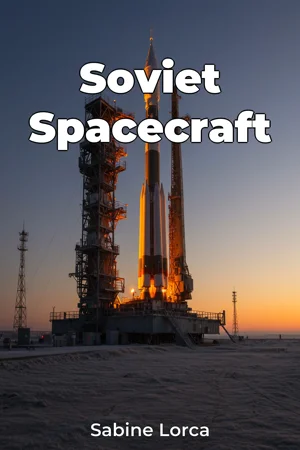
"Soviet Spacecraft" explores how the USSR, despite its wartime devastation, achieved remarkable feats in space, often ahead of the United States. The book examines the rapid technological advancements, intense political motivations during the Cold War, and the specific designs of spacecraft like Sputnik, Vostok, and Soyuz. It reveals that the Soviet success wasn't solely due to technology but also a unique system of resource allocation and national ambition, challenging the common narrative of technological determinism. The book progresses systematically, beginning with the Cold War context and initial Soviet interest in rocketry. It highlights key figures like Sergei Korolev and then delves into specific spacecraft, detailing their design, missions, and impact, including less publicized projects such as the Buran space shuttle. By analyzing declassified documents, mission transcripts, and insights from former Soviet engineers, "Soviet Spacecraft" offers a nuanced view of the Soviet space program, acknowledging both its triumphs and failures. It connects military history, the history of science, and political science to offer a comprehensive understanding.
Book Details
ISBN
9788235279781
Publisher
Publifye AS
Your Licenses
You don't own any licenses for this book
Purchase a license below to unlock this book and download the EPUB.
Purchase License
Select a tier to unlock this book
Need bulk licensing?
Contact us for enterprise agreements.