
About This Book
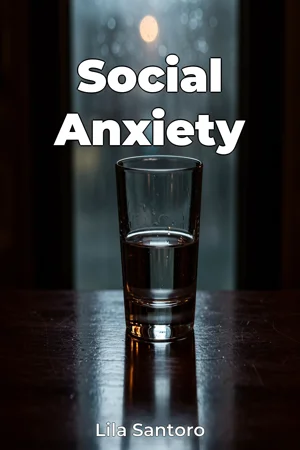
Do you find social situations overwhelming, and have you ever turned to substances to cope with the anxiety they provoke? This book, *Social Anxiety*, explores the intricate relationship between social anxiety disorder (SAD) and substance use, offering insights and evidence-based strategies for managing both. It delves into the psychological underpinnings of social anxiety, examines how it can lead to substance abuse as a maladaptive coping mechanism, and provides practical tools for individuals seeking to overcome these challenges. Social anxiety and substance misuse are critical public health issues, often co-occurring and exacerbating each other. Understanding their complex interplay is crucial for effective intervention and prevention strategies. This book argues that social anxiety can be a significant risk factor for substance use disorders, but with the right understanding and techniques, individuals can break free from this cycle. We begin by defining social anxiety disorder, differentiating it from normal shyness, and outlining its diagnostic criteria according to the DSM. Readers will gain a comprehensive understanding of the cognitive, behavioral, and physiological symptoms of SAD. The core of the book explores how social anxiety can lead to substance use. We examine the self-medication hypothesis, which suggests that individuals with social anxiety may use substances to alleviate their symptoms and navigate social situations more comfortably. The book details the neurobiological mechanisms involved, including the role of neurotransmitters like dopamine and GABA in both social anxiety and substance dependence. Real-life examples and case studies illustrate how this dynamic plays out in various populations and contexts. Moving beyond the problem, the book then transitions to solutions. Cognitive-behavioral therapy (CBT) is presented as a cornerstone of treatment, with detailed explanations of techniques like cognitive restructuring and exposure therapy. Mindfulness-based interventions are also explored as a complementary approach to managing anxiety and cravings. Practical strategies for building social skills, assertiveness, and self-esteem are provided, empowering readers to overcome their social fears and develop healthier coping mechanisms. The evidence presented is drawn from peer-reviewed research articles, clinical trials, and meta-analyses. The book also incorporates qualitative data from interviews and personal accounts to provide a human perspective on the experience of social anxiety and substance use. Methodologies from psychology, neuroscience, and addiction studies are integrated to provide a comprehensive understanding of the topic. This book connects to the fields of public health, sociology, and education. Understanding the social determinants of mental health and substance use is crucial for developing effective prevention programs. By addressing stigma and promoting mental health literacy, we can create more supportive communities for individuals struggling with these challenges. What sets this book apart is its integrated approach, combining a thorough understanding of the psychological and neurobiological factors underlying social anxiety and substance use with practical, evidence-based strategies for recovery. The tone is both informative and supportive, making complex concepts accessible to a wide audience. This book is intended for individuals with social anxiety, their families, and mental health professionals. It offers valuable insights and practical tools for anyone seeking to understand and overcome the challenges of social anxiety and substance use. While the book covers a wide range of topics related to social anxiety and substance use, it does not delve into specific treatment protocols for co-occurring disorders. The focus is on providing a foundational understanding and evidence-based strategies that can be adapted to individual needs. The strategies outlined in this book can be applied in various real-world settings, from individual therapy to support groups and community-based programs. By empowering individuals to manage their social anxiety and develop healthier coping mechanisms, we can reduce the risk of substance use and improve overall well-being. There are ongoing debates surrounding the most effective treatments for social anxiety and substance use disorders. This book acknowledges these debates and presents a balanced perspective, highlighting the strengths and limitations of different approaches.
Do you find social situations overwhelming, and have you ever turned to substances to cope with the anxiety they provoke? This book, *Social Anxiety*, explores the intricate relationship between social anxiety disorder (SAD) and substance use, offering insights and evidence-based strategies for managing both. It delves into the psychological underpinnings of social anxiety, examines how it can lead to substance abuse as a maladaptive coping mechanism, and provides practical tools for individuals seeking to overcome these challenges. Social anxiety and substance misuse are critical public health issues, often co-occurring and exacerbating each other. Understanding their complex interplay is crucial for effective intervention and prevention strategies. This book argues that social anxiety can be a significant risk factor for substance use disorders, but with the right understanding and techniques, individuals can break free from this cycle. We begin by defining social anxiety disorder, differentiating it from normal shyness, and outlining its diagnostic criteria according to the DSM. Readers will gain a comprehensive understanding of the cognitive, behavioral, and physiological symptoms of SAD. The core of the book explores how social anxiety can lead to substance use. We examine the self-medication hypothesis, which suggests that individuals with social anxiety may use substances to alleviate their symptoms and navigate social situations more comfortably. The book details the neurobiological mechanisms involved, including the role of neurotransmitters like dopamine and GABA in both social anxiety and substance dependence. Real-life examples and case studies illustrate how this dynamic plays out in various populations and contexts. Moving beyond the problem, the book then transitions to solutions. Cognitive-behavioral therapy (CBT) is presented as a cornerstone of treatment, with detailed explanations of techniques like cognitive restructuring and exposure therapy. Mindfulness-based interventions are also explored as a complementary approach to managing anxiety and cravings. Practical strategies for building social skills, assertiveness, and self-esteem are provided, empowering readers to overcome their social fears and develop healthier coping mechanisms. The evidence presented is drawn from peer-reviewed research articles, clinical trials, and meta-analyses. The book also incorporates qualitative data from interviews and personal accounts to provide a human perspective on the experience of social anxiety and substance use. Methodologies from psychology, neuroscience, and addiction studies are integrated to provide a comprehensive understanding of the topic. This book connects to the fields of public health, sociology, and education. Understanding the social determinants of mental health and substance use is crucial for developing effective prevention programs. By addressing stigma and promoting mental health literacy, we can create more supportive communities for individuals struggling with these challenges. What sets this book apart is its integrated approach, combining a thorough understanding of the psychological and neurobiological factors underlying social anxiety and substance use with practical, evidence-based strategies for recovery. The tone is both informative and supportive, making complex concepts accessible to a wide audience. This book is intended for individuals with social anxiety, their families, and mental health professionals. It offers valuable insights and practical tools for anyone seeking to understand and overcome the challenges of social anxiety and substance use. While the book covers a wide range of topics related to social anxiety and substance use, it does not delve into specific treatment protocols for co-occurring disorders. The focus is on providing a foundational understanding and evidence-based strategies that can be adapted to individual needs. The strategies outlined in this book can be applied in various real-world settings, from individual therapy to support groups and community-based programs. By empowering individuals to manage their social anxiety and develop healthier coping mechanisms, we can reduce the risk of substance use and improve overall well-being. There are ongoing debates surrounding the most effective treatments for social anxiety and substance use disorders. This book acknowledges these debates and presents a balanced perspective, highlighting the strengths and limitations of different approaches.
"Social Anxiety" explores the complex link between social anxiety disorder (SAD) and substance use, offering insights and proven methods to manage both. Individuals with SAD sometimes turn to self-medication, using substances to ease anxiety in social settings. This book investigates the psychological roots of social anxiety and how it can lead to substance abuse, highlighting the neurobiological mechanisms involved, such as the roles of dopamine and GABA. The book progresses from defining SAD and its symptoms to exploring the self-medication hypothesis with real-life examples, before transitioning to solutions. Cognitive-behavioral therapy (CBT) is presented as a key treatment, with techniques like cognitive restructuring and exposure therapy explained. Readers will also learn practical strategies for building social skills and self-esteem, empowering them to overcome social fears. What sets this book apart is its integrated approach, combining psychological understanding with practical strategies for recovery. Ultimately, "Social Anxiety" aims to provide a comprehensive understanding and evidence-based strategies for managing social anxiety and reducing the risk of substance use, making it a valuable resource for individuals, families, and mental health professionals.
Book Details
ISBN
9788235279712
Publisher
Publifye AS
Your Licenses
You don't own any licenses for this book
Purchase a license below to unlock this book and download the EPUB.
Purchase License
Select a tier to unlock this book
Need bulk licensing?
Contact us for enterprise agreements.