
About This Book
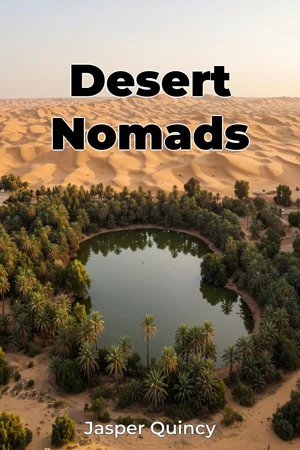
How do humans not only survive, but thrive, in some of the most arid and unforgiving landscapes on Earth? "Desert Nomads" delves into the lives of people inhabiting the world's harshest deserts, revealing the ancient skills, knowledge, and cultural adaptations that allow them to flourish where others could not. This book explores the intricate relationship between desert communities and their environment, focusing on water procurement, shelter construction, and the delicate balance of sustainable living in extreme conditions. These topics are vital because they offer insights into human resilience, environmental adaptation, and the importance of traditional ecological knowledge in an era of increasing climate change and resource scarcity. The narrative unfolds against a backdrop of increasing environmental challenges. Understanding the historical context of desert nomadism is crucial, examining centuries-old traditions passed down through generations, adapting to fluctuating climates and limited resources. The book doesn’t require any prior scientific expertise, providing accessible explanations of geographical and earth science principles relevant to desert environments. The central argument of "Desert Nomads" emphasizes the critical role of indigenous knowledge systems in achieving sustainable development and environmental stewardship. It posits that the survival strategies of desert nomads offer valuable lessons for addressing contemporary challenges related to water management, land use, and climate adaptation, not just for desert regions, but potentially for broader global application. The book is structured to provide a comprehensive understanding of desert nomadism. It begins by introducing the main concepts of desert ecology, human adaptation, and the principles of sustainable living in arid environments. The development of ideas then progresses through three major sections: (1) Water Wisdom: Exploring diverse techniques for finding, collecting, and conserving water, from ancient well systems to atmospheric harvesting, including the social structures around water resource management. (2) Sheltering from the Storm: Examining the ingenious architectural designs and construction methods employed to create shelter from extreme temperatures, sandstorms, and other environmental hazards, with considerations about material science and availability. (3) A Living Landscape: Focusing on the traditional practices of land management, agriculture, and animal husbandry that enable desert nomads to maintain a sustainable livelihood while preserving the fragile desert ecosystem. The book culminates by considering the practical applications of this indigenous knowledge in modern contexts, such as informing sustainable development initiatives, promoting climate resilience, and fostering cross-cultural understanding. The evidence presented draws from a range of sources, including ethnographic studies, archaeological records, and environmental data. Primary data includes interviews with desert nomads, observations of their daily lives, and analyses of their traditional practices. The methodologies employed will be qualitative, emphasizing in-depth understanding of cultural practices. Photographic documentation enriches the narratives, providing a visual representation of the people, landscapes, and techniques discussed. "Desert Nomads" connects to fields such as Anthropology, offering insights into cultural adaptation; Environmental Science, providing examples of sustainable resource management; and Geography, illustrating the interplay between humans and their environment. These connections broaden the book's appeal to a diverse readership and strengthen its argument for the importance of traditional ecological knowledge. This book distinguishes itself by focusing on the practical application of indigenous knowledge in addressing contemporary challenges. It highlights the resourcefulness and ingenuity of desert nomads, offering an optimistic perspective on human adaptation in the face of environmental adversity. The tone is informative, engaging, and respectful. The writing style blends scientific accuracy with narrative storytelling, making the content accessible to a broad audience while maintaining academic rigor. The target audience includes students and researchers in fields such as anthropology, environmental studies, and geography, as well as general readers interested in cultural diversity, sustainable living, and human resilience. The book is valuable to them since it offers new perspectives on environmental adaptation and highlights contributions of marginalized communities. In line with the conventions of travel and earth sciences geography non-fiction, the book features detailed descriptions of geographical locations, cultural practices, and scientific principles. The scope encompasses a variety of desert regions around the world, including the Sahara, the Kalahari, and the Gobi Desert. It acknowledges that not all desert communities are the same and does not intend to provide a definitive or comprehensive overview of all desert cultures. The information can be applied practically by readers interested in sustainable living, water conservation, and climate adaptation. It offers insights into alternative approaches to resource management and highlights the potential of traditional knowledge to inform modern solutions. While traditional knowledge is generally valuable, "Desert Nomads" also acknowledges debates surrounding its validity. The book addresses criticisms concerning the romanticization of indigenous cultures, emphasizing the importance of cultural sensitivity, collaboration, and recognizing the evolving challenges faced by desert communities in a changing world.
How do humans not only survive, but thrive, in some of the most arid and unforgiving landscapes on Earth? "Desert Nomads" delves into the lives of people inhabiting the world's harshest deserts, revealing the ancient skills, knowledge, and cultural adaptations that allow them to flourish where others could not. This book explores the intricate relationship between desert communities and their environment, focusing on water procurement, shelter construction, and the delicate balance of sustainable living in extreme conditions. These topics are vital because they offer insights into human resilience, environmental adaptation, and the importance of traditional ecological knowledge in an era of increasing climate change and resource scarcity. The narrative unfolds against a backdrop of increasing environmental challenges. Understanding the historical context of desert nomadism is crucial, examining centuries-old traditions passed down through generations, adapting to fluctuating climates and limited resources. The book doesn’t require any prior scientific expertise, providing accessible explanations of geographical and earth science principles relevant to desert environments. The central argument of "Desert Nomads" emphasizes the critical role of indigenous knowledge systems in achieving sustainable development and environmental stewardship. It posits that the survival strategies of desert nomads offer valuable lessons for addressing contemporary challenges related to water management, land use, and climate adaptation, not just for desert regions, but potentially for broader global application. The book is structured to provide a comprehensive understanding of desert nomadism. It begins by introducing the main concepts of desert ecology, human adaptation, and the principles of sustainable living in arid environments. The development of ideas then progresses through three major sections: (1) Water Wisdom: Exploring diverse techniques for finding, collecting, and conserving water, from ancient well systems to atmospheric harvesting, including the social structures around water resource management. (2) Sheltering from the Storm: Examining the ingenious architectural designs and construction methods employed to create shelter from extreme temperatures, sandstorms, and other environmental hazards, with considerations about material science and availability. (3) A Living Landscape: Focusing on the traditional practices of land management, agriculture, and animal husbandry that enable desert nomads to maintain a sustainable livelihood while preserving the fragile desert ecosystem. The book culminates by considering the practical applications of this indigenous knowledge in modern contexts, such as informing sustainable development initiatives, promoting climate resilience, and fostering cross-cultural understanding. The evidence presented draws from a range of sources, including ethnographic studies, archaeological records, and environmental data. Primary data includes interviews with desert nomads, observations of their daily lives, and analyses of their traditional practices. The methodologies employed will be qualitative, emphasizing in-depth understanding of cultural practices. Photographic documentation enriches the narratives, providing a visual representation of the people, landscapes, and techniques discussed. "Desert Nomads" connects to fields such as Anthropology, offering insights into cultural adaptation; Environmental Science, providing examples of sustainable resource management; and Geography, illustrating the interplay between humans and their environment. These connections broaden the book's appeal to a diverse readership and strengthen its argument for the importance of traditional ecological knowledge. This book distinguishes itself by focusing on the practical application of indigenous knowledge in addressing contemporary challenges. It highlights the resourcefulness and ingenuity of desert nomads, offering an optimistic perspective on human adaptation in the face of environmental adversity. The tone is informative, engaging, and respectful. The writing style blends scientific accuracy with narrative storytelling, making the content accessible to a broad audience while maintaining academic rigor. The target audience includes students and researchers in fields such as anthropology, environmental studies, and geography, as well as general readers interested in cultural diversity, sustainable living, and human resilience. The book is valuable to them since it offers new perspectives on environmental adaptation and highlights contributions of marginalized communities. In line with the conventions of travel and earth sciences geography non-fiction, the book features detailed descriptions of geographical locations, cultural practices, and scientific principles. The scope encompasses a variety of desert regions around the world, including the Sahara, the Kalahari, and the Gobi Desert. It acknowledges that not all desert communities are the same and does not intend to provide a definitive or comprehensive overview of all desert cultures. The information can be applied practically by readers interested in sustainable living, water conservation, and climate adaptation. It offers insights into alternative approaches to resource management and highlights the potential of traditional knowledge to inform modern solutions. While traditional knowledge is generally valuable, "Desert Nomads" also acknowledges debates surrounding its validity. The book addresses criticisms concerning the romanticization of indigenous cultures, emphasizing the importance of cultural sensitivity, collaboration, and recognizing the evolving challenges faced by desert communities in a changing world.
"Desert Nomads" explores the remarkable adaptations of people thriving in Earth's harshest desert environments, showcasing their ancient skills and cultural knowledge. These communities offer invaluable lessons in sustainable living and environmental adaptation, particularly relevant in an era marked by increasing climate change and resource scarcity. The book emphasizes the crucial role of indigenous knowledge systems, revealing how desert nomads have mastered water procurement and shelter construction in extreme conditions, such as using ancient well systems or ingenious architectural designs to combat sandstorms. The book progresses methodically, beginning with an introduction to desert ecology and sustainable living principles. It then delves into specific adaptations, such as water management techniques, innovative shelter designs tailored to extreme temperatures, and traditional land management practices. By drawing upon ethnographic studies, archaeological records, and environmental data, "Desert Nomads" aims to provide a comprehensive understanding of how these communities have achieved environmental stewardship and climate resilience, offering potential solutions to contemporary global challenges.
Book Details
ISBN
9788235279668
Publisher
Publifye AS
Your Licenses
You don't own any licenses for this book
Purchase a license below to unlock this book and download the EPUB.
Purchase License
Select a tier to unlock this book
Need bulk licensing?
Contact us for enterprise agreements.