
About This Book
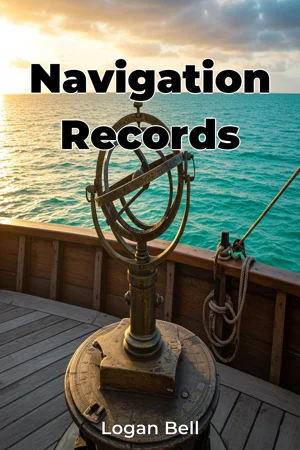
How did ancient civilizations navigate vast oceans and uncharted territories, connecting disparate cultures and shaping the world we know today? "Navigation Records" delves into the meticulous details of humanity’s early explorations, meticulously examining ancient maps, maritime logs, and travel accounts to reveal the methods, motivations, and consequences of connecting distant lands. This book is important because understanding these historical voyages provides critical insight into the development of global trade, cultural exchange, and the spread of knowledge. The book primarily addresses three key topics: the evolution of navigational techniques, the socio-economic drivers behind exploration, and the impact of these voyages on global interactions. Understanding how people navigated without modern technology is fascinating. The reasons behind these long and hazardous trips are very important. The outcomes of these voyages greatly impacted the world. To fully appreciate the achievements detailed in "Navigation Records," readers should possess a basic understanding of ancient history, cartography, and maritime history. Familiarity with key civilizations such as the Egyptians, Greeks, Romans, Phoenicians, Chinese, and Polynesians will be helpful. The central argument of "Navigation Records" posits that the evolution of navigational techniques was not solely a technological advancement, but a complex interplay of economic necessities, political ambitions, and cultural curiosity. This is a new idea. The book begins by introducing fundamental concepts like celestial navigation, dead reckoning, and the use of rudimentary instruments such as the astrolabe and quadrant. It then explores the development of shipbuilding and the understanding of winds and currents. The book is structured in three major parts. The first section analyzes early mapping traditions and navigational methods employed by various cultures. The second part examines specific voyages and expeditions providing detailed accounts from primary sources, such as the journals of explorers and the records kept by maritime administrations. This section will cover the voyages of Zheng He, the Polynesian migrations, and the explorations initiated by European powers. The third section analyzes the consequences of these explorations, including the exchange of goods, the dissemination of knowledge, and the cultural impact on both the explorers and the explored. Evidence presented in "Navigation Records" is primarily derived from primary sources, including digitized versions of ancient maps, translated excerpts from maritime logs, and transcriptions of historical travel accounts. Archaeological findings, such as shipwrecks and navigational tools, are also incorporated. The book connects to other fields of study such as anthropology, economics, and geography. The exploration of new lands facilitated the exchange of flora, fauna, and agricultural practices, which has interdisciplinary connections to biology and environmental science. "Navigation Records" offers a new perspective by integrating historical accounts with scientific analysis, offering a detailed view of this topic. The narrative maintains an academic tone, rigorously analyzing sources while remaining accessible to a broad audience. The writing style aims to be clear and engaging, weaving together historical facts with compelling stories of exploration and discovery. The target audience includes history enthusiasts, students of maritime history, geography buffs, and anyone interested in the early stages of globalization. Readers will find value in the book's thorough research, balanced perspective, and insightful analysis. As a work of history and travel exploration, "Navigation Records" strives to adhere to the genre's conventions of accuracy, objectivity, and thorough documentation. The book is broad in scope, yet it consciously limits its focus to pre-modern navigation, setting the stage for later works to explore modern marine exploration. The information presented in "Navigation Records" has practical applications in understanding global trade routes, cultural diffusion, and the impact of human exploration on the environment. It also offers valuable lessons in problem-solving, resilience, and the pursuit of knowledge. While the book aims to present a balanced account, it acknowledges ongoing debates regarding the ethical implications of early exploration, particularly in relation to colonization and exploitation. "Navigation Records" seeks to contribute to these discussions by providing a nuanced perspective on the motivations and consequences of humankind's early voyages of discovery.
How did ancient civilizations navigate vast oceans and uncharted territories, connecting disparate cultures and shaping the world we know today? "Navigation Records" delves into the meticulous details of humanity’s early explorations, meticulously examining ancient maps, maritime logs, and travel accounts to reveal the methods, motivations, and consequences of connecting distant lands. This book is important because understanding these historical voyages provides critical insight into the development of global trade, cultural exchange, and the spread of knowledge. The book primarily addresses three key topics: the evolution of navigational techniques, the socio-economic drivers behind exploration, and the impact of these voyages on global interactions. Understanding how people navigated without modern technology is fascinating. The reasons behind these long and hazardous trips are very important. The outcomes of these voyages greatly impacted the world. To fully appreciate the achievements detailed in "Navigation Records," readers should possess a basic understanding of ancient history, cartography, and maritime history. Familiarity with key civilizations such as the Egyptians, Greeks, Romans, Phoenicians, Chinese, and Polynesians will be helpful. The central argument of "Navigation Records" posits that the evolution of navigational techniques was not solely a technological advancement, but a complex interplay of economic necessities, political ambitions, and cultural curiosity. This is a new idea. The book begins by introducing fundamental concepts like celestial navigation, dead reckoning, and the use of rudimentary instruments such as the astrolabe and quadrant. It then explores the development of shipbuilding and the understanding of winds and currents. The book is structured in three major parts. The first section analyzes early mapping traditions and navigational methods employed by various cultures. The second part examines specific voyages and expeditions providing detailed accounts from primary sources, such as the journals of explorers and the records kept by maritime administrations. This section will cover the voyages of Zheng He, the Polynesian migrations, and the explorations initiated by European powers. The third section analyzes the consequences of these explorations, including the exchange of goods, the dissemination of knowledge, and the cultural impact on both the explorers and the explored. Evidence presented in "Navigation Records" is primarily derived from primary sources, including digitized versions of ancient maps, translated excerpts from maritime logs, and transcriptions of historical travel accounts. Archaeological findings, such as shipwrecks and navigational tools, are also incorporated. The book connects to other fields of study such as anthropology, economics, and geography. The exploration of new lands facilitated the exchange of flora, fauna, and agricultural practices, which has interdisciplinary connections to biology and environmental science. "Navigation Records" offers a new perspective by integrating historical accounts with scientific analysis, offering a detailed view of this topic. The narrative maintains an academic tone, rigorously analyzing sources while remaining accessible to a broad audience. The writing style aims to be clear and engaging, weaving together historical facts with compelling stories of exploration and discovery. The target audience includes history enthusiasts, students of maritime history, geography buffs, and anyone interested in the early stages of globalization. Readers will find value in the book's thorough research, balanced perspective, and insightful analysis. As a work of history and travel exploration, "Navigation Records" strives to adhere to the genre's conventions of accuracy, objectivity, and thorough documentation. The book is broad in scope, yet it consciously limits its focus to pre-modern navigation, setting the stage for later works to explore modern marine exploration. The information presented in "Navigation Records" has practical applications in understanding global trade routes, cultural diffusion, and the impact of human exploration on the environment. It also offers valuable lessons in problem-solving, resilience, and the pursuit of knowledge. While the book aims to present a balanced account, it acknowledges ongoing debates regarding the ethical implications of early exploration, particularly in relation to colonization and exploitation. "Navigation Records" seeks to contribute to these discussions by providing a nuanced perspective on the motivations and consequences of humankind's early voyages of discovery.
"Navigation Records" explores how ancient civilizations navigated the seas, connecting cultures and shaping global interactions. It delves into early exploration by examining ancient maps, maritime logs, and travel accounts. Discover how celestial navigation and dead reckoning were employed without modern technology, and understand the socio-economic drivers behind hazardous voyages of discovery. The book reveals that the evolution of navigation was more than just technological advancement; it was driven by economic needs, political ambitions, and cultural curiosity. For instance, the voyages of Zheng He and Polynesian migrations illustrate the global reach achieved through pre-modern navigation techniques. Structured in three parts, "Navigation Records" first analyzes early mapping and navigation methods. It then examines specific voyages using primary sources, and concludes by analyzing the consequences, including global trade and cultural exchange. This approach offers a detailed view of maritime history and its impact.
Book Details
ISBN
9788235279514
Publisher
Publifye AS
Your Licenses
You don't own any licenses for this book
Purchase a license below to unlock this book and download the EPUB.
Purchase License
Select a tier to unlock this book
Need bulk licensing?
Contact us for enterprise agreements.