
About This Book
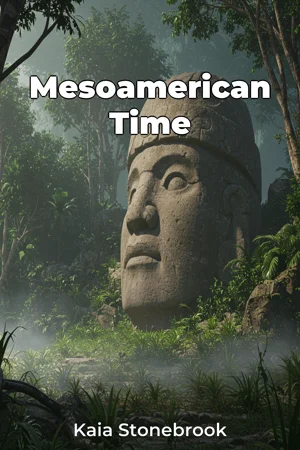
How did ancient Mesoamerican societies, lacking metal tools and modern technology, develop calendar systems of such precision and complexity that they continue to intrigue scholars today? "Mesoamerican Time" delves into the genesis and evolution of these sophisticated timekeeping methods, tracing their origins from the earliest civilizations to their influence on later, better-known cultures. This book explores the intricate calendar systems of the Olmecs and Zapotecs, revealing their foundational importance in shaping the cosmological views and societal structures of the Maya and Aztecs. These calendars weren't mere methods of tracking days; they were integral components of religious beliefs, agricultural practices, and political power. The book focuses on three core themes: the development of the Mesoamerican Long Count calendar, the intricacies of the 260-day ritual calendar (Tzolkin), and the 365-day solar calendar (Haab’). These systems, often working in conjunction, provided a cyclical framework for understanding time, history, and the universe itself. The significance of these topics lies in their ability to unlock the intellectual achievements of these ancient civilizations and demonstrate how they conceptualized their place within the cosmos. Understanding these calendars means understanding the very fabric of Mesoamerican society. To fully appreciate the nuances, the book provides essential historical context, examining the social and environmental conditions that fostered these innovations. Further, it explains the basics of Mesoamerican mathematics including the vigesimal (base-20) number system, and the role of hieroglyphic writing in recording calendrical information. The central argument is that the calendrical systems of the Olmecs and Zapotecs represent a profound intellectual leap, serving as the bedrock upon which later Mesoamerican cultures built their own complex temporal frameworks. This argument challenges the traditional view that the Maya were the sole innovators of Mesoamerican calendrical science, highlighting the crucial contributions of their predecessors. "Mesoamerican Time" unfolds in a structured manner. It begins by introducing fundamental concepts, such as the basic units of Mesoamerican timekeeping and the archaeological evidence supporting their existence. It then explores the specific contributions of the Olmecs and Zapotecs, analyzing inscriptions, monumental art, and architectural alignments to reconstruct their calendrical knowledge. Subsequent chapters trace the transmission and adaptation of these systems by the Maya and Aztecs, focusing on how each culture modified and integrated the calendars into their own unique worldviews. The book culminates by examining the legacy of these calendars, discussing their enduring impact on indigenous cultures and their ongoing relevance to modern scholars. Evidence presented includes detailed analysis of stelae inscriptions, codices, and archaeological site layouts. The research draws upon epigraphy, archaeology, and archaeoastronomy, utilizing newly deciphered texts and advanced dating techniques to provide fresh insights. The book also bridges interdisciplinary divides, connecting to anthropology, astronomy, and religious studies. It examines the social impact of the calendars on Mesoamerican societies, their astronomical underpinnings, and their role in shaping religious beliefs and rituals. These interdisciplinary connections enrich the understanding of these complex systems. "Mesoamerican Time" offers a unique perspective by emphasizing the foundational role of the Olmecs and Zapotecs, challenging the Maya-centric view prevalent in many existing works. The book employs a fact-based, academic writing style, making complex information accessible to a broad audience. The target audience includes students, researchers, and anyone interested in Mesoamerican history, archaeology, or ancient astronomy. It appeals to those seeking a deeper understanding of pre-Columbian intellectual achievements and the origins of Mesoamerican civilization. As a history and science book, "Mesoamerican Time" adheres to rigorous standards of accuracy and objectivity. It presents evidence-based arguments, clearly distinguishes between fact and speculation, and provides detailed citations for all sources. The book focuses primarily on the development and transmission of calendrical knowledge, with less emphasis on other aspects of Mesoamerican culture. This intentional limitation allows for a more in-depth exploration of the core topic. Understanding Mesoamerican calendars offers practical applications in various fields, including the interpretation of archaeological sites, the reconstruction of ancient chronologies, and the preservation of indigenous knowledge. While the decipherment of Mesoamerican writing continues to evolve, the book addresses ongoing debates surrounding the interpretation of specific calendrical inscriptions. By presenting different viewpoints, the book encourages critical thinking and further research.
How did ancient Mesoamerican societies, lacking metal tools and modern technology, develop calendar systems of such precision and complexity that they continue to intrigue scholars today? "Mesoamerican Time" delves into the genesis and evolution of these sophisticated timekeeping methods, tracing their origins from the earliest civilizations to their influence on later, better-known cultures. This book explores the intricate calendar systems of the Olmecs and Zapotecs, revealing their foundational importance in shaping the cosmological views and societal structures of the Maya and Aztecs. These calendars weren't mere methods of tracking days; they were integral components of religious beliefs, agricultural practices, and political power. The book focuses on three core themes: the development of the Mesoamerican Long Count calendar, the intricacies of the 260-day ritual calendar (Tzolkin), and the 365-day solar calendar (Haab’). These systems, often working in conjunction, provided a cyclical framework for understanding time, history, and the universe itself. The significance of these topics lies in their ability to unlock the intellectual achievements of these ancient civilizations and demonstrate how they conceptualized their place within the cosmos. Understanding these calendars means understanding the very fabric of Mesoamerican society. To fully appreciate the nuances, the book provides essential historical context, examining the social and environmental conditions that fostered these innovations. Further, it explains the basics of Mesoamerican mathematics including the vigesimal (base-20) number system, and the role of hieroglyphic writing in recording calendrical information. The central argument is that the calendrical systems of the Olmecs and Zapotecs represent a profound intellectual leap, serving as the bedrock upon which later Mesoamerican cultures built their own complex temporal frameworks. This argument challenges the traditional view that the Maya were the sole innovators of Mesoamerican calendrical science, highlighting the crucial contributions of their predecessors. "Mesoamerican Time" unfolds in a structured manner. It begins by introducing fundamental concepts, such as the basic units of Mesoamerican timekeeping and the archaeological evidence supporting their existence. It then explores the specific contributions of the Olmecs and Zapotecs, analyzing inscriptions, monumental art, and architectural alignments to reconstruct their calendrical knowledge. Subsequent chapters trace the transmission and adaptation of these systems by the Maya and Aztecs, focusing on how each culture modified and integrated the calendars into their own unique worldviews. The book culminates by examining the legacy of these calendars, discussing their enduring impact on indigenous cultures and their ongoing relevance to modern scholars. Evidence presented includes detailed analysis of stelae inscriptions, codices, and archaeological site layouts. The research draws upon epigraphy, archaeology, and archaeoastronomy, utilizing newly deciphered texts and advanced dating techniques to provide fresh insights. The book also bridges interdisciplinary divides, connecting to anthropology, astronomy, and religious studies. It examines the social impact of the calendars on Mesoamerican societies, their astronomical underpinnings, and their role in shaping religious beliefs and rituals. These interdisciplinary connections enrich the understanding of these complex systems. "Mesoamerican Time" offers a unique perspective by emphasizing the foundational role of the Olmecs and Zapotecs, challenging the Maya-centric view prevalent in many existing works. The book employs a fact-based, academic writing style, making complex information accessible to a broad audience. The target audience includes students, researchers, and anyone interested in Mesoamerican history, archaeology, or ancient astronomy. It appeals to those seeking a deeper understanding of pre-Columbian intellectual achievements and the origins of Mesoamerican civilization. As a history and science book, "Mesoamerican Time" adheres to rigorous standards of accuracy and objectivity. It presents evidence-based arguments, clearly distinguishes between fact and speculation, and provides detailed citations for all sources. The book focuses primarily on the development and transmission of calendrical knowledge, with less emphasis on other aspects of Mesoamerican culture. This intentional limitation allows for a more in-depth exploration of the core topic. Understanding Mesoamerican calendars offers practical applications in various fields, including the interpretation of archaeological sites, the reconstruction of ancient chronologies, and the preservation of indigenous knowledge. While the decipherment of Mesoamerican writing continues to evolve, the book addresses ongoing debates surrounding the interpretation of specific calendrical inscriptions. By presenting different viewpoints, the book encourages critical thinking and further research.
"Mesoamerican Time" explores the fascinating origins and evolution of ancient Mesoamerican calendars, revealing how societies without advanced technology developed remarkably precise timekeeping systems. The book traces these systems from the Olmecs and Zapotecs to the more well-known Maya and Aztecs, demonstrating how these calendars were integral to religious beliefs, agricultural practices, and political structures. Intriguingly, these calendars were not just about tracking days; they were deeply intertwined with understanding the cosmos, and the book highlights how the 260-day Tzolkin ritual calendar, and the 365-day Haab solar calendar worked together. The book emphasizes the foundational contributions of the Olmecs and Zapotecs, often overlooked in favor of the Maya. It examines the Long Count calendar and other systems, presenting historical context, Mesoamerican mathematics, and hieroglyphic writing to explain their complexity. By analyzing stelae inscriptions, monumental art, and archaeological site layouts, the book progresses from introducing basic concepts to exploring the specific contributions of each civilization, ultimately examining the enduring legacy and modern relevance of these ingenious systems.
Book Details
ISBN
9788235279309
Publisher
Publifye AS
Your Licenses
You don't own any licenses for this book
Purchase a license below to unlock this book and download the EPUB.
Purchase License
Select a tier to unlock this book
Need bulk licensing?
Contact us for enterprise agreements.