
About This Book
Have you ever wondered how ancient civilizations, without the benefit of modern technology, managed to track time with astonishing accuracy, aligning their lives and societies with the celestial dance of the sun? "Solar Time" delves into the fascinating world of solar calendars developed by cultures across the globe, revealing the ingenuity and profound understanding of astronomical principles embedded in their societal structures and daily routines. We will explore how these calendars were not merely tools for measuring time but integral components of religious practices, agricultural planning, and social organization. This book focuses primarily on two key topics: the diverse methodologies employed in the construction of solar calendars and the adaptive strategies developed to account for seasonal changes. We will examine how different cultures, from the Egyptians to the Mayans, devised ingenious methods for observing the sun's movements, creating calendars that governed every aspect of their lives. Furthermore, the book will explore the significance of understanding these historical timekeeping systems in the context of modern science and our ongoing quest to comprehend the universe. Understanding "Solar Time" requires no prior expertise in astronomy or history. We will provide the necessary background information on basic astronomical concepts, such as the Earth's orbit, axial tilt, and the solstices and equinoxes. We will also contextualize the development of these calendars within their respective historical and social frameworks, ensuring that readers grasp the cultural significance of these timekeeping systems. The central argument of "Solar Time" is that solar calendars represent a remarkable intellectual achievement, demonstrating humanity's innate ability to observe, understand, and adapt to the natural world. These calendars are not just relics of the past, but powerful testaments to the human capacity for innovation and our enduring connection to the cosmos. Recognizing their sophistication and the scientific principles they embody challenges the Eurocentric bias often present in historical narratives of scientific advancement. This book is structured to provide a comprehensive overview of the subject. We begin by introducing the fundamental concepts of solar time and the historical motivations for developing accurate calendars. The development of ideas unfolds across several thematic chapters. First, we examine the Egyptian solar calendar and its influence on subsequent calendar systems. Second, we explore the complex Mayan calendar system, highlighting its intricate mathematical underpinnings and its role in Mayan cosmology. Third, we investigate other significant solar calendars from around the world, including those of ancient China and various indigenous cultures. We will culminate by synthesizing the knowledge gained from these diverse examples, demonstrating how solar time influenced the development of agriculture, religion, and social structures. "Solar Time" draws upon a wide range of evidence, including archaeological findings, ancient texts, and modern astronomical research. We analyze inscriptions on monuments, papyrus scrolls, and other primary sources to reconstruct the methods and knowledge used in creating these solar calendars. We also incorporate contemporary scientific data to verify the accuracy of these calendars and to provide a deeper understanding of the astronomical phenomena they were designed to track. This book connects to several other fields of study, including archaeology, anthropology, and the history of science. By examining the cultural contexts in which these calendars were developed, we gain insights into the beliefs, values, and social organization of past societies. Furthermore, by exploring the scientific principles behind these calendars, we contribute to a broader understanding of the history of astronomical knowledge. "Solar Time" offers a unique perspective by emphasizing the cross-cultural similarities and differences in the development of solar calendars. Rather than focusing solely on the achievements of a single civilization, we take a global approach, highlighting the shared human impulse to understand and measure time while also acknowledging the diverse ways in which this impulse manifested itself in different cultural contexts. The tone is fact-based and informative, yet accessible to a broad audience. We strive to present complex information in a clear and engaging manner, avoiding technical jargon and providing ample explanations and examples. The target audience includes anyone interested in history, science, astronomy, or cultural studies. This book is valuable to readers seeking a deeper understanding of how ancient civilizations understood and interacted with the natural world, and of the history of scientific thought before the modern era. As a work of non-fiction in the genres of history and science, "Solar Time" aims to provide a rigorous and accurate account of its subject matter, while also engaging readers with compelling narratives and thought-provoking insights. The scope of "Solar Time" is intentionally broad, encompassing a wide range of cultures and time periods. However, we acknowledge that it is impossible to provide an exhaustive account of every solar calendar ever developed. Our focus is on highlighting the most significant and well-documented examples, while also providing a representative overview of the diversity of approaches to timekeeping. The information presented has practical application. Understanding the nuances of these historical timelines sheds light on the origins of standardized time and its societal impacts. For example, appreciating the astronomical accuracy achieved millennia ago can reshape perceptions of ancient knowledge. While the astronomical principles underlying solar calendars are well-established, debates continue regarding the precise interpretations of certain historical texts and archaeological findings. We address these controversies by presenting multiple perspectives and carefully evaluating the available evidence.
Have you ever wondered how ancient civilizations, without the benefit of modern technology, managed to track time with astonishing accuracy, aligning their lives and societies with the celestial dance of the sun? "Solar Time" delves into the fascinating world of solar calendars developed by cultures across the globe, revealing the ingenuity and profound understanding of astronomical principles embedded in their societal structures and daily routines. We will explore how these calendars were not merely tools for measuring time but integral components of religious practices, agricultural planning, and social organization. This book focuses primarily on two key topics: the diverse methodologies employed in the construction of solar calendars and the adaptive strategies developed to account for seasonal changes. We will examine how different cultures, from the Egyptians to the Mayans, devised ingenious methods for observing the sun's movements, creating calendars that governed every aspect of their lives. Furthermore, the book will explore the significance of understanding these historical timekeeping systems in the context of modern science and our ongoing quest to comprehend the universe. Understanding "Solar Time" requires no prior expertise in astronomy or history. We will provide the necessary background information on basic astronomical concepts, such as the Earth's orbit, axial tilt, and the solstices and equinoxes. We will also contextualize the development of these calendars within their respective historical and social frameworks, ensuring that readers grasp the cultural significance of these timekeeping systems. The central argument of "Solar Time" is that solar calendars represent a remarkable intellectual achievement, demonstrating humanity's innate ability to observe, understand, and adapt to the natural world. These calendars are not just relics of the past, but powerful testaments to the human capacity for innovation and our enduring connection to the cosmos. Recognizing their sophistication and the scientific principles they embody challenges the Eurocentric bias often present in historical narratives of scientific advancement. This book is structured to provide a comprehensive overview of the subject. We begin by introducing the fundamental concepts of solar time and the historical motivations for developing accurate calendars. The development of ideas unfolds across several thematic chapters. First, we examine the Egyptian solar calendar and its influence on subsequent calendar systems. Second, we explore the complex Mayan calendar system, highlighting its intricate mathematical underpinnings and its role in Mayan cosmology. Third, we investigate other significant solar calendars from around the world, including those of ancient China and various indigenous cultures. We will culminate by synthesizing the knowledge gained from these diverse examples, demonstrating how solar time influenced the development of agriculture, religion, and social structures. "Solar Time" draws upon a wide range of evidence, including archaeological findings, ancient texts, and modern astronomical research. We analyze inscriptions on monuments, papyrus scrolls, and other primary sources to reconstruct the methods and knowledge used in creating these solar calendars. We also incorporate contemporary scientific data to verify the accuracy of these calendars and to provide a deeper understanding of the astronomical phenomena they were designed to track. This book connects to several other fields of study, including archaeology, anthropology, and the history of science. By examining the cultural contexts in which these calendars were developed, we gain insights into the beliefs, values, and social organization of past societies. Furthermore, by exploring the scientific principles behind these calendars, we contribute to a broader understanding of the history of astronomical knowledge. "Solar Time" offers a unique perspective by emphasizing the cross-cultural similarities and differences in the development of solar calendars. Rather than focusing solely on the achievements of a single civilization, we take a global approach, highlighting the shared human impulse to understand and measure time while also acknowledging the diverse ways in which this impulse manifested itself in different cultural contexts. The tone is fact-based and informative, yet accessible to a broad audience. We strive to present complex information in a clear and engaging manner, avoiding technical jargon and providing ample explanations and examples. The target audience includes anyone interested in history, science, astronomy, or cultural studies. This book is valuable to readers seeking a deeper understanding of how ancient civilizations understood and interacted with the natural world, and of the history of scientific thought before the modern era. As a work of non-fiction in the genres of history and science, "Solar Time" aims to provide a rigorous and accurate account of its subject matter, while also engaging readers with compelling narratives and thought-provoking insights. The scope of "Solar Time" is intentionally broad, encompassing a wide range of cultures and time periods. However, we acknowledge that it is impossible to provide an exhaustive account of every solar calendar ever developed. Our focus is on highlighting the most significant and well-documented examples, while also providing a representative overview of the diversity of approaches to timekeeping. The information presented has practical application. Understanding the nuances of these historical timelines sheds light on the origins of standardized time and its societal impacts. For example, appreciating the astronomical accuracy achieved millennia ago can reshape perceptions of ancient knowledge. While the astronomical principles underlying solar calendars are well-established, debates continue regarding the precise interpretations of certain historical texts and archaeological findings. We address these controversies by presenting multiple perspectives and carefully evaluating the available evidence.
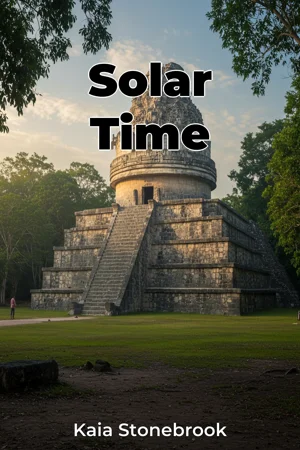
"Solar Time" explores the history of solar calendars and ancient civilizations' ingenious methods of timekeeping. These calendars were not just time-measuring tools, but crucial to religious practices, agricultural planning, and social structures. The book reveals how cultures, like the Egyptians and Mayans, developed sophisticated systems to align daily life with the sun's movements. These calendars demonstrate humanity's early grasp of astronomical principles; for example, the Mayan calendar's intricate mathematical underpinnings highlight its role in their cosmology. The book investigates diverse methodologies in constructing solar calendars and adapting to seasonal changes. It begins by introducing fundamental concepts of solar time and then examines specific calendars, starting with the Egyptian system and its influence. It progresses to explore the Mayan calendar and other significant solar calendars from ancient China and indigenous cultures worldwide. "Solar Time" emphasizes the cross-cultural similarities and differences, providing a global perspective on humanity's shared impulse to understand and measure time.
Book Details
ISBN
9788235279163
Publisher
Publifye AS
Your Licenses
You don't own any licenses for this book
Purchase a license below to unlock this book and download the EPUB.
Purchase License
Select a tier to unlock this book
Need bulk licensing?
Contact us for enterprise agreements.