
About This Book
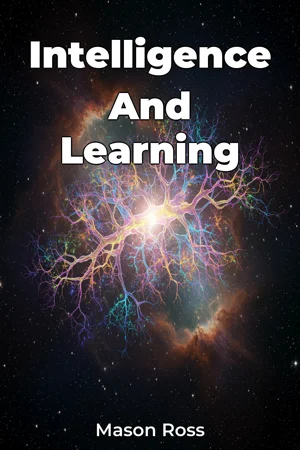
How do we learn, and why do some acquire skills more readily than others? *Intelligence and Learning* delves into this fundamental question, exploring the intricate relationship between cognitive abilities and the acquisition of knowledge and skills. This book examines how intelligence, viewed not as a singular entity but as a multifaceted set of cognitive capacities, shapes an individual's learning trajectory. Understanding this dynamic is crucial for educators, psychologists, and anyone seeking to optimize their own learning processes. This book focuses on three key areas: the diverse components of intelligence (such as fluid reasoning, working memory, and processing speed), the cognitive mechanisms underlying different learning styles, and the measurable impact of targeted interventions on both intelligence and learning outcomes. We argue that a nuanced understanding of intelligence is essential for tailoring educational strategies and fostering skill development across a wide range of aptitudes. Cognitive psychology provides the bedrock for our exploration. We build on decades of research into human intelligence, beginning with early psychometric theories and moving towards contemporary cognitive models that emphasize the flexibility and malleability of intellectual abilities. Familiarity with basic cognitive concepts, such as attention, memory, and problem-solving, will enhance the reader's comprehension, although we provide clear explanations of these concepts throughout the book. The central thesis underscores that intelligence significantly influences, but does not predetermine, learning potential. While innate cognitive abilities provide a foundation, strategic learning techniques, environmental factors, and sustained effort play equally vital roles in skill acquisition. This assertion challenges deterministic views of intelligence and highlights the potential for growth and improvement through targeted interventions. The book is structured into three core sections. First, we define intelligence, dissecting its various components and exploring different theoretical frameworks for understanding cognitive abilities. Second, we examine the cognitive processes involved in learning, analyzing how intelligence interacts with different learning styles and strategies. We cover topics such as deliberate practice, metacognition, and the role of motivation in learning. This section includes case studies illustrating the real-world application of these concepts. Third, we investigate interventions designed to enhance both intelligence and learning outcomes, presenting evidence-based strategies for boosting cognitive abilities and improving learning efficiency. This culminates in a discussion of the ethical considerations surrounding intelligence enhancement and the societal implications of these technologies. The evidence presented in this book draws from a wide range of sources, including longitudinal studies of cognitive development, experimental research on learning and memory, and meta-analyses of intervention effectiveness. We critically evaluate the strengths and limitations of each research method, providing a balanced perspective on the current state of knowledge. This book intersects with several disciplines, including education, neuroscience, and computer science. Educational practices can be optimized by understanding how intelligence affects learning; neuroscience offers insights into the neural mechanisms underlying both intelligence and learning; and artificial intelligence provides computational models for simulating and understanding cognitive processes. These interdisciplinary connections enrich the book's argument and provide a more holistic view of the topic. A unique aspect of this book is its emphasis on the dynamic interplay between intelligence and learning. We move beyond traditional views of intelligence as a fixed trait, highlighting the potential for cognitive growth and development through targeted interventions. This perspective offers a more optimistic and empowering message for readers interested in optimizing their own learning potential. The writing style is primarily academic, yet strives for accessibility, avoiding unnecessary jargon and providing clear explanations of complex concepts. The goal is to make the material engaging and understandable for a broad audience while maintaining scientific rigor. The target audience includes educators, psychologists, students, and anyone interested in understanding the science of learning and intelligence. This book offers valuable insights for those seeking to improve their own cognitive abilities, design effective educational programs, or simply gain a deeper understanding of how the human mind works. As a work of academic psychology, this book adheres to the standards of empirical evidence and rigorous analysis. We acknowledge the limitations of current research and highlight areas for future investigation. While the book covers a broad range of topics related to intelligence and learning, it focuses primarily on cognitive aspects, with less emphasis on social, emotional, or cultural influences. This focus allows for a more in-depth exploration of the cognitive mechanisms involved. The principles discussed in this book can be applied in various practical settings, including schools, workplaces, and personal development programs. The book offers concrete strategies for enhancing cognitive abilities, improving learning efficiency, and fostering skill development. Finally, we address ongoing debates in the field, such as the nature-versus-nurture debate and the ethical implications of intelligence enhancement technologies. By presenting different perspectives on these issues, we encourage readers to critically evaluate the evidence and form their own informed opinions.
How do we learn, and why do some acquire skills more readily than others? *Intelligence and Learning* delves into this fundamental question, exploring the intricate relationship between cognitive abilities and the acquisition of knowledge and skills. This book examines how intelligence, viewed not as a singular entity but as a multifaceted set of cognitive capacities, shapes an individual's learning trajectory. Understanding this dynamic is crucial for educators, psychologists, and anyone seeking to optimize their own learning processes. This book focuses on three key areas: the diverse components of intelligence (such as fluid reasoning, working memory, and processing speed), the cognitive mechanisms underlying different learning styles, and the measurable impact of targeted interventions on both intelligence and learning outcomes. We argue that a nuanced understanding of intelligence is essential for tailoring educational strategies and fostering skill development across a wide range of aptitudes. Cognitive psychology provides the bedrock for our exploration. We build on decades of research into human intelligence, beginning with early psychometric theories and moving towards contemporary cognitive models that emphasize the flexibility and malleability of intellectual abilities. Familiarity with basic cognitive concepts, such as attention, memory, and problem-solving, will enhance the reader's comprehension, although we provide clear explanations of these concepts throughout the book. The central thesis underscores that intelligence significantly influences, but does not predetermine, learning potential. While innate cognitive abilities provide a foundation, strategic learning techniques, environmental factors, and sustained effort play equally vital roles in skill acquisition. This assertion challenges deterministic views of intelligence and highlights the potential for growth and improvement through targeted interventions. The book is structured into three core sections. First, we define intelligence, dissecting its various components and exploring different theoretical frameworks for understanding cognitive abilities. Second, we examine the cognitive processes involved in learning, analyzing how intelligence interacts with different learning styles and strategies. We cover topics such as deliberate practice, metacognition, and the role of motivation in learning. This section includes case studies illustrating the real-world application of these concepts. Third, we investigate interventions designed to enhance both intelligence and learning outcomes, presenting evidence-based strategies for boosting cognitive abilities and improving learning efficiency. This culminates in a discussion of the ethical considerations surrounding intelligence enhancement and the societal implications of these technologies. The evidence presented in this book draws from a wide range of sources, including longitudinal studies of cognitive development, experimental research on learning and memory, and meta-analyses of intervention effectiveness. We critically evaluate the strengths and limitations of each research method, providing a balanced perspective on the current state of knowledge. This book intersects with several disciplines, including education, neuroscience, and computer science. Educational practices can be optimized by understanding how intelligence affects learning; neuroscience offers insights into the neural mechanisms underlying both intelligence and learning; and artificial intelligence provides computational models for simulating and understanding cognitive processes. These interdisciplinary connections enrich the book's argument and provide a more holistic view of the topic. A unique aspect of this book is its emphasis on the dynamic interplay between intelligence and learning. We move beyond traditional views of intelligence as a fixed trait, highlighting the potential for cognitive growth and development through targeted interventions. This perspective offers a more optimistic and empowering message for readers interested in optimizing their own learning potential. The writing style is primarily academic, yet strives for accessibility, avoiding unnecessary jargon and providing clear explanations of complex concepts. The goal is to make the material engaging and understandable for a broad audience while maintaining scientific rigor. The target audience includes educators, psychologists, students, and anyone interested in understanding the science of learning and intelligence. This book offers valuable insights for those seeking to improve their own cognitive abilities, design effective educational programs, or simply gain a deeper understanding of how the human mind works. As a work of academic psychology, this book adheres to the standards of empirical evidence and rigorous analysis. We acknowledge the limitations of current research and highlight areas for future investigation. While the book covers a broad range of topics related to intelligence and learning, it focuses primarily on cognitive aspects, with less emphasis on social, emotional, or cultural influences. This focus allows for a more in-depth exploration of the cognitive mechanisms involved. The principles discussed in this book can be applied in various practical settings, including schools, workplaces, and personal development programs. The book offers concrete strategies for enhancing cognitive abilities, improving learning efficiency, and fostering skill development. Finally, we address ongoing debates in the field, such as the nature-versus-nurture debate and the ethical implications of intelligence enhancement technologies. By presenting different perspectives on these issues, we encourage readers to critically evaluate the evidence and form their own informed opinions.
"Intelligence and Learning" explores the dynamic relationship between cognitive abilities and how we acquire knowledge. It examines intelligence as a set of multifaceted capacities, such as fluid reasoning and working memory, which significantly shape an individual's learning journey. The book uniquely emphasizes that intelligence isn't predetermined; instead, strategic learning, environmental factors, and sustained effort play vital roles. Did you know that understanding the flexibility of intellectual abilities can lead to tailored educational strategies and skill development? This book is structured into three key sections. It begins by defining intelligence and its components, then analyzes the cognitive processes involved in learning, including metacognition and motivation. Finally, it investigates interventions for enhancing intelligence and learning outcomes, presenting evidence-based strategies. The approach balances academic rigor with accessibility, making complex concepts understandable for educators, psychologists, and anyone interested in cognitive enhancement and understanding learning styles.
Book Details
ISBN
9788235278753
Publisher
Publifye AS
Your Licenses
You don't own any licenses for this book
Purchase a license below to unlock this book and download the EPUB.
Purchase License
Select a tier to unlock this book
Need bulk licensing?
Contact us for enterprise agreements.