
About This Book
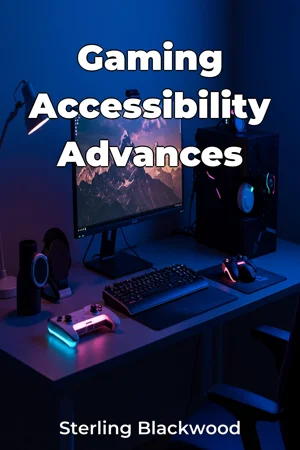
Can digital games truly be for everyone? This book, "Gaming Accessibility Advances," tackles this question head-on, exploring the innovative hardware and software solutions expanding gaming participation for individuals with diverse disabilities. The core focus revolves around two pivotal themes: technological advancements in assistive gaming technologies and the evolving landscape of inclusive game design. The significance of these topics lies in their potential to unlock the cognitive, social, and emotional benefits of gaming for a vastly underserved population while simultaneously broadening the industry’s reach and fostering a more inclusive culture. To understand current advancements, a brief historical context is essential. Early efforts in gaming accessibility were often limited to rudimentary adaptations. Today, the field is rapidly evolving, driven by technological breakthroughs and a growing awareness of the importance of inclusive design principles. No specific prerequisite knowledge is required to understand this material, as the book provides necessary background information on disability studies, game design, and relevant technologies. The central argument presented is that proactive integration of accessibility considerations into the game development lifecycle and the continued innovation in assistive technologies are not merely accommodations but essential drivers of creativity and market expansion for the gaming industry. This argument is vital because it reframes accessibility as a value-added proposition rather than a costly afterthought, encouraging wider adoption. The book is structured to first introduce fundamental concepts of accessibility, universal design for learning (UDL) principles, and the social model of disability to provide a theoretical grounding. It then delves into specific examples of hardware and software innovations, such as adaptive controllers, eye-tracking technology, and customizable interfaces. A significant portion of the book is dedicated to examining case studies of games that have successfully implemented accessibility features, analyzing their design choices and impact on player experience. The culmination of the argument appears in a discussion on the future of gaming accessibility, highlighting emerging technologies and strategies for fostering a more inclusive gaming ecosystem. The book concludes with practical guidelines for developers and designers seeking to create accessible games, as well as resources for gamers with disabilities seeking assistive technologies. Evidence is drawn from a variety of sources, including academic research, industry reports, user testimonials, and technical specifications of assistive devices. Unique data is presented through interviews with game developers and accessibility advocates, providing insider perspectives on the challenges and opportunities in this field. The book connects to several interdisciplinary areas. Firstly, it intersects with human-computer interaction (HCI), examining how people with disabilities interact with technology and how interfaces can be optimized for diverse needs. Secondly, it relates to disability studies, drawing on theoretical frameworks to understand the social and cultural dimensions of accessibility. Finally, it links to the field of education, exploring the potential of accessible games for learning and cognitive development. These connections enrich the book's argument by providing a holistic understanding of gaming accessibility. A unique aspect of this book is its dual focus on both technological innovations and the human element of accessibility. It goes beyond simply describing assistive technologies to explore the lived experiences of gamers with disabilities and the impact of accessibility features on their enjoyment and participation. The book adopts a professional but accessible tone, avoiding technical jargon and presenting information in a clear and engaging manner. It is intended for game developers, designers, researchers, accessibility advocates, and anyone interested in the intersection of technology and disability. The book will be valuable to these readers because it provides a comprehensive overview of the current state of gaming accessibility, practical guidance for creating inclusive games, and a vision for a more equitable gaming future. As a non-fiction work in the 'Computers, Technology' genre focuses on fact-based analysis, evidence-backed arguments, and practical applications. The book's scope is limited to digital games and does not cover accessibility in other forms of entertainment. It primarily focuses on visual, auditory, and motor impairments. The information presented can be directly applied by game developers to improve the accessibility of their games and by gamers with disabilities to identify and utilize assistive technologies. The book also touches upon the ongoing debate around the level of responsibility that game developers should bear in ensuring accessibility. It explores the tension between the creative freedom of developers and the ethical imperative to create inclusive experiences.
Can digital games truly be for everyone? This book, "Gaming Accessibility Advances," tackles this question head-on, exploring the innovative hardware and software solutions expanding gaming participation for individuals with diverse disabilities. The core focus revolves around two pivotal themes: technological advancements in assistive gaming technologies and the evolving landscape of inclusive game design. The significance of these topics lies in their potential to unlock the cognitive, social, and emotional benefits of gaming for a vastly underserved population while simultaneously broadening the industry’s reach and fostering a more inclusive culture. To understand current advancements, a brief historical context is essential. Early efforts in gaming accessibility were often limited to rudimentary adaptations. Today, the field is rapidly evolving, driven by technological breakthroughs and a growing awareness of the importance of inclusive design principles. No specific prerequisite knowledge is required to understand this material, as the book provides necessary background information on disability studies, game design, and relevant technologies. The central argument presented is that proactive integration of accessibility considerations into the game development lifecycle and the continued innovation in assistive technologies are not merely accommodations but essential drivers of creativity and market expansion for the gaming industry. This argument is vital because it reframes accessibility as a value-added proposition rather than a costly afterthought, encouraging wider adoption. The book is structured to first introduce fundamental concepts of accessibility, universal design for learning (UDL) principles, and the social model of disability to provide a theoretical grounding. It then delves into specific examples of hardware and software innovations, such as adaptive controllers, eye-tracking technology, and customizable interfaces. A significant portion of the book is dedicated to examining case studies of games that have successfully implemented accessibility features, analyzing their design choices and impact on player experience. The culmination of the argument appears in a discussion on the future of gaming accessibility, highlighting emerging technologies and strategies for fostering a more inclusive gaming ecosystem. The book concludes with practical guidelines for developers and designers seeking to create accessible games, as well as resources for gamers with disabilities seeking assistive technologies. Evidence is drawn from a variety of sources, including academic research, industry reports, user testimonials, and technical specifications of assistive devices. Unique data is presented through interviews with game developers and accessibility advocates, providing insider perspectives on the challenges and opportunities in this field. The book connects to several interdisciplinary areas. Firstly, it intersects with human-computer interaction (HCI), examining how people with disabilities interact with technology and how interfaces can be optimized for diverse needs. Secondly, it relates to disability studies, drawing on theoretical frameworks to understand the social and cultural dimensions of accessibility. Finally, it links to the field of education, exploring the potential of accessible games for learning and cognitive development. These connections enrich the book's argument by providing a holistic understanding of gaming accessibility. A unique aspect of this book is its dual focus on both technological innovations and the human element of accessibility. It goes beyond simply describing assistive technologies to explore the lived experiences of gamers with disabilities and the impact of accessibility features on their enjoyment and participation. The book adopts a professional but accessible tone, avoiding technical jargon and presenting information in a clear and engaging manner. It is intended for game developers, designers, researchers, accessibility advocates, and anyone interested in the intersection of technology and disability. The book will be valuable to these readers because it provides a comprehensive overview of the current state of gaming accessibility, practical guidance for creating inclusive games, and a vision for a more equitable gaming future. As a non-fiction work in the 'Computers, Technology' genre focuses on fact-based analysis, evidence-backed arguments, and practical applications. The book's scope is limited to digital games and does not cover accessibility in other forms of entertainment. It primarily focuses on visual, auditory, and motor impairments. The information presented can be directly applied by game developers to improve the accessibility of their games and by gamers with disabilities to identify and utilize assistive technologies. The book also touches upon the ongoing debate around the level of responsibility that game developers should bear in ensuring accessibility. It explores the tension between the creative freedom of developers and the ethical imperative to create inclusive experiences.
"Gaming Accessibility Advances" explores the evolving world of inclusive game design and assistive gaming technologies, highlighting innovations that enable individuals with disabilities to fully participate in digital gaming. The book emphasizes how integrating accessibility considerations into game development is not just an accommodation, but a driver of creativity and market expansion. Discover how customizable interfaces and adaptive controllers are breaking down barriers, unlocking the cognitive, social, and emotional benefits of gaming for a vastly underserved community. The book begins by laying a foundation in accessibility concepts like universal design for learning (UDL), and the social model of disability. It then progresses to showcasing hardware and software breakthroughs, including eye-tracking technology, and examining successful case studies of accessible games. By drawing from academic research, industry reports, and user testimonials, the book provides a comprehensive overview of the current state of gaming accessibility. Ultimately, this book champions a future where digital games are truly for everyone, offering practical guidelines for developers and resources for gamers with disabilities. It uniquely balances technological advancements with the human element, exploring the lived experiences of gamers with disabilities and the impact of accessibility features on their enjoyment and participation.
Book Details
ISBN
9788235278722
Publisher
Publifye AS
Your Licenses
You don't own any licenses for this book
Purchase a license below to unlock this book and download the EPUB.
Purchase License
Select a tier to unlock this book
Need bulk licensing?
Contact us for enterprise agreements.