
About This Book
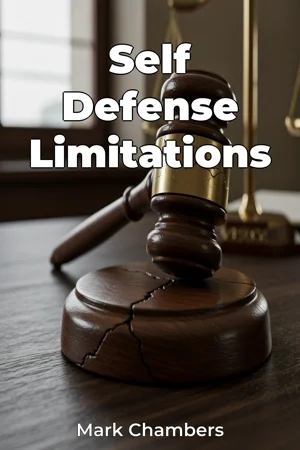
When does defending yourself become a crime? "Self Defense Limitations" dissects the complex legal boundaries of self-defense, offering a comprehensive analysis of when the use of force is justified and when it crosses the line into criminal behavior. This book explores the intricacies of self-defense law, a crucial subject that intersects with politics and true crime, affecting everyday citizens, legal professionals, and policymakers alike. We begin by establishing a solid foundation in the core principles of self-defense law, including the concepts of reasonable force, imminent danger, and the duty to retreat. Understanding these principles is paramount, as they form the bedrock upon which all self-defense claims are evaluated in a court of law. Following this, the book delves into the historical context of self-defense laws, tracing their evolution from common law traditions to modern statutory interpretations. This historical overview provides crucial background for understanding current legal standards and ongoing debates. The central argument of "Self Defense Limitations" is that self-defense is not an unlimited right, and its justifiable application is contingent upon a complex interplay of legal standards, contextual factors, and subjective perceptions. An oversimplified understanding of self-defense can lead to legal jeopardy, while a nuanced grasp of its limitations is essential for responsible and lawful conduct. The book is structured to systematically guide the reader through the complexities of self-defense law. First, it lays out the basic principles and historical context. Second, it examines specific scenarios in which self-defense claims arise, such as defending oneself against assault, protecting one's property, and using force in defense of others. These scenarios are analyzed through the lens of legal precedent and hypothetical case studies. Third, the book addresses the controversial "stand your ground" laws, dissecting their implications for self-defense claims and their impact on crime rates and social justice. Finally, it culminates in a discussion of potential reforms to self-defense laws, aimed at striking a better balance between individual rights and public safety. The analysis relies heavily on legal case studies, statutory law, and scholarly research in criminal justice and legal theory. Moreover, the book draws upon unique datasets, including FBI crime statistics and court records, to provide empirical evidence supporting its arguments. "Self Defense Limitations" also connects to fields such as sociology, political science, and psychology. By examining the social and political context of self-defense laws, the book sheds light on how these laws reflect and reinforce societal attitudes toward violence, race, and class. By considering the psychological factors that influence perceptions of threat and the use of force, the book offers a more complete understanding of self-defense situations. This book offers a unique perspective by challenging the notion that self-defense is a straightforward or absolute right. It exposes the gray areas and ambiguities inherent in self-defense law, providing readers with a more realistic and nuanced understanding of its limitations. The overall tone is academic yet accessible, presenting complex legal concepts in a clear and engaging manner. The intended audience includes law students, legal professionals, criminal justice scholars, and anyone interested in understanding the legal boundaries of self-defense. This book would be valuable to anyone seeking a deeper understanding of this critical area of law, especially given its increasing relevance in today's society. As a work of non-fiction within the 'Politics, True Crime' genres, this book adheres to the conventions of factual accuracy, objective analysis, and clear sourcing. While the book covers a broad range of topics related to self-defense, it intentionally limits its scope to the legal aspects, without delving into the ethical or moral dimensions beyond their direct legal implications. The information in "Self Defense Limitations" has numerous real-world applications. It can help individuals make informed decisions about using force in self-defense, assist legal professionals in litigating self-defense cases, and inform policymakers considering reforms to self-defense laws. The book addresses ongoing debates surrounding self-defense, such as the justifiable use of lethal force against non-lethal threats, the role of implicit bias in self-defense claims, and the impact of "stand your ground" laws on public safety. By providing a comprehensive and balanced analysis of these controversies, "Self Defense Limitations" aims to contribute to a more informed and productive dialogue on this important issue.
When does defending yourself become a crime? "Self Defense Limitations" dissects the complex legal boundaries of self-defense, offering a comprehensive analysis of when the use of force is justified and when it crosses the line into criminal behavior. This book explores the intricacies of self-defense law, a crucial subject that intersects with politics and true crime, affecting everyday citizens, legal professionals, and policymakers alike. We begin by establishing a solid foundation in the core principles of self-defense law, including the concepts of reasonable force, imminent danger, and the duty to retreat. Understanding these principles is paramount, as they form the bedrock upon which all self-defense claims are evaluated in a court of law. Following this, the book delves into the historical context of self-defense laws, tracing their evolution from common law traditions to modern statutory interpretations. This historical overview provides crucial background for understanding current legal standards and ongoing debates. The central argument of "Self Defense Limitations" is that self-defense is not an unlimited right, and its justifiable application is contingent upon a complex interplay of legal standards, contextual factors, and subjective perceptions. An oversimplified understanding of self-defense can lead to legal jeopardy, while a nuanced grasp of its limitations is essential for responsible and lawful conduct. The book is structured to systematically guide the reader through the complexities of self-defense law. First, it lays out the basic principles and historical context. Second, it examines specific scenarios in which self-defense claims arise, such as defending oneself against assault, protecting one's property, and using force in defense of others. These scenarios are analyzed through the lens of legal precedent and hypothetical case studies. Third, the book addresses the controversial "stand your ground" laws, dissecting their implications for self-defense claims and their impact on crime rates and social justice. Finally, it culminates in a discussion of potential reforms to self-defense laws, aimed at striking a better balance between individual rights and public safety. The analysis relies heavily on legal case studies, statutory law, and scholarly research in criminal justice and legal theory. Moreover, the book draws upon unique datasets, including FBI crime statistics and court records, to provide empirical evidence supporting its arguments. "Self Defense Limitations" also connects to fields such as sociology, political science, and psychology. By examining the social and political context of self-defense laws, the book sheds light on how these laws reflect and reinforce societal attitudes toward violence, race, and class. By considering the psychological factors that influence perceptions of threat and the use of force, the book offers a more complete understanding of self-defense situations. This book offers a unique perspective by challenging the notion that self-defense is a straightforward or absolute right. It exposes the gray areas and ambiguities inherent in self-defense law, providing readers with a more realistic and nuanced understanding of its limitations. The overall tone is academic yet accessible, presenting complex legal concepts in a clear and engaging manner. The intended audience includes law students, legal professionals, criminal justice scholars, and anyone interested in understanding the legal boundaries of self-defense. This book would be valuable to anyone seeking a deeper understanding of this critical area of law, especially given its increasing relevance in today's society. As a work of non-fiction within the 'Politics, True Crime' genres, this book adheres to the conventions of factual accuracy, objective analysis, and clear sourcing. While the book covers a broad range of topics related to self-defense, it intentionally limits its scope to the legal aspects, without delving into the ethical or moral dimensions beyond their direct legal implications. The information in "Self Defense Limitations" has numerous real-world applications. It can help individuals make informed decisions about using force in self-defense, assist legal professionals in litigating self-defense cases, and inform policymakers considering reforms to self-defense laws. The book addresses ongoing debates surrounding self-defense, such as the justifiable use of lethal force against non-lethal threats, the role of implicit bias in self-defense claims, and the impact of "stand your ground" laws on public safety. By providing a comprehensive and balanced analysis of these controversies, "Self Defense Limitations" aims to contribute to a more informed and productive dialogue on this important issue.
"Self Defense Limitations" explores the complex legal boundaries defining when self-defense crosses into criminal behavior. It dives into the core principles like 'reasonable force' and 'imminent danger', concepts crucial for evaluating self-defense claims in court. Did you know that an oversimplified understanding of self-defense law can actually land you in legal jeopardy? The book navigates through historical context, tracing self-defense laws from common law to modern interpretations. The book uniquely argues that self-defense isn't an unlimited right but depends on legal standards and contextual factors. Chapters methodically guide readers, first laying out basic principles, then examining specific scenarios like defending property or others. Controversial 'stand your ground' laws are dissected, revealing their impact on crime rates. The analysis uses legal case studies, FBI crime statistics, and scholarly research to support its arguments, offering a nuanced understanding of self-defense law's limitations.
Book Details
ISBN
9788235278678
Publisher
Publifye AS
Your Licenses
You don't own any licenses for this book
Purchase a license below to unlock this book and download the EPUB.
Purchase License
Select a tier to unlock this book
Need bulk licensing?
Contact us for enterprise agreements.