
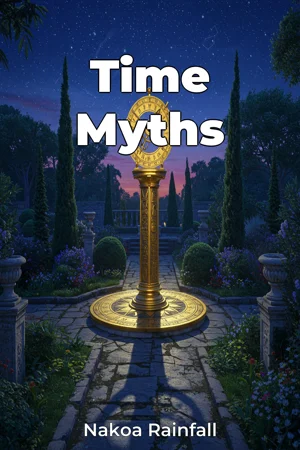
About This Book
Are our modern methods of tracking time as objective as we believe, or are they echoes of age-old myths and cultural narratives? "Time Myths" delves into the fascinating interplay between human timekeeping and the myths that have shaped our understanding of cosmic cycles, calendars, and the very nature of time itself. This book explores the surprising ways in which mythology continues to influence our scientific and historical perspectives on time. We will examine how diverse cultures around the globe have conceptualized and measured time through their myths, focusing on calendars as tangible embodiments of these belief systems and the celestial events that underpin them. These topics are important because they reveal that our current understanding of time is not solely based on objective observation but is also deeply rooted in cultural narratives and ancestral worldviews. Understanding these roots can provide fresh insights into modern scientific and historical interpretations of time and its impact on society. The book provides historical context by tracing the development of various calendar systems, from lunar calendars of early agricultural societies, to the solar calendars of ancient empires, and to the standardized timekeeping mechanisms of the modern world. Understanding the social context involves examining how different cultures have used calendars to regulate agricultural practices, religious observances, and social structures. This historical and social backdrop is essential for appreciating the cultural significance embedded within each system. The central argument of "Time Myths" is that the evolution of timekeeping is inextricably linked to the mythological frameworks that guided early human societies, demonstrating that our current scientific and historical frameworks for understanding time are built upon layers of cultural interpretation. This argument is crucial because it challenges the notion of time as a purely objective, measurable phenomenon and highlights the subjective, culturally constructed aspects of human time perception. The book is structured to first introduce fundamental concepts surrounding time and mythology, then progressively build upon these ideas to demonstrate the pervasive influence of myth on our timekeeping systems. Beginning with a brief survey of various global myths related to cosmic cycles, we proceed to analyze concrete examples of calendars, such as the Mayan calendar and the Egyptian calendar, revealing how mythological narratives are embedded within their structure and function. We then explore the scientific and historical evidence that supports the close connection between timekeeping and mythological systems. The book culminates by reflecting on the practical implications of recognizing the cultural relativity of time, considering how this recognition can deepen our understanding of different societies and worldviews. The arguments presented are supported by diverse evidence, including archaeological findings, ancient texts, astronomical data, and anthropological studies. We analyze primary sources such as the Popol Vuh and Egyptian Books of the Dead, alongside secondary analyses from the fields of archaeoastronomy, comparative mythology, and the history of science. "Time Myths" connects to other fields such as anthropology, archaeology, and astronomy. The connection to anthropology arises from the study of cultural practices associated with calendars. The connection to archaeology stems from the physical evidence of timekeeping devices and monuments. Astronomy provides the scientific basis for understanding celestial events that underpin many mythological narratives. These interdisciplinary connections enrich our arguments, offering a holistic view of timekeeping as a synthesis of science, history, and cultural expression. The book takes a unique approach by directly comparing ancient myths with modern scientific and historical practices, revealing the hidden assumptions and cultural biases that underpin our understanding of time. The tone and writing style are informative and accessible, aiming to cater to a broad audience while maintaining academic rigor. The book's target audience includes history enthusiasts, science buffs, mythology lovers, and anyone curious about the cultural construction of time. It will be valuable to readers seeking a deeper understanding of the historical, scientific, and cultural forces that have shaped our perception of time. As a work of non-fiction in the genres of science and history, “Time Myths” adheres to the conventions of presenting factual information supported by evidence and analysis. While the book aims to provide a comprehensive overview of global time myths, it acknowledges the vastness of the subject by focusing on select case studies and examples, thus illustrating key concepts rather than attempting an exhaustive categorization. The information in the book has real-world applications in fields such as cross-cultural communication and education. Recognizing the cultural relativity of time can enhance understanding and cooperation across diverse societies. While this book doesn't focus on controversies, it does touch on areas of debate within historical and scientific communities regarding the interpretation of ancient texts and the accuracy of astronomical data related to mythological narratives. By acknowledging these debates, the book encourages readers to think critically about the limitations of our knowledge and the ongoing process of historical and scientific inquiry.
Are our modern methods of tracking time as objective as we believe, or are they echoes of age-old myths and cultural narratives? "Time Myths" delves into the fascinating interplay between human timekeeping and the myths that have shaped our understanding of cosmic cycles, calendars, and the very nature of time itself. This book explores the surprising ways in which mythology continues to influence our scientific and historical perspectives on time. We will examine how diverse cultures around the globe have conceptualized and measured time through their myths, focusing on calendars as tangible embodiments of these belief systems and the celestial events that underpin them. These topics are important because they reveal that our current understanding of time is not solely based on objective observation but is also deeply rooted in cultural narratives and ancestral worldviews. Understanding these roots can provide fresh insights into modern scientific and historical interpretations of time and its impact on society. The book provides historical context by tracing the development of various calendar systems, from lunar calendars of early agricultural societies, to the solar calendars of ancient empires, and to the standardized timekeeping mechanisms of the modern world. Understanding the social context involves examining how different cultures have used calendars to regulate agricultural practices, religious observances, and social structures. This historical and social backdrop is essential for appreciating the cultural significance embedded within each system. The central argument of "Time Myths" is that the evolution of timekeeping is inextricably linked to the mythological frameworks that guided early human societies, demonstrating that our current scientific and historical frameworks for understanding time are built upon layers of cultural interpretation. This argument is crucial because it challenges the notion of time as a purely objective, measurable phenomenon and highlights the subjective, culturally constructed aspects of human time perception. The book is structured to first introduce fundamental concepts surrounding time and mythology, then progressively build upon these ideas to demonstrate the pervasive influence of myth on our timekeeping systems. Beginning with a brief survey of various global myths related to cosmic cycles, we proceed to analyze concrete examples of calendars, such as the Mayan calendar and the Egyptian calendar, revealing how mythological narratives are embedded within their structure and function. We then explore the scientific and historical evidence that supports the close connection between timekeeping and mythological systems. The book culminates by reflecting on the practical implications of recognizing the cultural relativity of time, considering how this recognition can deepen our understanding of different societies and worldviews. The arguments presented are supported by diverse evidence, including archaeological findings, ancient texts, astronomical data, and anthropological studies. We analyze primary sources such as the Popol Vuh and Egyptian Books of the Dead, alongside secondary analyses from the fields of archaeoastronomy, comparative mythology, and the history of science. "Time Myths" connects to other fields such as anthropology, archaeology, and astronomy. The connection to anthropology arises from the study of cultural practices associated with calendars. The connection to archaeology stems from the physical evidence of timekeeping devices and monuments. Astronomy provides the scientific basis for understanding celestial events that underpin many mythological narratives. These interdisciplinary connections enrich our arguments, offering a holistic view of timekeeping as a synthesis of science, history, and cultural expression. The book takes a unique approach by directly comparing ancient myths with modern scientific and historical practices, revealing the hidden assumptions and cultural biases that underpin our understanding of time. The tone and writing style are informative and accessible, aiming to cater to a broad audience while maintaining academic rigor. The book's target audience includes history enthusiasts, science buffs, mythology lovers, and anyone curious about the cultural construction of time. It will be valuable to readers seeking a deeper understanding of the historical, scientific, and cultural forces that have shaped our perception of time. As a work of non-fiction in the genres of science and history, “Time Myths” adheres to the conventions of presenting factual information supported by evidence and analysis. While the book aims to provide a comprehensive overview of global time myths, it acknowledges the vastness of the subject by focusing on select case studies and examples, thus illustrating key concepts rather than attempting an exhaustive categorization. The information in the book has real-world applications in fields such as cross-cultural communication and education. Recognizing the cultural relativity of time can enhance understanding and cooperation across diverse societies. While this book doesn't focus on controversies, it does touch on areas of debate within historical and scientific communities regarding the interpretation of ancient texts and the accuracy of astronomical data related to mythological narratives. By acknowledging these debates, the book encourages readers to think critically about the limitations of our knowledge and the ongoing process of historical and scientific inquiry.
"Time Myths" explores the fascinating connection between how we track time today and the ancient myths that continue to shape our understanding of cosmic cycles. It argues that our current scientific and historical views on time are deeply rooted in cultural narratives, challenging the notion of time as solely objective. For instance, many ancient calendars, such as the Mayan or Egyptian, weren't just about marking days; they were tangible expressions of mythological beliefs. The book progresses by first introducing fundamental concepts of time and mythology, then analyzing specific calendars to reveal embedded narratives. It supports its claims with archaeological findings, ancient texts, and astronomical data. By comparing ancient myths with modern scientific practices, "Time Myths" reveals hidden cultural biases in our understanding of time. This approach offers readers fresh insights into modern interpretations of time and its impact on society, highlighting how our perception of time is a cultural construct. Ultimately, recognizing the cultural relativity of time, as "Time Myths" advocates, can deepen our understanding of diverse societies and worldviews. This recognition is crucial for cross-cultural communication and education. The book provides a unique perspective on the cultural construction of time, valuable for anyone interested in history, science, or mythology.
Book Details
ISBN
9788235278562
Publisher
Publifye AS
Your Licenses
You don't own any licenses for this book
Purchase a license below to unlock this book and download the EPUB.
Purchase License
Select a tier to unlock this book
Need bulk licensing?
Contact us for enterprise agreements.