
About This Book
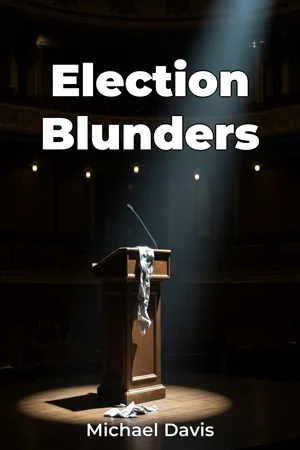
Have political campaigns ever been lost on a single phrase, a forgotten detail, or a misinterpreted gesture? *Election Blunders* dissects the critical errors, missteps, and strategic miscalculations that have altered the course of political history. We explore how seemingly minor incidents can snowball into monumental defeats, forever changing the political landscape. This book primarily examines two key areas: the power of political messaging and the peril of underestimating public sentiment. Political messaging, encompassing speeches, slogans, and advertising campaigns, wields immense influence; its miscalibration can alienate voters and galvanize opposition. Simultaneously, an inaccurate assessment of public opinion, driven by flawed data or detached elitism, often leads to policies and platforms that resonate poorly with the electorate. Understanding these dynamics is crucial not only for political strategists but for any citizen seeking to comprehend the forces that shape our governments. To fully appreciate these political downfalls, it’s essential to understand the context in which they occurred. We delve into the historical and social landscapes surrounding each election, examining prevailing attitudes, economic conditions, and geopolitical factors that influenced voter behavior. Readers should possess a basic knowledge of modern political history, but individual case studies provide sufficient background for broader comprehension. Our central argument is that political defeats are rarely attributable to singular, isolated events. Instead, they are typically the culmination of a series of smaller errors—a chain reaction triggered by miscommunication, misjudgment, or a profound disconnect with the electorate. By meticulously analyzing these "blunders," we aim to provide a framework for identifying and avoiding similar pitfalls in future campaigns. The book is structured to provide a comprehensive exploration of election failures. First, we introduce core communication and perception concepts central to political success. Then, the book is divided into case studies, each focusing on a specific election across different countries and time periods. These case studies explore: 1) instances where poorly crafted speeches or slogans backfired spectacularly, 2) situations in which a candidate's actions or affiliations were deliberately misinterpreted or exploited by opponents, and 3) examples of campaigns that failed to adapt to shifting public sentiment or emerging issues. The book culminates by distilling these case studies into actionable strategies for political actors and offering a new perspective on the often unpredictable nature of electoral politics. The presented analysis relies on primary source material – including campaign documents, transcripts of speeches, and contemporary news reports – alongside scholarly research on political communication, public opinion, and electoral behavior. Quantitative data, such as polling results and demographic trends, is used to further contextualize the qualitative analysis of specific blunders. The insights within transcend traditional political science, connecting to fields like communication studies, sociology, and history. Effective political messaging draws directly from communication theories, while the study of public sentiment relies heavily on sociological research methods. Historical context is essential for understanding the unique circumstances surrounding each election. This book offers a distinctive perspective by framing political defeats not merely as failures of strategy but as diagnostic tools for understanding the intricate relationship between political actors and the electorate. Focusing on specific, demonstrable blunders provides tangible learning opportunities for aspiring politicians, campaign managers, and engaged citizens. The writing style combines rigorous analysis with accessible prose, aiming for a broad readership. *Election Blunders* is intended for students of political science and history, political professionals, journalists, and anyone with an interest in the dynamics of elections. By understanding past mistakes, readers can gain a deeper appreciation for the challenges and complexities of modern political campaigns. As a work of political history, the book adheres to standards of accuracy, objectivity, and balanced analysis. While the book encompasses a variety of elections globally, it cannot include every significant race. The selection prioritizes those that offer the most compelling illustrations of the core themes. The lessons derived from these case studies extend beyond the realm of electoral politics. Effective communication, accurate perception of public sentiment, and adaptability are crucial skills in numerous professional and personal contexts. Indeed, *Election Blunders* will address the ongoing debates surrounding the influence of media, social media, and campaign finance on election outcomes, particularly in the context of evolving communication technologies.
Have political campaigns ever been lost on a single phrase, a forgotten detail, or a misinterpreted gesture? *Election Blunders* dissects the critical errors, missteps, and strategic miscalculations that have altered the course of political history. We explore how seemingly minor incidents can snowball into monumental defeats, forever changing the political landscape. This book primarily examines two key areas: the power of political messaging and the peril of underestimating public sentiment. Political messaging, encompassing speeches, slogans, and advertising campaigns, wields immense influence; its miscalibration can alienate voters and galvanize opposition. Simultaneously, an inaccurate assessment of public opinion, driven by flawed data or detached elitism, often leads to policies and platforms that resonate poorly with the electorate. Understanding these dynamics is crucial not only for political strategists but for any citizen seeking to comprehend the forces that shape our governments. To fully appreciate these political downfalls, it’s essential to understand the context in which they occurred. We delve into the historical and social landscapes surrounding each election, examining prevailing attitudes, economic conditions, and geopolitical factors that influenced voter behavior. Readers should possess a basic knowledge of modern political history, but individual case studies provide sufficient background for broader comprehension. Our central argument is that political defeats are rarely attributable to singular, isolated events. Instead, they are typically the culmination of a series of smaller errors—a chain reaction triggered by miscommunication, misjudgment, or a profound disconnect with the electorate. By meticulously analyzing these "blunders," we aim to provide a framework for identifying and avoiding similar pitfalls in future campaigns. The book is structured to provide a comprehensive exploration of election failures. First, we introduce core communication and perception concepts central to political success. Then, the book is divided into case studies, each focusing on a specific election across different countries and time periods. These case studies explore: 1) instances where poorly crafted speeches or slogans backfired spectacularly, 2) situations in which a candidate's actions or affiliations were deliberately misinterpreted or exploited by opponents, and 3) examples of campaigns that failed to adapt to shifting public sentiment or emerging issues. The book culminates by distilling these case studies into actionable strategies for political actors and offering a new perspective on the often unpredictable nature of electoral politics. The presented analysis relies on primary source material – including campaign documents, transcripts of speeches, and contemporary news reports – alongside scholarly research on political communication, public opinion, and electoral behavior. Quantitative data, such as polling results and demographic trends, is used to further contextualize the qualitative analysis of specific blunders. The insights within transcend traditional political science, connecting to fields like communication studies, sociology, and history. Effective political messaging draws directly from communication theories, while the study of public sentiment relies heavily on sociological research methods. Historical context is essential for understanding the unique circumstances surrounding each election. This book offers a distinctive perspective by framing political defeats not merely as failures of strategy but as diagnostic tools for understanding the intricate relationship between political actors and the electorate. Focusing on specific, demonstrable blunders provides tangible learning opportunities for aspiring politicians, campaign managers, and engaged citizens. The writing style combines rigorous analysis with accessible prose, aiming for a broad readership. *Election Blunders* is intended for students of political science and history, political professionals, journalists, and anyone with an interest in the dynamics of elections. By understanding past mistakes, readers can gain a deeper appreciation for the challenges and complexities of modern political campaigns. As a work of political history, the book adheres to standards of accuracy, objectivity, and balanced analysis. While the book encompasses a variety of elections globally, it cannot include every significant race. The selection prioritizes those that offer the most compelling illustrations of the core themes. The lessons derived from these case studies extend beyond the realm of electoral politics. Effective communication, accurate perception of public sentiment, and adaptability are crucial skills in numerous professional and personal contexts. Indeed, *Election Blunders* will address the ongoing debates surrounding the influence of media, social media, and campaign finance on election outcomes, particularly in the context of evolving communication technologies.
*Election Blunders* examines the critical missteps and strategic miscalculations that have altered political history, focusing on the power of political messaging and the importance of understanding public sentiment. The book argues that political defeats are rarely due to a single event but rather a series of smaller errors stemming from miscommunication or a disconnect with voters. A key insight involves how seemingly minor incidents, such as a poorly chosen phrase, can snowball into monumental defeats. The book explores various case studies across different countries and time periods, analyzing instances where speeches backfired, candidates' actions were misinterpreted, and campaigns failed to adapt to shifting public sentiment. It delves into historical context, examining prevailing attitudes, economic conditions, and geopolitical factors that influenced voter behavior. Using primary sources like campaign documents and news reports, the analysis highlights how misjudging public opinion, often driven by flawed data, leads to platforms that fail to resonate with voters. Structured to provide a comprehensive exploration of election failures, the book starts by introducing core concepts central to political success. It then progresses into detailed case studies, culminating in actionable strategies for political actors. By framing political defeats as diagnostic tools, *Election Blunders* offers tangible learning opportunities for understanding the complex relationship between political actors and the electorate, providing a new perspective on the unpredictable nature of electoral politics.
Book Details
ISBN
9788235278456
Publisher
Publifye AS
Your Licenses
You don't own any licenses for this book
Purchase a license below to unlock this book and download the EPUB.
Purchase License
Select a tier to unlock this book
Need bulk licensing?
Contact us for enterprise agreements.