
About This Book
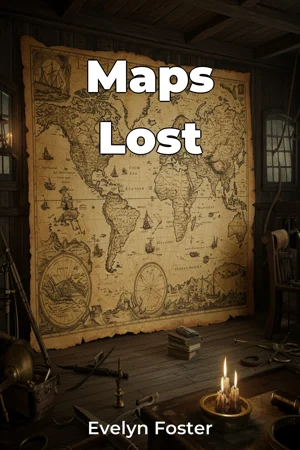
Have you ever stopped to consider the profound impact of errors? In "Maps Lost," we delve into the captivating world of cartographic mishaps, exploring how inaccurate maps have not only misled explorers and shaped historical events but also fundamentally altered our understanding of the world. This book examines specific instances where flawed maps inadvertently revealed "new" lands, fueled territorial disputes, and transformed global trade routes, affecting the course of history. Central to our exploration are the concepts of cartographic projection, the influence of political agendas on mapmaking, and the gradual evolution of geographic knowledge. These topics are crucial because maps, far from being objective representations of reality, are often subjective interpretations reflecting the biases, limitations, and sometimes, deliberate manipulations of their creators. Understanding these factors is essential for critically assessing historical narratives and appreciating the complexities of geographic discovery. The historical context is equally vital. We will investigate the periods when exploration was driven by mercantilism, colonialism, and scientific curiosity. Readers should have a basic understanding of these historical forces to fully grasp the motivations behind mapmaking and the consequences of inaccurate representations. The central argument of "Maps Lost" is that cartographic errors, while often perceived as failures, have paradoxically served as catalysts for exploration, discovery, and ultimately, the expansion of geographic knowledge. It's about how those errors shaped the world. This argument challenges the conventional view of maps as purely objective tools and emphasizes their dynamic role in shaping human experience and historical narratives. The book is structured to first introduce the fundamental principles of cartography and the inherent challenges of representing a three-dimensional world on a two-dimensional surface. Then, "Maps Lost" will proceed with a series of case studies focusing on specific maps and their historical consequences. These chapters will examine examples such as the mythical islands that plagued early maps of the Atlantic, the miscalculations that fueled the search for the Northwest Passage, and the politicized mappings of contested territories. The book culminates by assessing the legacy of cartographic errors, considering their relevance in the age of digital mapping, and reflecting on the enduring importance of critical cartographic literacy. The claims presented in "Maps Lost" are supported by rigorous research drawing upon a diverse range of sources, including historical maps, explorers' journals, diplomatic correspondence, and modern cartographic analysis. We will analyze unique datasets to determine patterns of error, trace the dissemination of inaccurate information, and assess the impact of these errors on specific historical events. This book also has interdisciplinary connections to fields such as political science, sociology, and art history. The influence of political agendas on mapmaking highlights the intersection of cartography and political science. The role of maps in shaping cultural perceptions of different regions connects the subject to sociology. The artistic elements of map design and their influence on public perceptions link the book to art history. "Maps Lost" offers a fresh perspective by adopting a critical cartographic approach, which emphasizes the subjective and socially constructed nature of maps. This approach challenges traditional views of cartography as a purely objective science and encourages readers to question the authority of maps. The writing style is accessible yet rigorous, aiming to engage a broad audience while maintaining scholarly integrity. The book targets readers interested in history, geography, and the history of science. It will appeal to anyone curious about the hidden stories behind maps and the unintended consequences of human error. As a work of non-fiction, "Maps Lost" focuses on historical accuracy and evidence-based arguments. While it explores compelling narratives, it is grounded in factual research and scholarly analysis. The scope of the book encompasses maps from various historical periods and regions, but it focuses on instances where errors had significant historical consequences. The book does not attempt to provide a comprehensive history of cartography but rather uses selected examples to illustrate the central argument. The information presented in "Maps Lost" can be applied practically by equipping readers with the tools to critically analyze maps and other visual representations of data. It promotes cartographic literacy, which is essential for informed decision-making in an increasingly data-driven world. Finally, the book addresses ongoing debates about the objectivity of maps and the role of cartography in shaping public perceptions of the world. By examining historical examples of cartographic errors, "Maps Lost" provides valuable insights into these complex issues.
Have you ever stopped to consider the profound impact of errors? In "Maps Lost," we delve into the captivating world of cartographic mishaps, exploring how inaccurate maps have not only misled explorers and shaped historical events but also fundamentally altered our understanding of the world. This book examines specific instances where flawed maps inadvertently revealed "new" lands, fueled territorial disputes, and transformed global trade routes, affecting the course of history. Central to our exploration are the concepts of cartographic projection, the influence of political agendas on mapmaking, and the gradual evolution of geographic knowledge. These topics are crucial because maps, far from being objective representations of reality, are often subjective interpretations reflecting the biases, limitations, and sometimes, deliberate manipulations of their creators. Understanding these factors is essential for critically assessing historical narratives and appreciating the complexities of geographic discovery. The historical context is equally vital. We will investigate the periods when exploration was driven by mercantilism, colonialism, and scientific curiosity. Readers should have a basic understanding of these historical forces to fully grasp the motivations behind mapmaking and the consequences of inaccurate representations. The central argument of "Maps Lost" is that cartographic errors, while often perceived as failures, have paradoxically served as catalysts for exploration, discovery, and ultimately, the expansion of geographic knowledge. It's about how those errors shaped the world. This argument challenges the conventional view of maps as purely objective tools and emphasizes their dynamic role in shaping human experience and historical narratives. The book is structured to first introduce the fundamental principles of cartography and the inherent challenges of representing a three-dimensional world on a two-dimensional surface. Then, "Maps Lost" will proceed with a series of case studies focusing on specific maps and their historical consequences. These chapters will examine examples such as the mythical islands that plagued early maps of the Atlantic, the miscalculations that fueled the search for the Northwest Passage, and the politicized mappings of contested territories. The book culminates by assessing the legacy of cartographic errors, considering their relevance in the age of digital mapping, and reflecting on the enduring importance of critical cartographic literacy. The claims presented in "Maps Lost" are supported by rigorous research drawing upon a diverse range of sources, including historical maps, explorers' journals, diplomatic correspondence, and modern cartographic analysis. We will analyze unique datasets to determine patterns of error, trace the dissemination of inaccurate information, and assess the impact of these errors on specific historical events. This book also has interdisciplinary connections to fields such as political science, sociology, and art history. The influence of political agendas on mapmaking highlights the intersection of cartography and political science. The role of maps in shaping cultural perceptions of different regions connects the subject to sociology. The artistic elements of map design and their influence on public perceptions link the book to art history. "Maps Lost" offers a fresh perspective by adopting a critical cartographic approach, which emphasizes the subjective and socially constructed nature of maps. This approach challenges traditional views of cartography as a purely objective science and encourages readers to question the authority of maps. The writing style is accessible yet rigorous, aiming to engage a broad audience while maintaining scholarly integrity. The book targets readers interested in history, geography, and the history of science. It will appeal to anyone curious about the hidden stories behind maps and the unintended consequences of human error. As a work of non-fiction, "Maps Lost" focuses on historical accuracy and evidence-based arguments. While it explores compelling narratives, it is grounded in factual research and scholarly analysis. The scope of the book encompasses maps from various historical periods and regions, but it focuses on instances where errors had significant historical consequences. The book does not attempt to provide a comprehensive history of cartography but rather uses selected examples to illustrate the central argument. The information presented in "Maps Lost" can be applied practically by equipping readers with the tools to critically analyze maps and other visual representations of data. It promotes cartographic literacy, which is essential for informed decision-making in an increasingly data-driven world. Finally, the book addresses ongoing debates about the objectivity of maps and the role of cartography in shaping public perceptions of the world. By examining historical examples of cartographic errors, "Maps Lost" provides valuable insights into these complex issues.
"Maps Lost" explores the fascinating history of cartographic errors and their profound impact on world history. It reveals how flawed maps have shaped exploration, fueled territorial disputes, and redefined our understanding of the world. The book highlights that maps are not objective truths but interpretations influenced by political agendas and the limitations of geographic knowledge at the time. For example, the persistent appearance of mythical islands on early maps of the Atlantic spurred many voyages of (fruitless) exploration. The book adopts a critical cartographic approach, challenging the notion of maps as purely objective tools. It emphasizes that maps are subjective constructions that reflect their creators' biases and historical contexts. "Maps Lost" progresses through a series of compelling case studies, examining specific maps and their unintended consequences. These include instances where miscalculations led to the search for the Northwest Passage and politicized mappings of contested territories. Ultimately, "Maps Lost" argues that cartographic errors, while often viewed as failures, have paradoxically driven exploration, discovery, and the expansion of geographic knowledge. It equips readers with the tools for cartographic literacy, encouraging them to critically analyze maps and understand their role in shaping our perception of the world.
Book Details
ISBN
9788235278203
Publisher
Publifye AS
Your Licenses
You don't own any licenses for this book
Purchase a license below to unlock this book and download the EPUB.
Purchase License
Select a tier to unlock this book
Need bulk licensing?
Contact us for enterprise agreements.