
About This Book
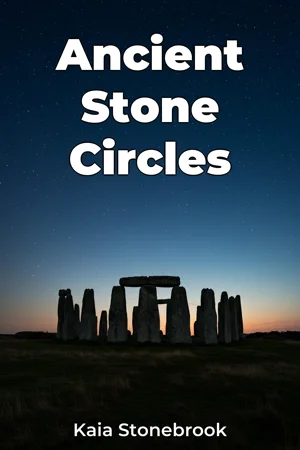
Why did ancient cultures expend immense effort to erect monumental stone circles? "Ancient Stone Circles" delves into this enduring mystery, examining the multifaceted roles these structures played in indigenous societies around the world. This book synthesizes historical records, archaeological findings, and astronomical research to present a comprehensive understanding of stone circles as more than just static monuments. We will explore their significance as sophisticated astronomical observatories, vital centers for social gatherings, and sacred spaces for ceremonial practices. This exploration is crucial because it reveals the advanced knowledge and complex social structures of these ancient cultures. Challenging previous interpretations that often dismissed these sites as primitive, this book argues that stone circles represent a profound understanding of celestial mechanics, social organization, and ritualistic expression. Central to understanding stone circles is an appreciation for the cultural context in which they were built. We will examine the historical development of various indigenous societies, focusing on their belief systems, social hierarchies, and technological capabilities. Understanding these factors is essential for interpreting the purpose and function of these circles within their respective communities. The central argument of "Ancient Stone Circles" is that these structures were deliberately designed to serve multiple, interconnected functions, reflecting a holistic worldview where astronomy, society, and spirituality were deeply intertwined. This perspective challenges the notion that stone circles were solely religious or astronomical sites, highlighting their integral role in maintaining social cohesion and transmitting knowledge across generations. The book is structured to methodically build this argument. First, we introduce the main concepts of archaeoastronomy, social archaeology, and comparative mythology, providing the reader with a foundational understanding of the interdisciplinary nature of this research. Second, we explore specific examples of stone circles from different regions, including the British Isles, Africa, and the Americas. Each case study will analyze the site’s astronomical alignments, architectural features, and associated artifacts, offering insights into its potential uses. Third, the book examines the social context of these sites, considering how they facilitated gatherings, ceremonies, and the reinforcement of community bonds. Finally, we look at legacy and current research. The evidence presented in this book draws from a wide range of sources, including archaeological surveys, radiocarbon dating, ethnographic studies, and statistical analysis of astronomical alignments. We incorporate information from previously unpublished data sets and utilize advanced imaging techniques to reveal hidden features of these ancient sites. The book connects directly to several other fields, including anthropology, providing insights into cultural practices; statistics, used to analyze patterns in astronomical alignments; and art history, examining the symbolic meaning of carvings and other decorative elements found at these sites. These connections enrich our understanding of the complex interplay between culture, science, and art in ancient societies. "Ancient Stone Circles" offers a unique perspective by integrating quantitative astronomical data with qualitative cultural interpretations. This interdisciplinary approach allows for a more nuanced and complete understanding of these enigmatic structures. Written in a clear and accessible style, "Ancient Stone Circles" is intended for a broad readership, including students, scholars, and anyone interested in archaeology, astronomy, or ancient history. The book aims to provide a valuable resource for understanding the ingenuity and cultural complexity of indigenous societies, revealing the hidden knowledge encoded within these ancient monuments. The book's scope is intentionally broad, encompassing a global survey of stone circles while focusing on specific case studies to illustrate key concepts. While we acknowledge the vastness of this topic, our aim is to provide a comprehensive overview of the major sites and theoretical frameworks, acknowledging limitations inherent in any such undertaking. The information presented in this book can be applied to various practical contexts, including heritage management, tourism, and education. By understanding the cultural and scientific significance of stone circles, we can better protect and preserve these invaluable resources for future generations. The interpretation of stone circles is not without its controversies. Ongoing debates surround the accuracy of astronomical alignments, the nature of ceremonial practices, and the degree to which these sites were deliberately designed. "Ancient Stone Circles" addresses these debates by presenting a balanced perspective and critically evaluating the available evidence.
Why did ancient cultures expend immense effort to erect monumental stone circles? "Ancient Stone Circles" delves into this enduring mystery, examining the multifaceted roles these structures played in indigenous societies around the world. This book synthesizes historical records, archaeological findings, and astronomical research to present a comprehensive understanding of stone circles as more than just static monuments. We will explore their significance as sophisticated astronomical observatories, vital centers for social gatherings, and sacred spaces for ceremonial practices. This exploration is crucial because it reveals the advanced knowledge and complex social structures of these ancient cultures. Challenging previous interpretations that often dismissed these sites as primitive, this book argues that stone circles represent a profound understanding of celestial mechanics, social organization, and ritualistic expression. Central to understanding stone circles is an appreciation for the cultural context in which they were built. We will examine the historical development of various indigenous societies, focusing on their belief systems, social hierarchies, and technological capabilities. Understanding these factors is essential for interpreting the purpose and function of these circles within their respective communities. The central argument of "Ancient Stone Circles" is that these structures were deliberately designed to serve multiple, interconnected functions, reflecting a holistic worldview where astronomy, society, and spirituality were deeply intertwined. This perspective challenges the notion that stone circles were solely religious or astronomical sites, highlighting their integral role in maintaining social cohesion and transmitting knowledge across generations. The book is structured to methodically build this argument. First, we introduce the main concepts of archaeoastronomy, social archaeology, and comparative mythology, providing the reader with a foundational understanding of the interdisciplinary nature of this research. Second, we explore specific examples of stone circles from different regions, including the British Isles, Africa, and the Americas. Each case study will analyze the site’s astronomical alignments, architectural features, and associated artifacts, offering insights into its potential uses. Third, the book examines the social context of these sites, considering how they facilitated gatherings, ceremonies, and the reinforcement of community bonds. Finally, we look at legacy and current research. The evidence presented in this book draws from a wide range of sources, including archaeological surveys, radiocarbon dating, ethnographic studies, and statistical analysis of astronomical alignments. We incorporate information from previously unpublished data sets and utilize advanced imaging techniques to reveal hidden features of these ancient sites. The book connects directly to several other fields, including anthropology, providing insights into cultural practices; statistics, used to analyze patterns in astronomical alignments; and art history, examining the symbolic meaning of carvings and other decorative elements found at these sites. These connections enrich our understanding of the complex interplay between culture, science, and art in ancient societies. "Ancient Stone Circles" offers a unique perspective by integrating quantitative astronomical data with qualitative cultural interpretations. This interdisciplinary approach allows for a more nuanced and complete understanding of these enigmatic structures. Written in a clear and accessible style, "Ancient Stone Circles" is intended for a broad readership, including students, scholars, and anyone interested in archaeology, astronomy, or ancient history. The book aims to provide a valuable resource for understanding the ingenuity and cultural complexity of indigenous societies, revealing the hidden knowledge encoded within these ancient monuments. The book's scope is intentionally broad, encompassing a global survey of stone circles while focusing on specific case studies to illustrate key concepts. While we acknowledge the vastness of this topic, our aim is to provide a comprehensive overview of the major sites and theoretical frameworks, acknowledging limitations inherent in any such undertaking. The information presented in this book can be applied to various practical contexts, including heritage management, tourism, and education. By understanding the cultural and scientific significance of stone circles, we can better protect and preserve these invaluable resources for future generations. The interpretation of stone circles is not without its controversies. Ongoing debates surround the accuracy of astronomical alignments, the nature of ceremonial practices, and the degree to which these sites were deliberately designed. "Ancient Stone Circles" addresses these debates by presenting a balanced perspective and critically evaluating the available evidence.
"Ancient Stone Circles" explores the purpose and significance of these ancient monuments in societies worldwide. It argues that stone circles were not merely primitive relics but sophisticated centers for astronomical observation, social gatherings, and ceremonial practices. Intriguingly, archaeological findings suggest deliberate designs incorporating celestial alignments, reflecting advanced knowledge of astronomy and social organization. The book delves into the cultural context of stone circles, examining the belief systems, social structures, and technological capabilities of the indigenous societies that built them. It challenges previous interpretations by integrating quantitative astronomical data with qualitative cultural interpretations, offering a nuanced understanding of these enigmatic structures. Case studies from the British Isles, Africa, and the Americas showcase the astronomical alignments, architectural features, and associated artifacts, revealing potential uses in maintaining social cohesion and transmitting knowledge. Structured methodically, "Ancient Stone Circles" introduces archaeoastronomy and social archaeology before exploring specific examples and their social contexts. The book uses historical records, archaeological findings, and astronomical research to build its argument, providing a comprehensive overview of major sites and theoretical frameworks, ultimately revealing the ingenuity and cultural complexity encoded within these ancient monuments.
Book Details
ISBN
9788235278142
Publisher
Publifye AS
Your Licenses
You don't own any licenses for this book
Purchase a license below to unlock this book and download the EPUB.
Purchase License
Select a tier to unlock this book
Need bulk licensing?
Contact us for enterprise agreements.