
About This Book
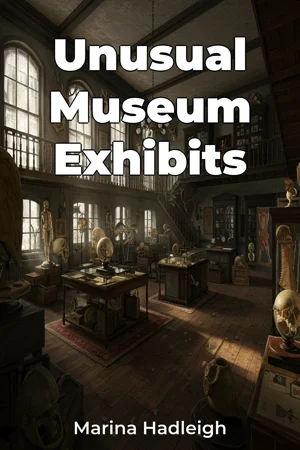
Have you ever wondered what truly lurks behind the velvet ropes of the world's most peculiar museums? "Unusual Museum Exhibits" delves into the captivating realm of the strange, the unsettling, and the downright bizarre, showcasing the most unconventional collections and artifacts ever put on public display. This book explores how these oddities challenge our understanding of art, history, and the very nature of collecting. This exploration revolves around three central themes: the psychology of collecting, the redefinition of historical artifacts, and the power of museums to shape narratives. We examine what drives individuals and institutions to gather such unconventional items, how these items force us to reconsider established historical accounts, and the role museums play in influencing public perception through their curated displays. These topics are crucial because they reveal the hidden biases and eccentricities embedded within our cultural institutions and the broader historical record. Understanding the significance of these exhibits requires some context. We delve into the history of museums, from their origins as private cabinets of curiosities to their modern role as public educators. We examine the evolving definitions of art and artifact, considering how cultural context influences our perception of value and significance. Ethical considerations regarding the acquisition and display of sensitive items are also explored, including issues of cultural appropriation and the repatriation of artifacts. The core argument of "Unusual Museum Exhibits" is that these bizarre collections, often dismissed as mere curiosities, offer valuable insights into the human condition, the complexities of history, and the subjective nature of value. By examining these unconventional exhibits, we can gain a deeper understanding of our cultural biases and the ways in which museums shape our understanding of the world. The book is structured to guide readers through this intriguing landscape. We begin with an introduction to the concept of "unusual" in the context of museums, establishing a framework for evaluating the exhibits discussed throughout the book. The book then moves into focused sections. One section details collections focusing on the oddities of the natural world, from deformed animal specimens to questionable taxidermy. A second section investigates museums dedicated to the darker side of history, including instruments of torture, medical anomalies, and true crime memorabilia. Finally, the last section analyzes exhibits that challenge traditional artistic boundaries, such as museums dedicated to bad art or works created by individuals with mental illnesses. The book culminates with a discussion of the implications of these exhibits for the future of museums and the importance of critical engagement with cultural institutions. The evidence presented in "Unusual Museum Exhibits" draws from a variety of sources, including museum archives, exhibition catalogs, academic research, and interviews with curators and collectors. We also analyze visitor feedback and media coverage to understand public perceptions of these unusual exhibits. Interdisciplinary connections further enrich the book's argument. Firstly, anthropology provides insights into the cultural significance of objects and the rituals of collecting. Secondly, psychology helps us understand the motivations behind unusual obsessions and the human fascination with the macabre. Thirdly, philosophy explores the nature of beauty, the definition of art, and the ethics of display. "Unusual Museum Exhibits" distinguishes itself through its comprehensive scope and critical analysis. Rather than simply showcasing a list of bizarre exhibits, the book delves into the underlying reasons for their existence, the controversies they generate, and the insights they offer into human nature and cultural values. The tone is both informative and engaging, balancing scholarly rigor with accessible language to appeal to a broad audience. This book is intended for anyone interested in art, history, museums, or the unusual aspects of human behavior. It will appeal to museum enthusiasts, cultural critics, and anyone who enjoys exploring the hidden corners of our world. Given the art and history genres, readers can expect a blend of factual accuracy, thoughtful analysis, and engaging storytelling. The book's scope is intentionally broad, encompassing a wide range of unusual exhibits from around the world. However, it is limited to exhibits that are publicly accessible, excluding private collections that are not open to the public. The lessons gleaned from "Unusual Museum Exhibits" have practical applications for museum professionals, artists, and cultural critics. Understanding the appeal and impact of unusual exhibits can help museums attract new audiences and foster more critical engagement with their collections. Finally, the book addresses ongoing debates surrounding the ethics of collecting and displaying sensitive items, including human remains and culturally significant artifacts. By exploring these controversies, "Unusual Museum Exhibits" encourages readers to think critically about the role of museums in preserving and interpreting our shared cultural heritage.
Have you ever wondered what truly lurks behind the velvet ropes of the world's most peculiar museums? "Unusual Museum Exhibits" delves into the captivating realm of the strange, the unsettling, and the downright bizarre, showcasing the most unconventional collections and artifacts ever put on public display. This book explores how these oddities challenge our understanding of art, history, and the very nature of collecting. This exploration revolves around three central themes: the psychology of collecting, the redefinition of historical artifacts, and the power of museums to shape narratives. We examine what drives individuals and institutions to gather such unconventional items, how these items force us to reconsider established historical accounts, and the role museums play in influencing public perception through their curated displays. These topics are crucial because they reveal the hidden biases and eccentricities embedded within our cultural institutions and the broader historical record. Understanding the significance of these exhibits requires some context. We delve into the history of museums, from their origins as private cabinets of curiosities to their modern role as public educators. We examine the evolving definitions of art and artifact, considering how cultural context influences our perception of value and significance. Ethical considerations regarding the acquisition and display of sensitive items are also explored, including issues of cultural appropriation and the repatriation of artifacts. The core argument of "Unusual Museum Exhibits" is that these bizarre collections, often dismissed as mere curiosities, offer valuable insights into the human condition, the complexities of history, and the subjective nature of value. By examining these unconventional exhibits, we can gain a deeper understanding of our cultural biases and the ways in which museums shape our understanding of the world. The book is structured to guide readers through this intriguing landscape. We begin with an introduction to the concept of "unusual" in the context of museums, establishing a framework for evaluating the exhibits discussed throughout the book. The book then moves into focused sections. One section details collections focusing on the oddities of the natural world, from deformed animal specimens to questionable taxidermy. A second section investigates museums dedicated to the darker side of history, including instruments of torture, medical anomalies, and true crime memorabilia. Finally, the last section analyzes exhibits that challenge traditional artistic boundaries, such as museums dedicated to bad art or works created by individuals with mental illnesses. The book culminates with a discussion of the implications of these exhibits for the future of museums and the importance of critical engagement with cultural institutions. The evidence presented in "Unusual Museum Exhibits" draws from a variety of sources, including museum archives, exhibition catalogs, academic research, and interviews with curators and collectors. We also analyze visitor feedback and media coverage to understand public perceptions of these unusual exhibits. Interdisciplinary connections further enrich the book's argument. Firstly, anthropology provides insights into the cultural significance of objects and the rituals of collecting. Secondly, psychology helps us understand the motivations behind unusual obsessions and the human fascination with the macabre. Thirdly, philosophy explores the nature of beauty, the definition of art, and the ethics of display. "Unusual Museum Exhibits" distinguishes itself through its comprehensive scope and critical analysis. Rather than simply showcasing a list of bizarre exhibits, the book delves into the underlying reasons for their existence, the controversies they generate, and the insights they offer into human nature and cultural values. The tone is both informative and engaging, balancing scholarly rigor with accessible language to appeal to a broad audience. This book is intended for anyone interested in art, history, museums, or the unusual aspects of human behavior. It will appeal to museum enthusiasts, cultural critics, and anyone who enjoys exploring the hidden corners of our world. Given the art and history genres, readers can expect a blend of factual accuracy, thoughtful analysis, and engaging storytelling. The book's scope is intentionally broad, encompassing a wide range of unusual exhibits from around the world. However, it is limited to exhibits that are publicly accessible, excluding private collections that are not open to the public. The lessons gleaned from "Unusual Museum Exhibits" have practical applications for museum professionals, artists, and cultural critics. Understanding the appeal and impact of unusual exhibits can help museums attract new audiences and foster more critical engagement with their collections. Finally, the book addresses ongoing debates surrounding the ethics of collecting and displaying sensitive items, including human remains and culturally significant artifacts. By exploring these controversies, "Unusual Museum Exhibits" encourages readers to think critically about the role of museums in preserving and interpreting our shared cultural heritage.
"Unusual Museum Exhibits" explores the fascinating world of unconventional museum collections, delving into the motivations behind collecting bizarre artifacts and how these exhibits challenge our understanding of art and history. It examines the psychology of collecting, the redefinition of historical artifacts, and the power of museums to shape narratives. For example, collections of deformed animal specimens or instruments of torture push the boundaries of what we consider worthy of display. The book progresses by first introducing the concept of "unusual" in museums, then moves into focused sections detailing oddities of the natural world, museums dedicated to the darker side of history, and exhibits challenging traditional artistic boundaries. Readers will discover how museums, from their origins as cabinets of curiosities, influence public perception and how these oddities offer valuable insights into the human condition. By analyzing these unconventional exhibits, the book provides a deeper understanding of our cultural biases and the ways in which museums shape our understanding of the world.
Book Details
ISBN
9788235278104
Publisher
Publifye AS
Your Licenses
You don't own any licenses for this book
Purchase a license below to unlock this book and download the EPUB.
Purchase License
Select a tier to unlock this book
Need bulk licensing?
Contact us for enterprise agreements.