
About This Book
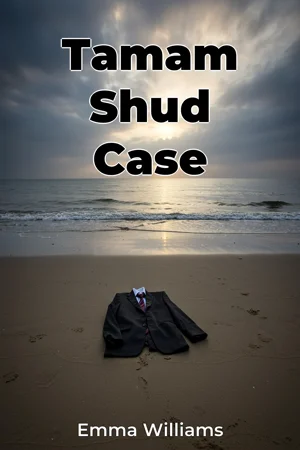
Who was the unidentified man discovered on Somerton Beach in 1948, and why, seventy years later, does his story continue to captivate? "Tamam Shud Case" delves into one of Australia's most enduring mysteries, dissecting the available evidence surrounding the death of a man found with a scrap of paper bearing the words "Tamam Shud" – Persian for "ended" or "finished." This book meticulously examines the known facts of the case, exploring the realms of World History, True Crime, and History World, to shed light on a puzzle that has baffled investigators for decades. At the heart of this investigation lies the intersection of forensic science, codebreaking, and intelligence history. First, the book probes the initial police investigation, re-evaluating the forensic evidence: the man’s physical condition, his clothing, and the peculiar items found in his possession, including the altered copy of "The Rubaiyat of Omar Khayyam." This exploration confronts the limitations of 1940s forensic technology while applying contemporary analytical perspectives. Second, the relentless attempts to decipher the cryptic code discovered within the book’s torn page are analyzed, considering linguistic possibilities and historical precedents. The investigation dissects various proposed solutions, exploring their plausibility. Finally, the book examines recently declassified intelligence documents, investigating potential links between the Somerton Man and Cold War espionage activities. We assess the climate of paranoia and secrecy that defined the era, in order to expose the truth behind this puzzling death. "Tamam Shud Case" argues that while a definitive solution to the Somerton Man’s identity and demise may remain elusive, a thorough and critical reassessment of the existing evidence, combined with emerging historical context, can unravel the mystery. The book is structured to guide the reader through the complexities of the case. Initially, it lays the groundwork by establishing the historical backdrop of post-World War II Australia, setting the scene for the ensuing investigation. Then, the book methodically reconstructs the timeline of events, starting from the discovery on Somerton Beach and progressing through the subsequent police inquiry. It then pivots to a detailed analysis of the "Rubaiyat" code. Finally, the book explores the potential espionage angle, drawing upon declassified documents and expert opinions to construct a compelling narrative. The book relies heavily on primary source materials, including police reports, autopsy records, witness statements, and intelligence documents. These resources, combined with secondary academic research, provide a comprehensive foundation for the analysis. The "Tamam Shud Case" transcends the boundaries of a simple crime story, connecting to broader fields such as cryptography, Cold War history, and the sociology of unsolved mysteries. This interdisciplinary approach allows for a richer and more nuanced understanding of the case. It considers the power of rumour, speculation, and the enduring human fascination with the enigmatic. This book provides a new consideration by questioning the long-held assumptions about the case and challenging readers to reconsider the evidence. Written in a clear and engaging style, "Tamam Shud Case" caters to a broad audience interested in true crime, history, and unsolved mysteries. While maintaining scholarly rigor, the book avoids overly technical jargon. It is intended for anyone captivated by the enduring enigma of the Somerton Man, offering fresh insights and perspectives on a case that continues to intrigue. The scope of this book is limited to the available evidence and credible theories surrounding the Somerton Man’s death. While acknowledging the many speculative claims and conspiracy theories that have emerged over the years, the book focuses on a fact-based analysis grounded in verifiable information. "Tamam Shud Case" acknowledges that definitively solving the long-cold case of the Somerton Man is an unrealistic ambition, however, the book offers the most thorough assessment of the information currently available.
Who was the unidentified man discovered on Somerton Beach in 1948, and why, seventy years later, does his story continue to captivate? "Tamam Shud Case" delves into one of Australia's most enduring mysteries, dissecting the available evidence surrounding the death of a man found with a scrap of paper bearing the words "Tamam Shud" – Persian for "ended" or "finished." This book meticulously examines the known facts of the case, exploring the realms of World History, True Crime, and History World, to shed light on a puzzle that has baffled investigators for decades. At the heart of this investigation lies the intersection of forensic science, codebreaking, and intelligence history. First, the book probes the initial police investigation, re-evaluating the forensic evidence: the man’s physical condition, his clothing, and the peculiar items found in his possession, including the altered copy of "The Rubaiyat of Omar Khayyam." This exploration confronts the limitations of 1940s forensic technology while applying contemporary analytical perspectives. Second, the relentless attempts to decipher the cryptic code discovered within the book’s torn page are analyzed, considering linguistic possibilities and historical precedents. The investigation dissects various proposed solutions, exploring their plausibility. Finally, the book examines recently declassified intelligence documents, investigating potential links between the Somerton Man and Cold War espionage activities. We assess the climate of paranoia and secrecy that defined the era, in order to expose the truth behind this puzzling death. "Tamam Shud Case" argues that while a definitive solution to the Somerton Man’s identity and demise may remain elusive, a thorough and critical reassessment of the existing evidence, combined with emerging historical context, can unravel the mystery. The book is structured to guide the reader through the complexities of the case. Initially, it lays the groundwork by establishing the historical backdrop of post-World War II Australia, setting the scene for the ensuing investigation. Then, the book methodically reconstructs the timeline of events, starting from the discovery on Somerton Beach and progressing through the subsequent police inquiry. It then pivots to a detailed analysis of the "Rubaiyat" code. Finally, the book explores the potential espionage angle, drawing upon declassified documents and expert opinions to construct a compelling narrative. The book relies heavily on primary source materials, including police reports, autopsy records, witness statements, and intelligence documents. These resources, combined with secondary academic research, provide a comprehensive foundation for the analysis. The "Tamam Shud Case" transcends the boundaries of a simple crime story, connecting to broader fields such as cryptography, Cold War history, and the sociology of unsolved mysteries. This interdisciplinary approach allows for a richer and more nuanced understanding of the case. It considers the power of rumour, speculation, and the enduring human fascination with the enigmatic. This book provides a new consideration by questioning the long-held assumptions about the case and challenging readers to reconsider the evidence. Written in a clear and engaging style, "Tamam Shud Case" caters to a broad audience interested in true crime, history, and unsolved mysteries. While maintaining scholarly rigor, the book avoids overly technical jargon. It is intended for anyone captivated by the enduring enigma of the Somerton Man, offering fresh insights and perspectives on a case that continues to intrigue. The scope of this book is limited to the available evidence and credible theories surrounding the Somerton Man’s death. While acknowledging the many speculative claims and conspiracy theories that have emerged over the years, the book focuses on a fact-based analysis grounded in verifiable information. "Tamam Shud Case" acknowledges that definitively solving the long-cold case of the Somerton Man is an unrealistic ambition, however, the book offers the most thorough assessment of the information currently available.
The "Tamam Shud Case" explores the perplexing death of an unidentified man discovered on Somerton Beach, Australia, in 1948. This true crime mystery, steeped in Australian history, has endured for decades due to its baffling details and lack of resolution. The book meticulously examines the available evidence, from forensic findings to cryptic codes, to shed light on this cold case. One intriguing aspect is the scrap of paper found with the body bearing the Persian phrase "Tamam Shud," meaning "ended," taken from "The Rubaiyat," which adds layers of complexity to the man's identity and purpose. The book progresses methodically, first establishing the historical context of post-World War II Australia. It then reconstructs the timeline of events, from the initial discovery to the subsequent police inquiry. The book uniquely analyzes the "Rubaiyat" code found within a torn page of the book, exploring potential meanings and connections. Finally, the book explores the potential espionage angle, drawing upon declassified documents and expert opinions to construct a compelling narrative. Another key element is the possible link to Cold War espionage, raising questions about whether the Somerton Man was a spy operating in a climate of paranoia and secrecy. By relying on primary source materials like police reports and autopsy records, "Tamam Shud Case" offers a comprehensive, fact-based analysis accessible to those interested in World History and unsolved mysteries. While a definitive answer may remain elusive, the book provides fresh insights and challenges long-held assumptions, making it a valuable resource for anyone captivated by this enduring enigma.
Book Details
ISBN
9788235278081
Publisher
Publifye AS
Your Licenses
You don't own any licenses for this book
Purchase a license below to unlock this book and download the EPUB.
Purchase License
Select a tier to unlock this book
Need bulk licensing?
Contact us for enterprise agreements.