
About This Book
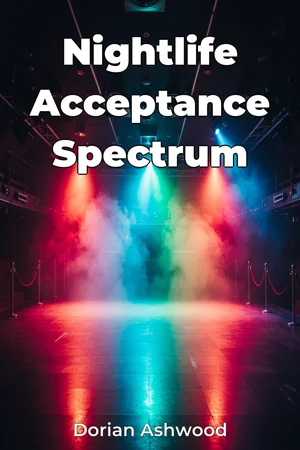
Are the rainbow flags displayed during Pride month genuine symbols of inclusivity, or merely performative gestures masking deeper inequalities within the nightlife industry? "Nightlife Acceptance Spectrum" delves into the complex relationship between LGBTQ+ patrons and nightlife venues across major cities, examining the legal frameworks, enforcement practices, and societal expectations that shape these interactions. This book explores the degree to which nightlife spaces truly embrace and protect their LGBTQ+ clientele. This study is crucial because nightlife represents a significant social and economic space for LGBTQ+ individuals. Venues can serve as vital community hubs, providing spaces for connection, self-expression, and celebration. Understanding the acceptance spectrum is vital for promoting inclusivity and safety and combating discrimination. Furthermore, the economic impact of LGBTQ+ nightlife on urban economies is considerable, making the practices of these venues a matter of broader public interest. "Nightlife Acceptance Spectrum" argues that despite increasing visibility and acceptance, LGBTQ+ patrons still face considerable challenges in navigating nightlife spaces. These challenges range from subtle forms of discrimination and microaggressions to overt acts of harassment and violence. The book posits that a nuanced understanding of local licensing laws, enforcement disparities, and public behavior standards is essential for creating truly inclusive and safe environments. The book begins by establishing the historical context of LGBTQ+ nightlife, tracing its evolution from clandestine gatherings to more mainstream acceptance. We then examine local licensing laws across several major cities, comparing how these laws address issues of discrimination, safety, and accessibility for LGBTQ+ patrons. A detailed analysis of enforcement practices follows, investigating whether regulations are consistently and equitably applied. The book also evaluates public behavior standards, exploring how expectations of conduct within nightlife spaces may disproportionately impact LGBTQ+ individuals. Our research draws upon diverse sources, including legal documents, policy analyses, ethnographic observations of nightlife venues, and interviews with venue owners, staff, and LGBTQ+ patrons. This multi-method approach provides a comprehensive picture of the challenges and opportunities within the nightlife industry. This book connects to various fields, including sociology, political science, and urban studies. Sociological theories of identity and social space inform our understanding of how LGBTQ+ individuals experience nightlife. Political science frameworks help us analyze the policy landscape and regulatory mechanisms that govern nightlife venues. Urban studies provide insights into how nightlife contributes to the cultural and economic vitality of cities. "Nightlife Acceptance Spectrum" offers a distinctive perspective by developing a novel framework for assessing LGBTQ+ inclusion in nightlife. This framework considers not only legal and policy factors but also the lived experiences of LGBTQ+ patrons and the operational practices of venue owners and staff. Written in an accessible yet rigorous academic style, this book aims to inform policymakers, venue owners, LGBTQ+ advocates, and anyone interested in creating more inclusive urban spaces. It will be a valuable resource for students and researchers in sociology, political science, urban planning, and LGBTQ+ studies. While the book focuses primarily on major cities in the United States and Europe, the framework and findings can be applied to other contexts globally. The book acknowledges that experiences within the LGBTQ+ community are not monolithic; therefore, it strives to represent diverse perspectives based on race, gender identity, sexual orientation, and socioeconomic status. The information presented in "Nightlife Acceptance Spectrum" can be used to develop best practices for creating inclusive nightlife environments. These practices include implementing anti-discrimination policies, training staff on LGBTQ+ sensitivity, and fostering a culture of respect and safety within venues. The book also addresses ongoing debates surrounding issues such as the commercialization of LGBTQ+ spaces, the tension between inclusivity and exclusivity, and the role of nightlife in promoting social and political change. By engaging with these controversies, "Nightlife Acceptance Spectrum" seeks to contribute to a more nuanced and informed discussion about LGBTQ+ rights and urban life.
Are the rainbow flags displayed during Pride month genuine symbols of inclusivity, or merely performative gestures masking deeper inequalities within the nightlife industry? "Nightlife Acceptance Spectrum" delves into the complex relationship between LGBTQ+ patrons and nightlife venues across major cities, examining the legal frameworks, enforcement practices, and societal expectations that shape these interactions. This book explores the degree to which nightlife spaces truly embrace and protect their LGBTQ+ clientele. This study is crucial because nightlife represents a significant social and economic space for LGBTQ+ individuals. Venues can serve as vital community hubs, providing spaces for connection, self-expression, and celebration. Understanding the acceptance spectrum is vital for promoting inclusivity and safety and combating discrimination. Furthermore, the economic impact of LGBTQ+ nightlife on urban economies is considerable, making the practices of these venues a matter of broader public interest. "Nightlife Acceptance Spectrum" argues that despite increasing visibility and acceptance, LGBTQ+ patrons still face considerable challenges in navigating nightlife spaces. These challenges range from subtle forms of discrimination and microaggressions to overt acts of harassment and violence. The book posits that a nuanced understanding of local licensing laws, enforcement disparities, and public behavior standards is essential for creating truly inclusive and safe environments. The book begins by establishing the historical context of LGBTQ+ nightlife, tracing its evolution from clandestine gatherings to more mainstream acceptance. We then examine local licensing laws across several major cities, comparing how these laws address issues of discrimination, safety, and accessibility for LGBTQ+ patrons. A detailed analysis of enforcement practices follows, investigating whether regulations are consistently and equitably applied. The book also evaluates public behavior standards, exploring how expectations of conduct within nightlife spaces may disproportionately impact LGBTQ+ individuals. Our research draws upon diverse sources, including legal documents, policy analyses, ethnographic observations of nightlife venues, and interviews with venue owners, staff, and LGBTQ+ patrons. This multi-method approach provides a comprehensive picture of the challenges and opportunities within the nightlife industry. This book connects to various fields, including sociology, political science, and urban studies. Sociological theories of identity and social space inform our understanding of how LGBTQ+ individuals experience nightlife. Political science frameworks help us analyze the policy landscape and regulatory mechanisms that govern nightlife venues. Urban studies provide insights into how nightlife contributes to the cultural and economic vitality of cities. "Nightlife Acceptance Spectrum" offers a distinctive perspective by developing a novel framework for assessing LGBTQ+ inclusion in nightlife. This framework considers not only legal and policy factors but also the lived experiences of LGBTQ+ patrons and the operational practices of venue owners and staff. Written in an accessible yet rigorous academic style, this book aims to inform policymakers, venue owners, LGBTQ+ advocates, and anyone interested in creating more inclusive urban spaces. It will be a valuable resource for students and researchers in sociology, political science, urban planning, and LGBTQ+ studies. While the book focuses primarily on major cities in the United States and Europe, the framework and findings can be applied to other contexts globally. The book acknowledges that experiences within the LGBTQ+ community are not monolithic; therefore, it strives to represent diverse perspectives based on race, gender identity, sexual orientation, and socioeconomic status. The information presented in "Nightlife Acceptance Spectrum" can be used to develop best practices for creating inclusive nightlife environments. These practices include implementing anti-discrimination policies, training staff on LGBTQ+ sensitivity, and fostering a culture of respect and safety within venues. The book also addresses ongoing debates surrounding issues such as the commercialization of LGBTQ+ spaces, the tension between inclusivity and exclusivity, and the role of nightlife in promoting social and political change. By engaging with these controversies, "Nightlife Acceptance Spectrum" seeks to contribute to a more nuanced and informed discussion about LGBTQ+ rights and urban life.
"Nightlife Acceptance Spectrum" explores the multifaceted relationship between LGBTQ+ individuals and nightlife, going beyond surface-level visibility to examine the true extent of inclusion within these spaces. It addresses a critical question: are Pride month displays genuine, or do they mask underlying inequalities? The book delves into how licensing laws, enforcement practices, and public behavior standards shape the experiences of LGBTQ+ patrons, revealing that despite progress, microaggressions and discrimination persist. Nightlife acts as a vital social and economic space, serving as a community hub for connection and self-expression, making acceptance crucial. The book uses a unique framework to assess LGBTQ+ inclusion, considering legal aspects, lived experiences, and venue practices. It draws from diverse sources such as legal documents, ethnographic observations, and interviews to provide a comprehensive picture. The book begins by historically contextualizing LGBTQ+ nightlife, then examines licensing laws, enforcement, and public behavior standards across cities. This multi-method approach connects to sociology, political science, and urban studies, offering a nuanced perspective on creating truly inclusive urban environments.
Book Details
ISBN
9788235278050
Publisher
Publifye AS
Your Licenses
You don't own any licenses for this book
Purchase a license below to unlock this book and download the EPUB.
Purchase License
Select a tier to unlock this book
Need bulk licensing?
Contact us for enterprise agreements.